A Systematic Review of the Learning Dynamics of Proprioception Training: Specificity, Acquisition, Retention, and Transfer
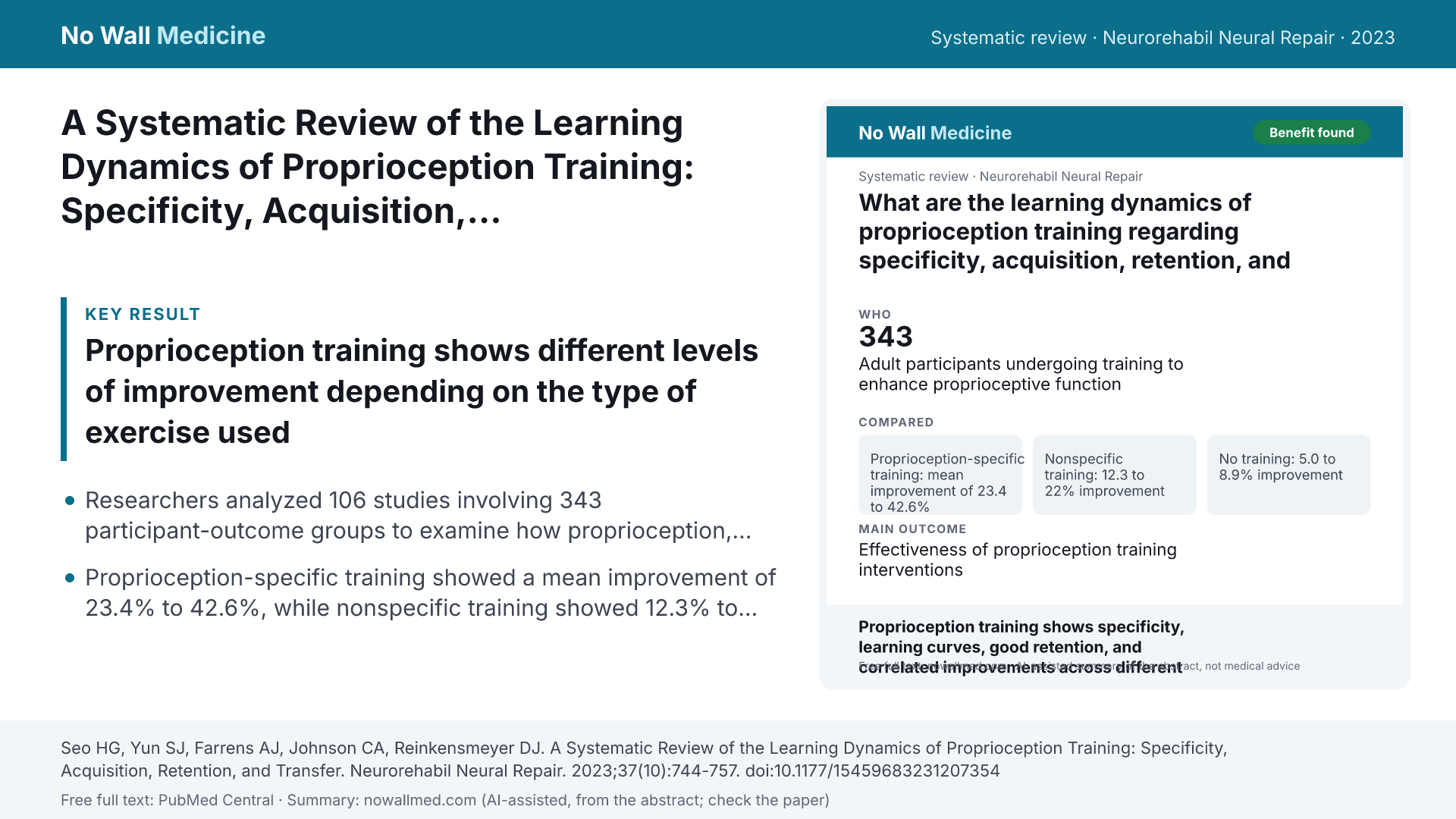
Key result: Proprioception training shows different levels of improvement depending on the type of exercise used
Systematic reviewBenefit found
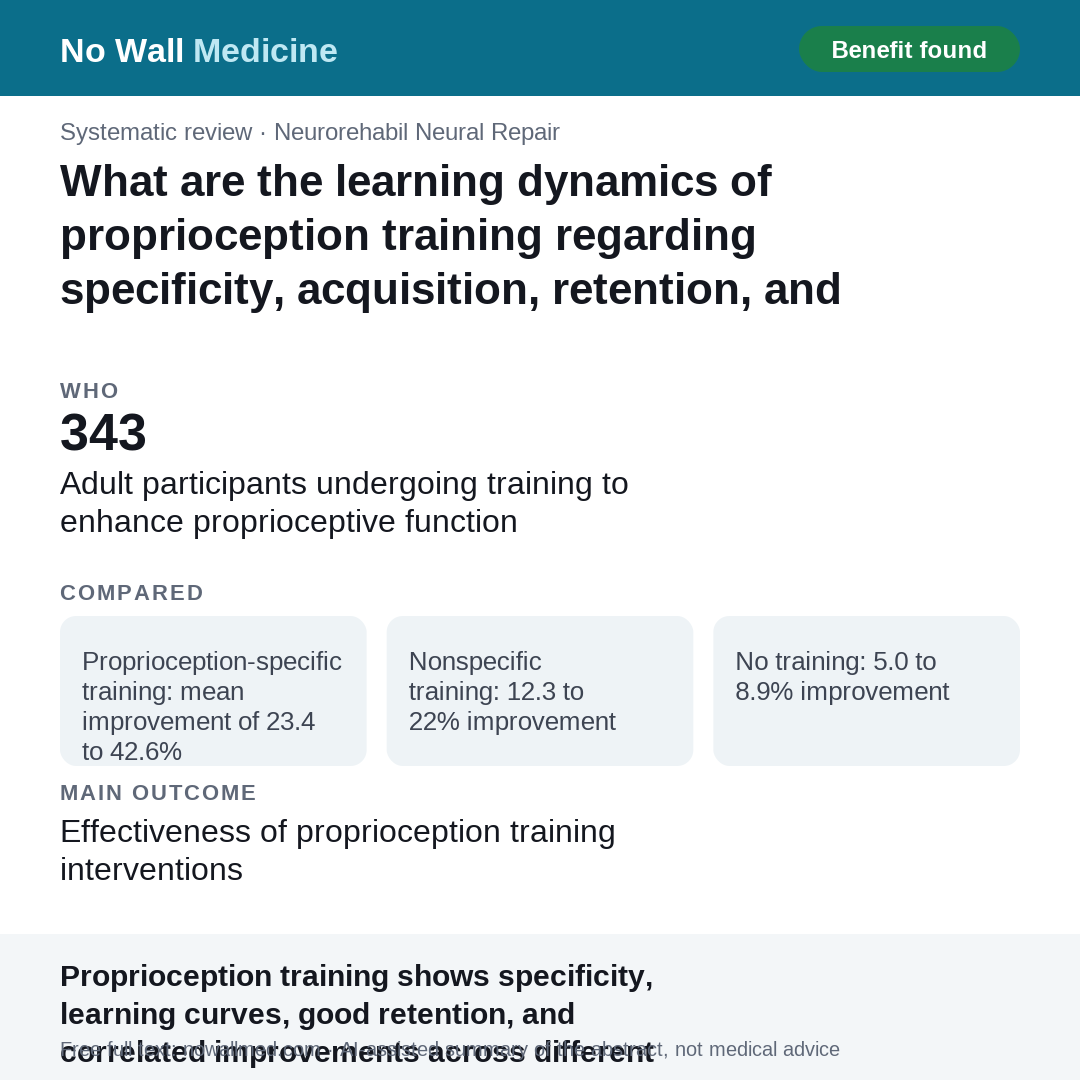
What are the learning dynamics of proprioception training regarding specificity, acquisition, retention, and transfer?
Who
343
Adult participants undergoing training to enhance proprioceptive function
Compared
Proprioception-specific training: mean improvement of 23.4 to 42.6%
Nonspecific training: 12.3 to 22% improvement
No training: 5.0 to 8.9% improvement
Main outcome
Effectiveness of proprioception training interventions
Bottom line: Proprioception training shows specificity, learning curves, good retention, and correlated improvements across different assessments.
Neurorehabil Neural Repair · 2023-10-21Download image
Key points
- Researchers analyzed 106 studies involving 343 participant-outcome groups to examine how proprioception, or the sense of body position, changes with training.
- Proprioception-specific training showed a mean improvement of 23.4% to 42.6%, while nonspecific training showed 12.3% to 22% and no training showed 5.0% to 8.9%.
- Improvements were largely maintained during follow-up assessments lasting at least 1 week in 12 studies.
Discussion prompts
- Would these patients look like yours? Who was left out?
- Is the main outcome one that matters to patients?
- Is the difference large enough to change what you do?
Cite: Seo HG, Yun SJ, Farrens AJ, Johnson CA, Reinkensmeyer DJ. A Systematic Review of the Learning Dynamics of Proprioception Training: Specificity, Acquisition, Retention, and Transfer. Neurorehabil Neural Repair. 2023. doi:10.1177/15459683231207354
Free full text: PubMed Central · Summary and visual abstract: nowallmed.com/a/a-systematic-review-of-the-learning-dynamics-of-proprioception-10ws6kf/ (AI-assisted from the abstract; check the paper before relying on it).