Systematic review evaluates management strategies for high blood sugar in hospitalized adults
A Systematic Review Supporting the Endocrine Society Clinical Practice Guideline for the Management of Hyperglycemia in Adults Hospitalized for Noncritical Illness or Undergoing Elective Surgical Procedures
Systematic review and meta-analysisMixed results
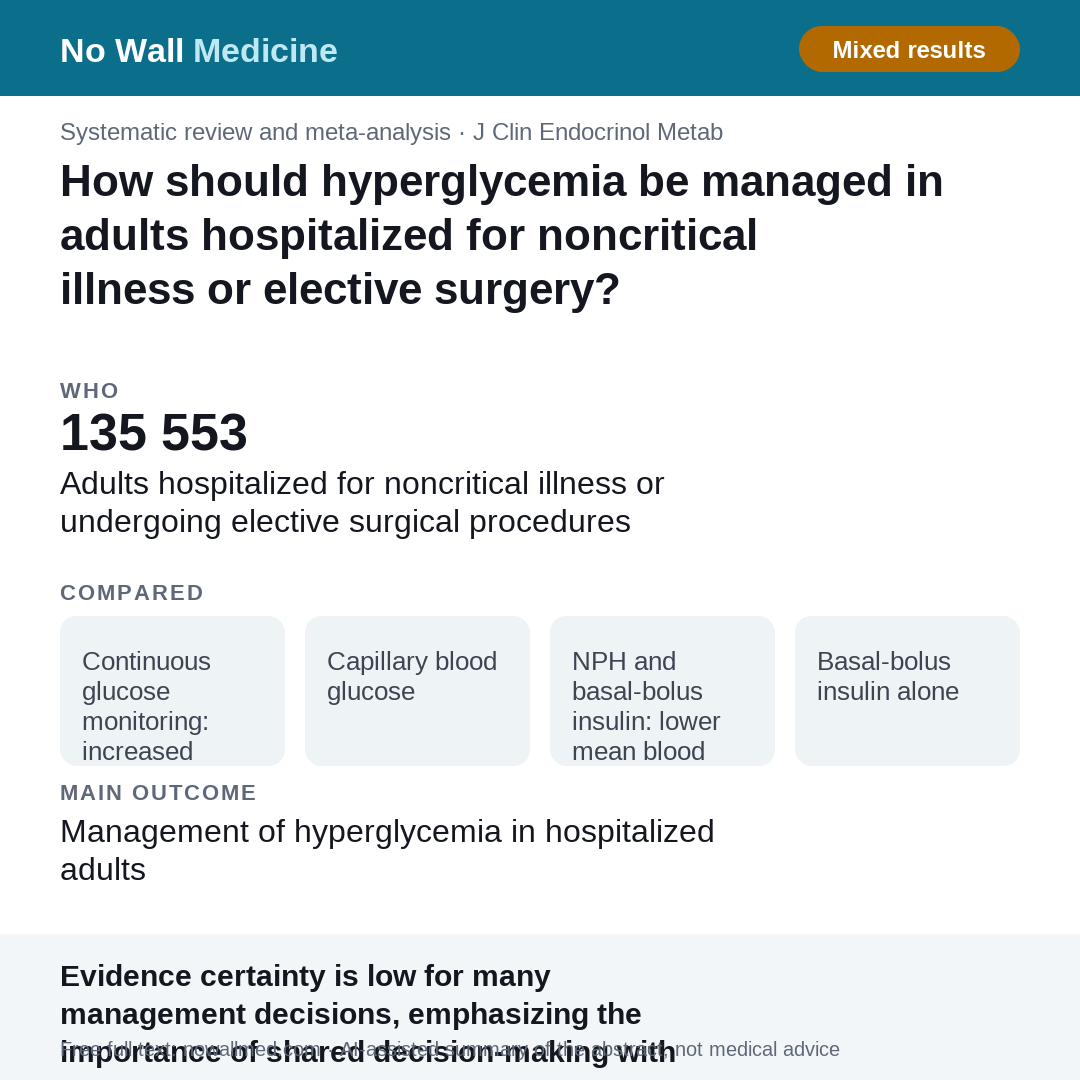
How should hyperglycemia be managed in adults hospitalized for noncritical illness or elective surgery?
Who
135 553
Adults hospitalized for noncritical illness or undergoing elective surgical procedures
Compared
Continuous glucose monitoring: increased hypoglycemia and decreased mean daily blood glucose
Capillary blood glucose
NPH and basal-bolus insulin: lower mean blood glucose
Basal-bolus insulin alone
Main outcome
Management of hyperglycemia in hospitalized adults
Bottom line: Evidence certainty is low for many management decisions, emphasizing the importance of shared decision-making with patients.
J Clin Endocrinol Metab · 2022-06-13Download image
Clinical question: How should hyperglycemia be managed in adults hospitalized for noncritical illness or elective surgery?
Why it matters: Managing high blood sugar in hospitalized patients with diabetes or new hyperglycemia is challenging and requires evidence-based clinical practice guidelines.
Key points
- Researchers analyzed 94 studies involving 135 553 patients to evaluate various blood sugar management strategies in noncritical hospital settings.
- Continuous glucose monitoring, which tracks sugar levels constantly, was associated with more identified hypoglycemia and lower mean daily blood glucose than capillary blood glucose testing.
- Preoperative hemoglobin A1c levels below 7% were associated with shorter hospital stays and fewer infections, but also a higher number of reoperations.
Headline and key points written with AI from the paper’s abstract, with every number checked against it. Read the paper before relying on them.
Was this summary helpful?
Subject terms
Cite this article
Seisa MO, Saadi S, Nayfeh T, Muthusamy K, Shah SH, Firwana M. A Systematic Review Supporting the Endocrine Society Clinical Practice Guideline for the Management of Hyperglycemia in Adults Hospitalized for Noncritical Illness or Undergoing Elective Surgical Procedures. J Clin Endocrinol Metab. 2022. doi:10.1210/clinem/dgac277
Spotted a mistake? Suggest a correction
Top studies every Monday
The week’s key trials and guidelines in your specialties, plus any topics you follow. By email, free.
Get the weekly digest