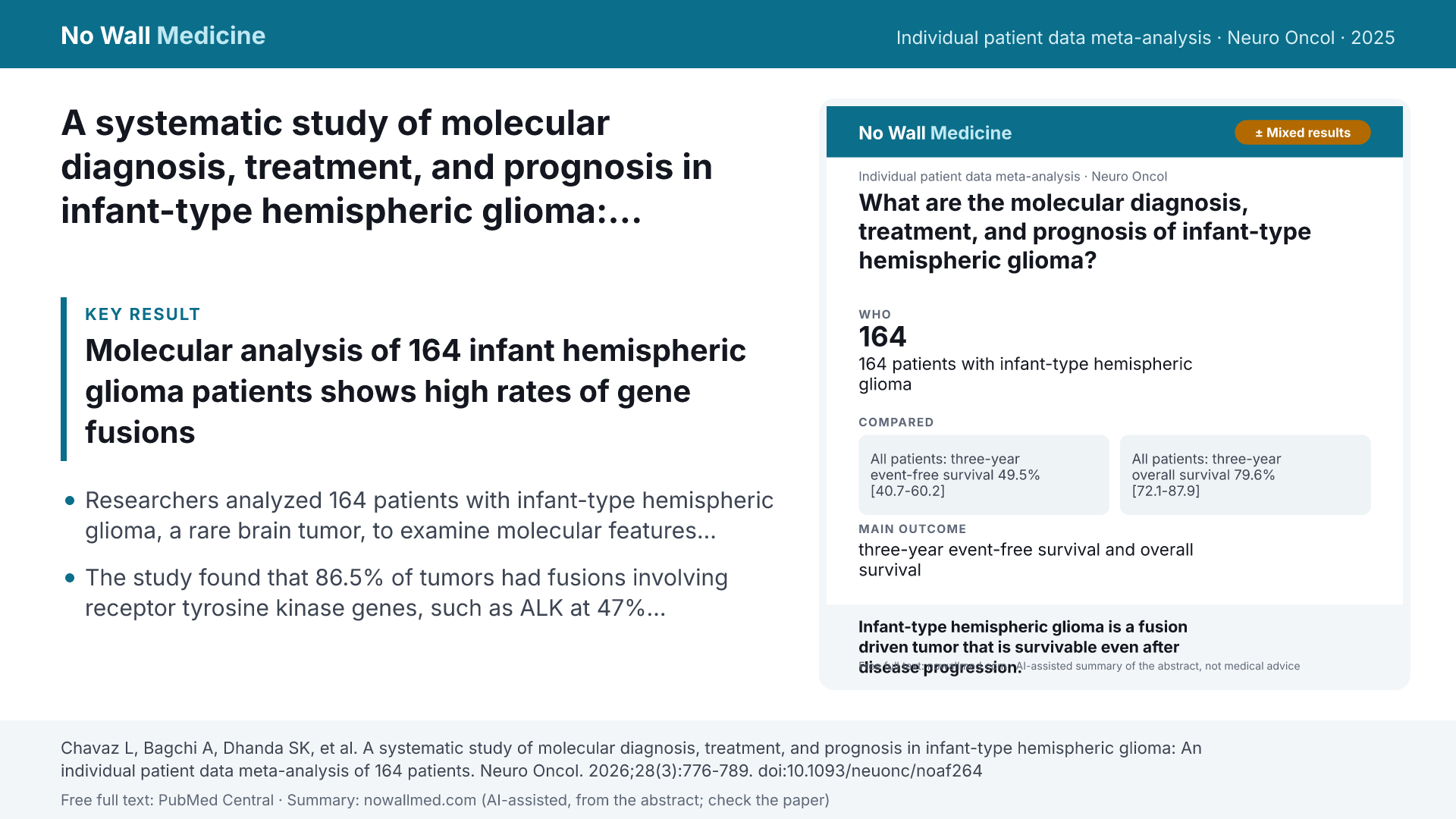
Molecular analysis of 164 infant hemispheric glioma patients shows high rates of gene fusions
A systematic study of molecular diagnosis, treatment, and prognosis in infant-type hemispheric glioma: An individual patient data meta-analysis of 164 patients
Individual patient data meta-analysisMixed results
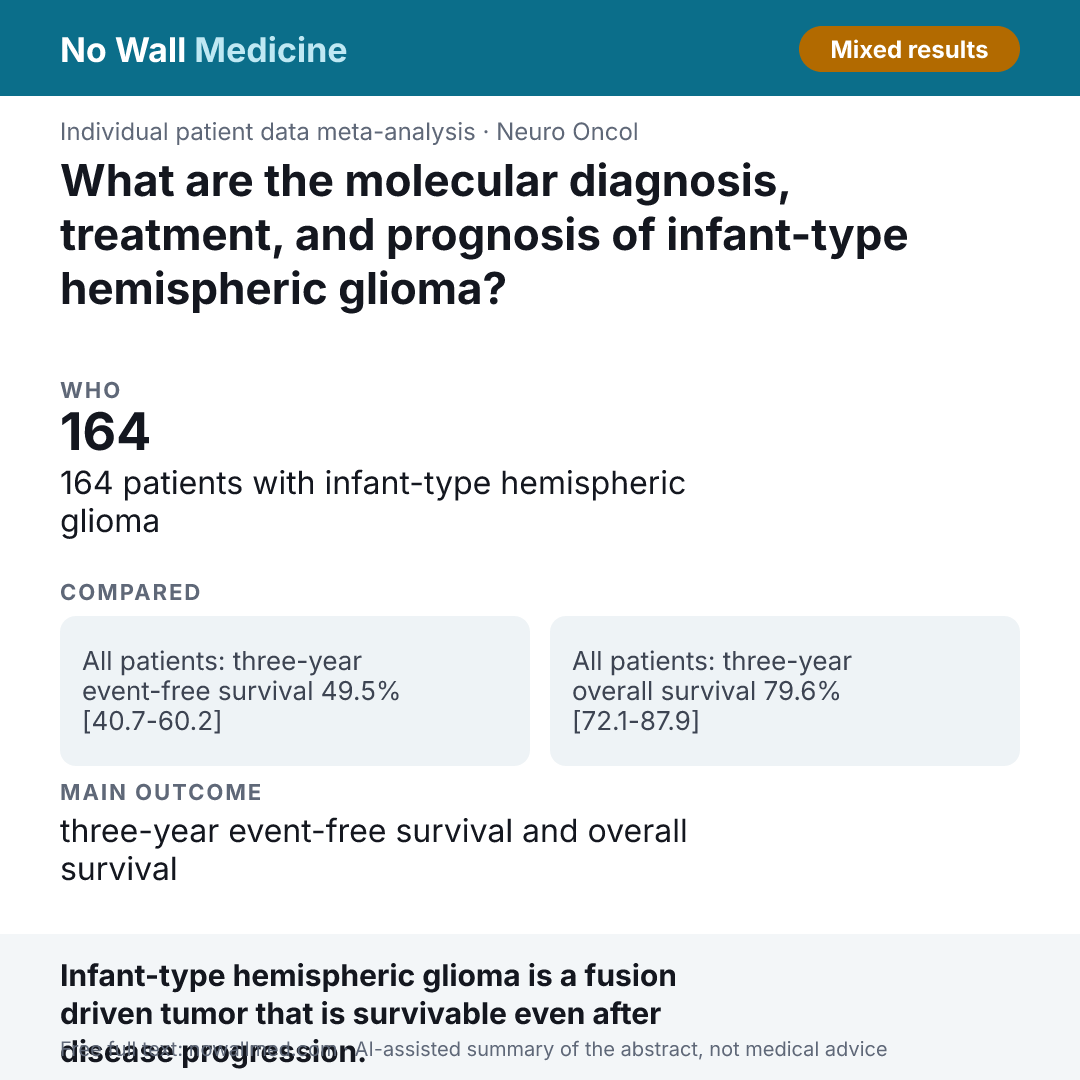
What are the molecular diagnosis, treatment, and prognosis of infant-type hemispheric glioma?
Who
164
164 patients with infant-type hemispheric glioma
Compared
All patients: three-year event-free survival 49.5% [40.7-60.2]
All patients: three-year overall survival 79.6% [72.1-87.9]
Main outcome
three-year event-free survival and overall survival
Bottom line: Infant-type hemispheric glioma is a fusion driven tumor that is survivable even after disease progression.
Neuro Oncol · 2025-11-09 · Save PNG
Clinical question: What are the molecular diagnosis, treatment, and prognosis of infant-type hemispheric glioma?
Why it matters: Optimal treatment and factors determining clinical outcomes for the rare infant-type hemispheric glioma have not yet been established.
Key points
- Researchers analyzed 164 patients with infant-type hemispheric glioma, a rare brain tumor, to examine molecular features and clinical outcomes.
- The study found that 86.5% of tumors had fusions involving receptor tyrosine kinase genes, such as ALK at 47% and NTRK1/2/3 at 22.5%.
- Three-year event-free survival was 49.5% and overall survival was 79.6%, with tumor progression and intracranial hemorrhage being common causes of death.
Headline and key points written with AI from the paper’s abstract, with every number checked against it. Read the paper before relying on them.
Was this summary helpful?
Subject terms
Headline, design, result, key points, caveat and citation as plain text.
Cite this article
Chavaz L, Bagchi A, Dhanda SK, et al. A systematic study of molecular diagnosis, treatment, and prognosis in infant-type hemispheric glioma: An individual patient data meta-analysis of 164 patients. Neuro Oncol. 2026;28(3):776-789. doi:10.1093/neuonc/noaf264
Spotted a mistake? Suggest a correction