Factors affecting the implementation of online asynchronous telemedicine platforms in primary care practices
A theory-based analysis of the implementation of online asynchronous telemedicine platforms into primary care practices using Normalisation Process Theory
Meta-analysis of 21 studiesUnclear result
factors affecting online telemedicine implementation
Who
25
primary care patients and healthcare professionals
Compared
online platform
usual care
Main outcome
implementation success
Bottom line: implementation hindered by poor usability
BMC Prim Care · 2025-02-06Download image
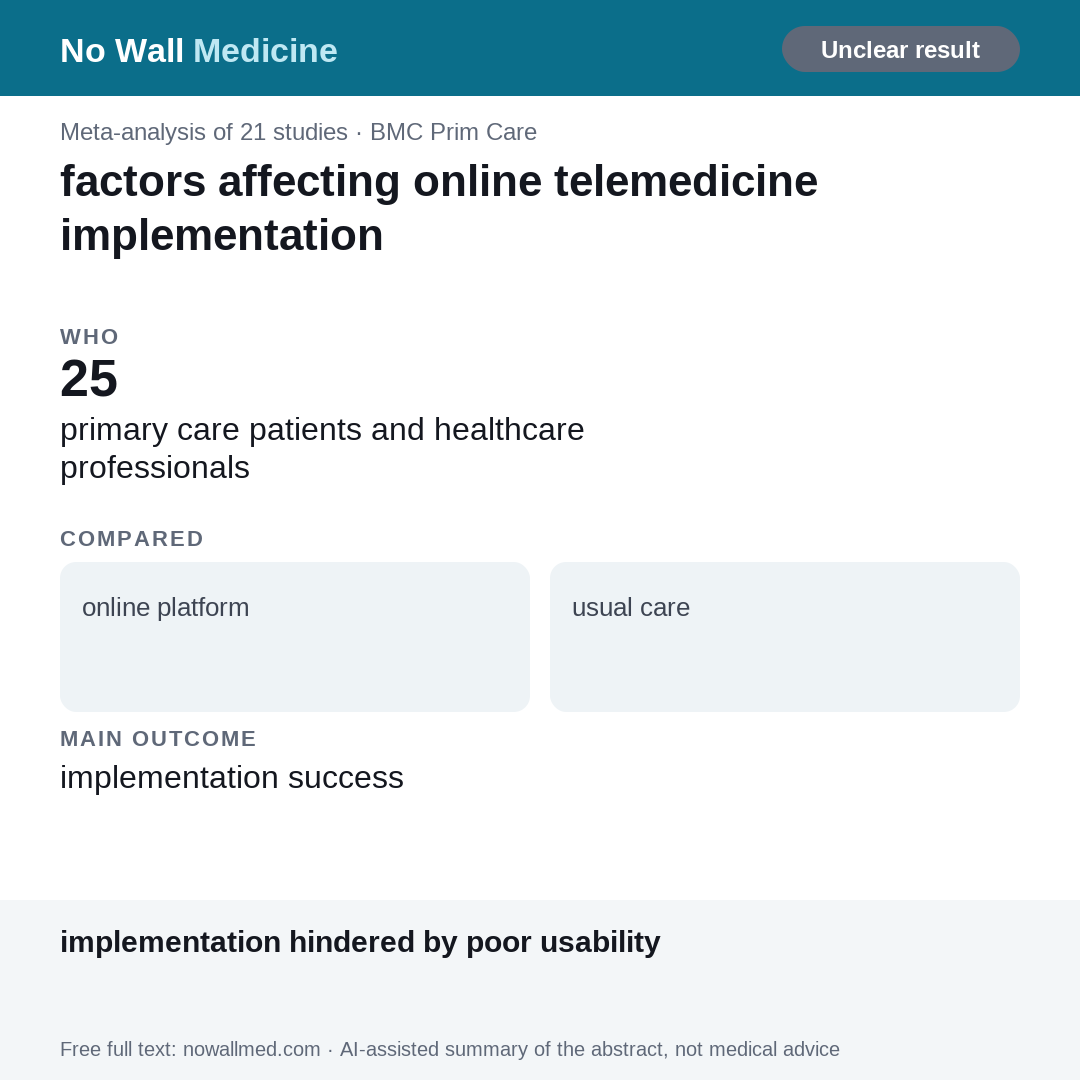
Why it matters: It was unclear whether the implementation of online asynchronous telemedicine platforms into primary care was successful and what factors affected this process.
Key points
- Researchers analyzed 25 reports from 21 primary studies regarding the use of online asynchronous telemedicine platforms for two-way communication in primary care.
- Implementation was associated with increased workload, poor usability, and a lack of integration into existing clinical systems.
- Successful implementation was linked to high patient satisfaction and staff confidence, though concerns remained regarding confidentiality and health inequities.
Headline and key points written with AI from the paper’s abstract, with every number checked against it. Read the paper before relying on them.
Topics
Cite this article
Leighton C, Joseph-Williams N, Porter A, Edwards A, Cooper A. A theory-based analysis of the implementation of online asynchronous telemedicine platforms into primary care practices using Normalisation Process Theory. BMC Prim Care. 2025. doi:10.1186/s12875-025-02717-0
Spotted a mistake? Suggest a correction
Top studies every Monday
The week’s key trials and guidelines in your specialties, by email. Free.
Get the weekly digest