A Type 2 Diabetes Subtype Responsive to ACCORD Intensive Glycemia Treatment
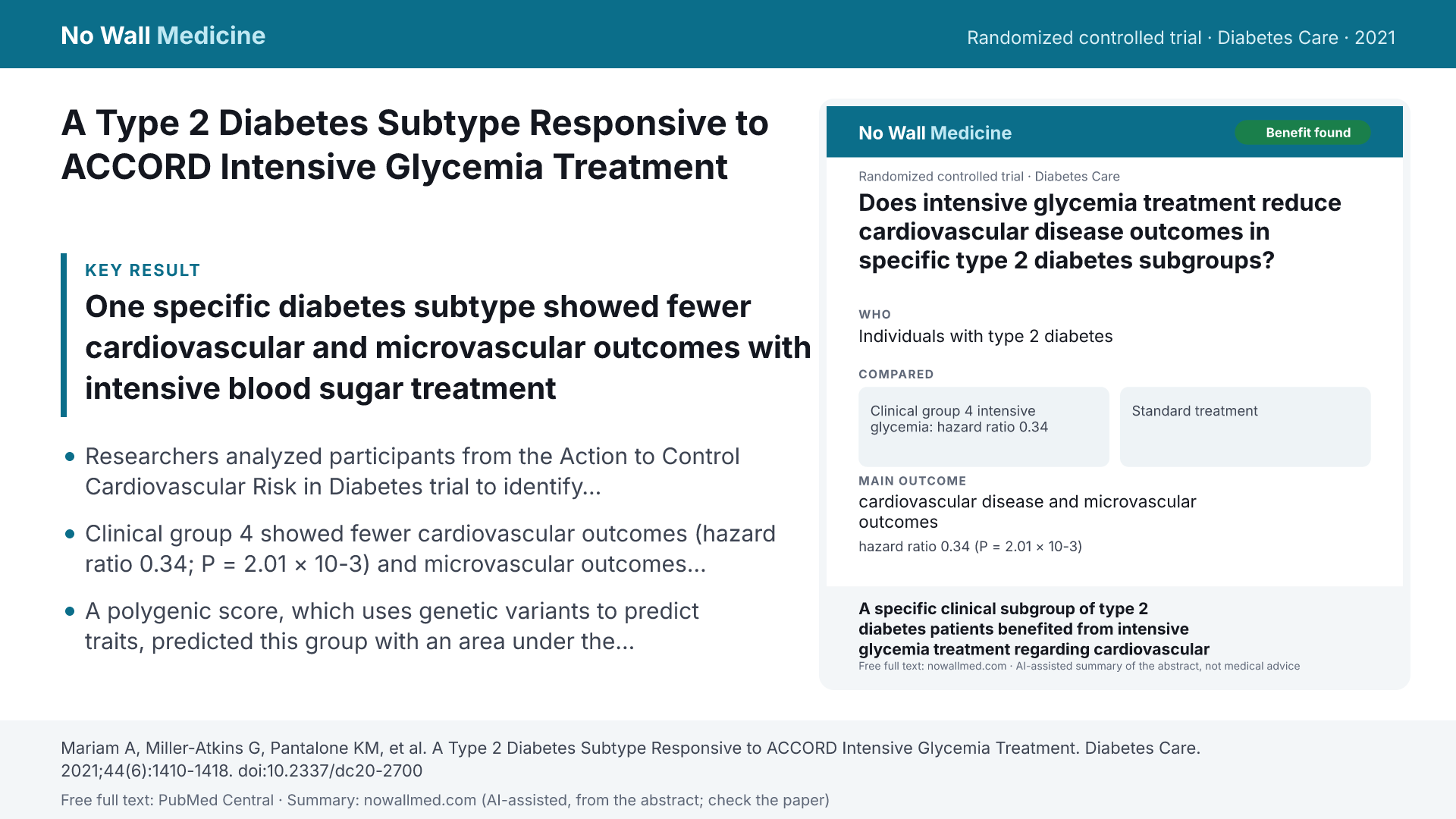
Key result: One specific diabetes subtype showed fewer cardiovascular and microvascular outcomes with intensive blood sugar treatment
Randomized controlled trialBenefit found
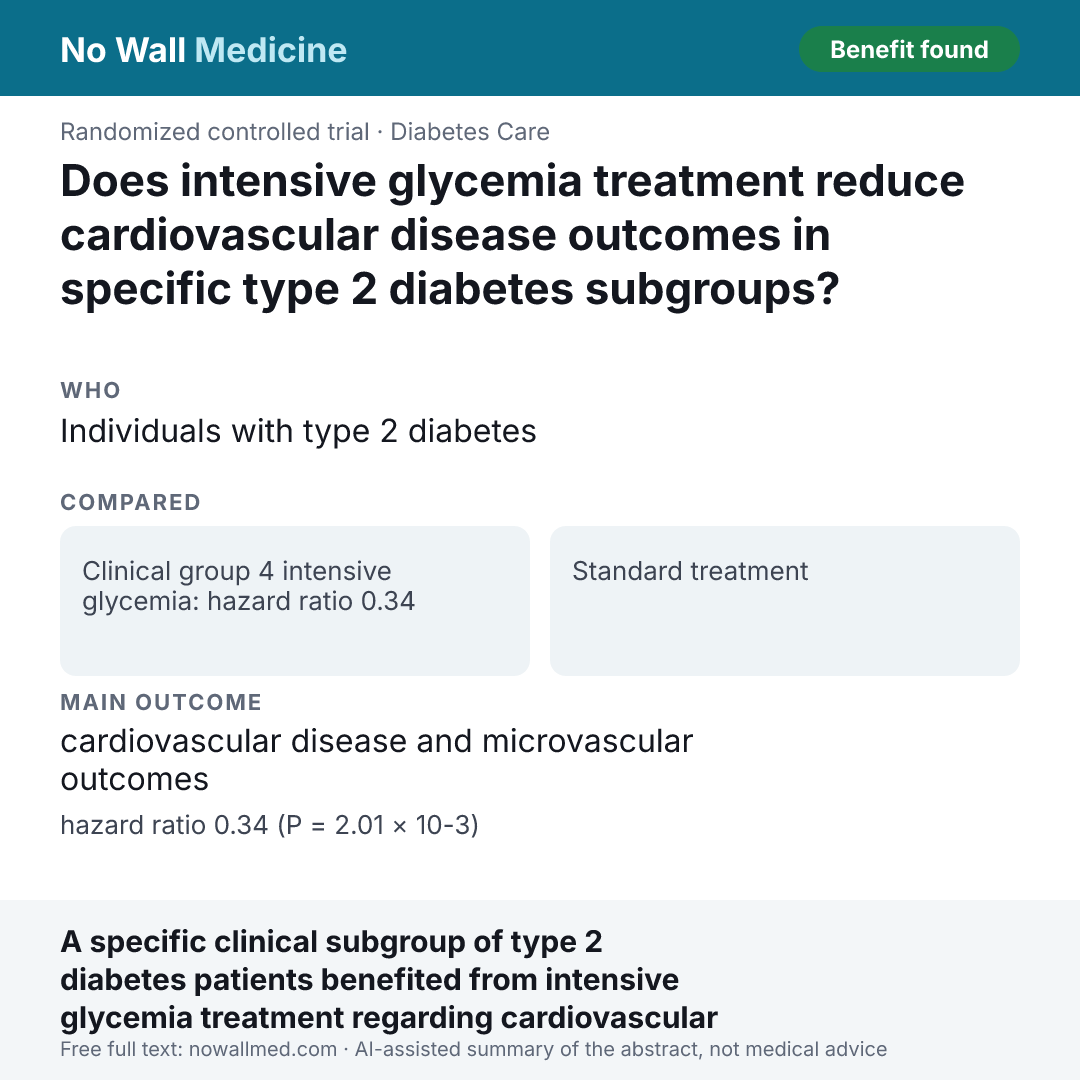
Does intensive glycemia treatment reduce cardiovascular disease outcomes in specific type 2 diabetes subgroups?
Who
Individuals with type 2 diabetes
Compared
Clinical group 4 intensive glycemia: hazard ratio 0.34
Standard treatment
Main outcome
cardiovascular disease and microvascular outcomes
Result: hazard ratio 0.34 (P = 2.01 × 10⁻³)
Bottom line: A specific clinical subgroup of type 2 diabetes patients benefited from intensive glycemia treatment regarding cardiovascular disease outcomes.
Diabetes Care · 2021-04-16 · Save PNG
Key points
- Researchers analyzed participants from the Action to Control Cardiovascular Risk in Diabetes trial to identify clinical groups based on blood sugar trajectories.
- Clinical group 4 showed fewer cardiovascular outcomes (hazard ratio 0.34; P = 2.01 × 10⁻³) and microvascular outcomes (hazard ratio 0.86; P = 0.015) with intensive treatment.
- A polygenic score, which uses genetic variants to predict traits, predicted this group with an area under the receiver operating characteristic curve of 0.98.
Why it matters: Current management guidelines advise against intensive blood sugar control in high-risk type 2 diabetes patients due to potential harms seen in previous trials.
Discussion prompts
- Would these patients look like yours? Who was left out?
- Is the main outcome one that matters to patients?
- Is the difference large enough to change what you do?
Cite: Mariam A, Miller-Atkins G, Pantalone KM, et al. A Type 2 Diabetes Subtype Responsive to ACCORD Intensive Glycemia Treatment. Diabetes Care. 2021;44(6):1410-1418. doi:10.2337/dc20-2700
Free full text: PubMed Central · Summary and visual abstract: nowallmed.com/a/a-type-2-diabetes-subtype-responsive-to-accord-intensive-glycemia-1yyh6b5/ (AI-assisted from the abstract; check the paper before relying on it).