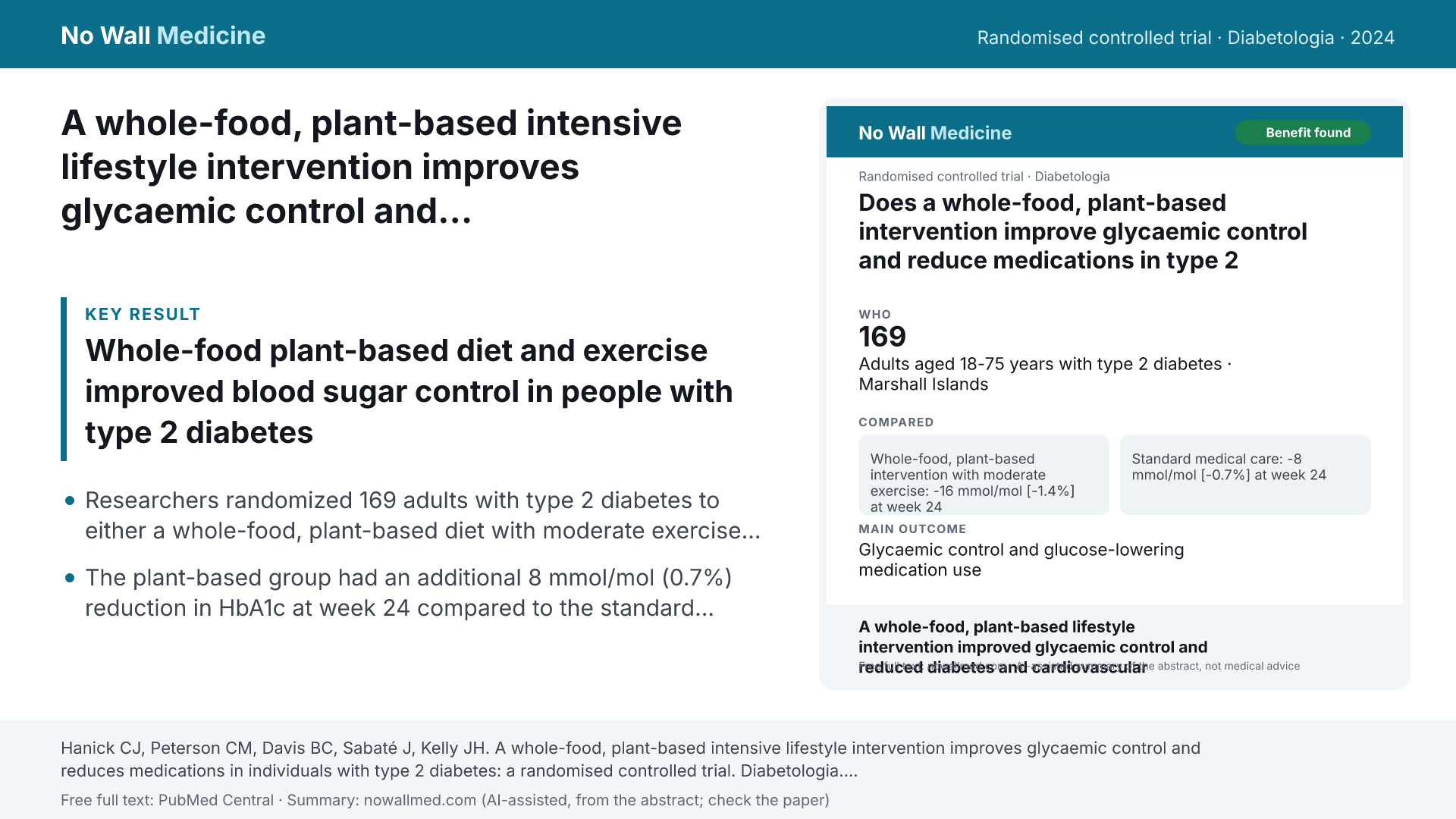
Whole-food plant-based diet and exercise improved blood sugar control in people with type 2 diabetes
A whole-food, plant-based intensive lifestyle intervention improves glycaemic control and reduces medications in individuals with type 2 diabetes: a randomised controlled trial
Randomised controlled trialBenefit found
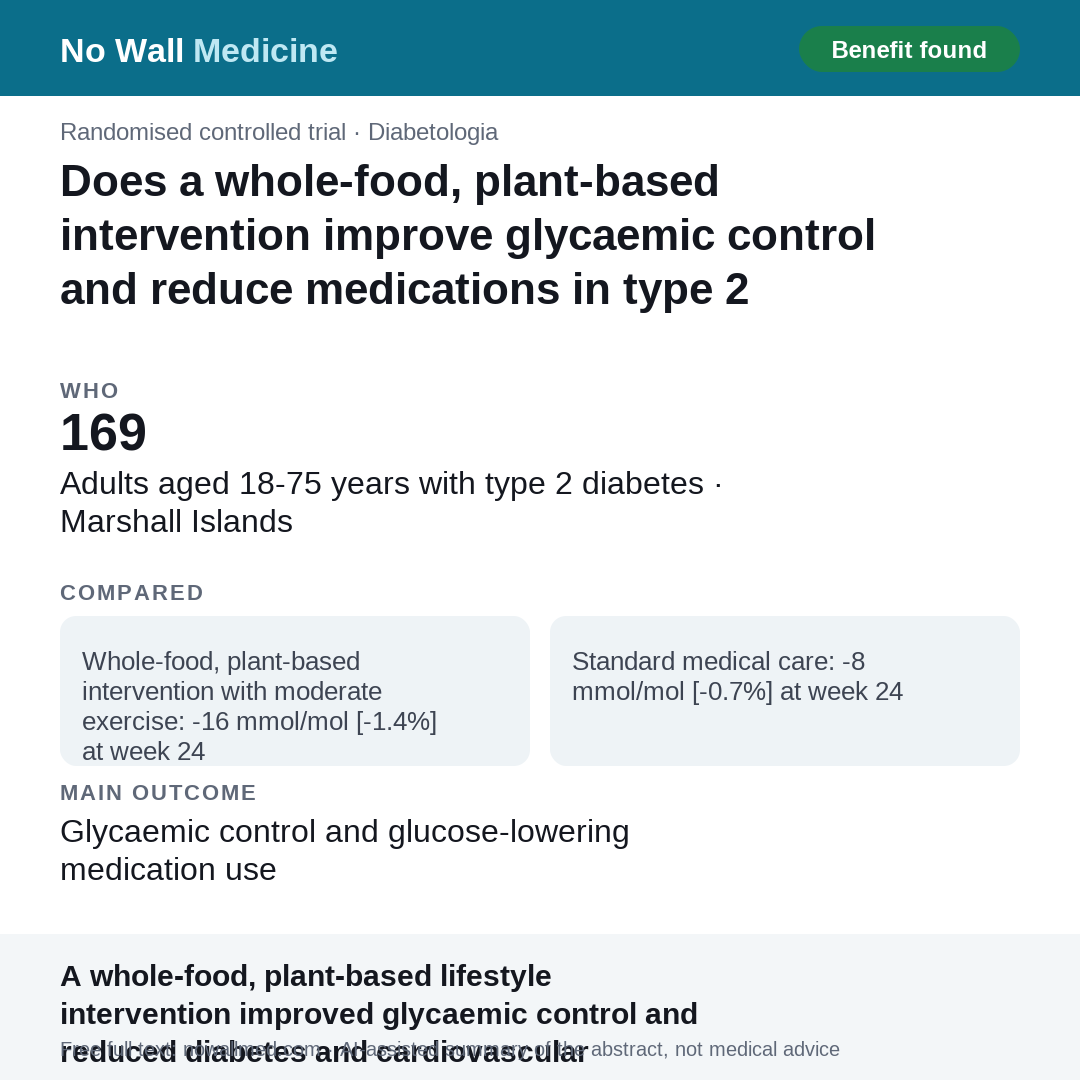
Does a whole-food, plant-based intervention improve glycaemic control and reduce medications in type 2 diabetes?
Who
169
Adults aged 18-75 years with type 2 diabetes · Marshall Islands
Compared
Whole-food, plant-based intervention with moderate exercise: -16 mmol/mol [-1.4%] at week 24
Standard medical care: -8 mmol/mol [-0.7%] at week 24
Main outcome
Glycaemic control and glucose-lowering medication use
Bottom line: A whole-food, plant-based lifestyle intervention improved glycaemic control and reduced diabetes and cardiovascular medication use.
Funded by: Department of the Army
Diabetologia · 2024-09-21Download image
Clinical question: Does a whole-food, plant-based intervention improve glycaemic control and reduce medications in type 2 diabetes?
Why it matters: It was unknown if a whole-food, plant-based intensive lifestyle intervention is more effective than standard medical care for managing type 2 diabetes.
Key points
- Researchers randomized 169 adults with type 2 diabetes to either a whole-food, plant-based diet with moderate exercise or standard medical care for 24 weeks.
- The plant-based group had an additional 8 mmol/mol (0.7%) reduction in HbA1c at week 24 compared to the standard care group.
- Among those taking medication, 63% of the plant-based group reduced their glucose-lowering medications compared to 24% in the standard care group.
Headline and key points written with AI from the paper’s abstract, with every number checked against it. Read the paper before relying on them.
Was this summary helpful?
Subject terms
Cite this article
Hanick CJ, Peterson CM, Davis BC, Sabaté J, Kelly JH. A whole-food, plant-based intensive lifestyle intervention improves glycaemic control and reduces medications in individuals with type 2 diabetes: a randomised controlled trial. Diabetologia. 2024. doi:10.1007/s00125-024-06272-8
Spotted a mistake? Suggest a correction
Top studies every Monday
The week’s key trials and guidelines in your specialties, plus any topics you follow. By email, free.
Get the weekly digest