Acceptance and commitment therapy improves quality of life and reduces helplessness in breast cancer patients
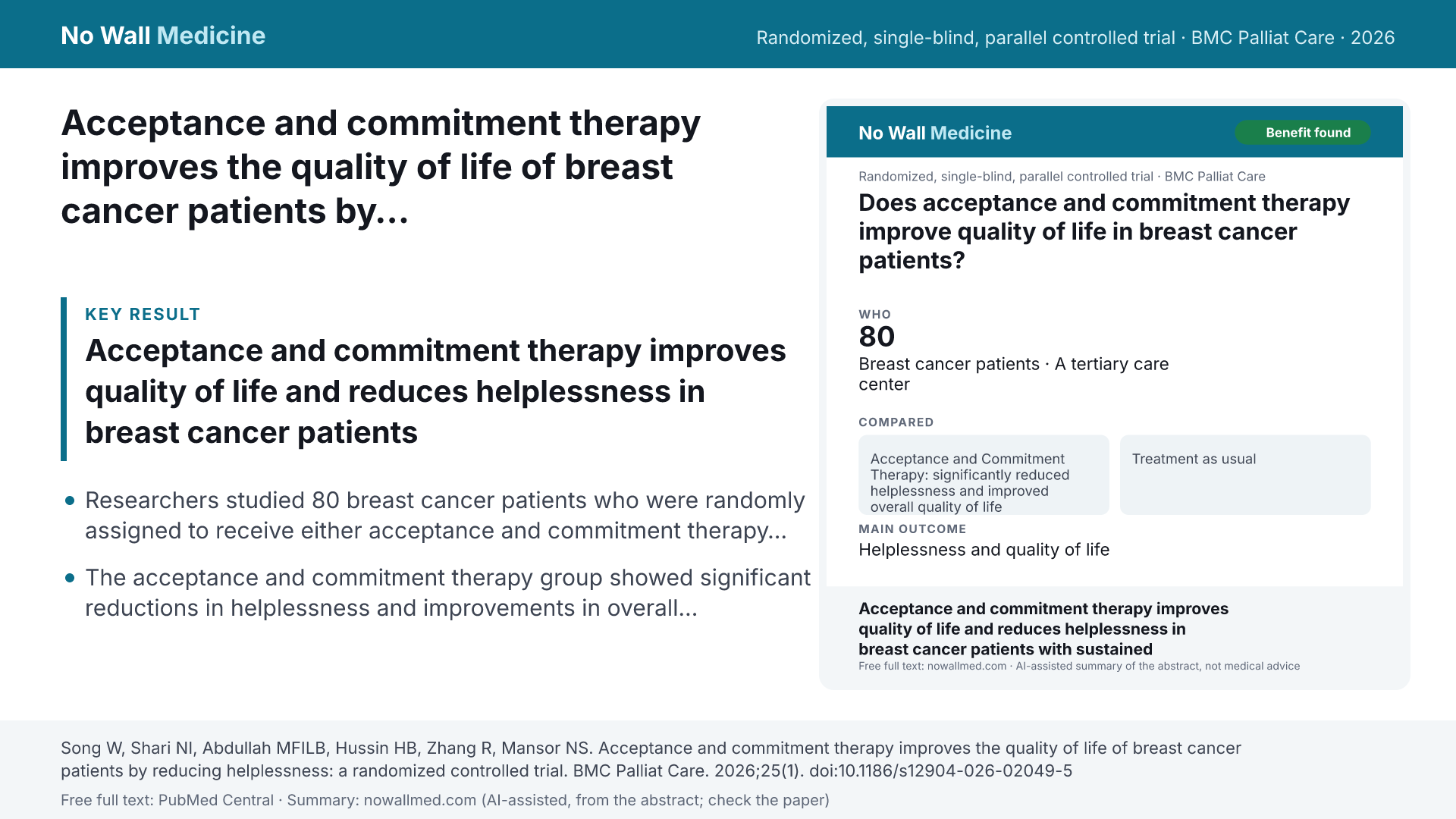
Acceptance and commitment therapy improves the quality of life of breast cancer patients by reducing helplessness: a randomized controlled trial
Randomized, single-blind, parallel controlled trialBenefit found
Does acceptance and commitment therapy improve quality of life in breast cancer patients?
Who
80
Breast cancer patients · A tertiary care center
Compared
Acceptance and Commitment Therapy: significantly reduced helplessness and improved overall quality of life
Treatment as usual
Main outcome
Helplessness and quality of life
Bottom line: Acceptance and commitment therapy improves quality of life and reduces helplessness in breast cancer patients with sustained effects.
BMC Palliat Care · 2026-03-05 · Save PNG
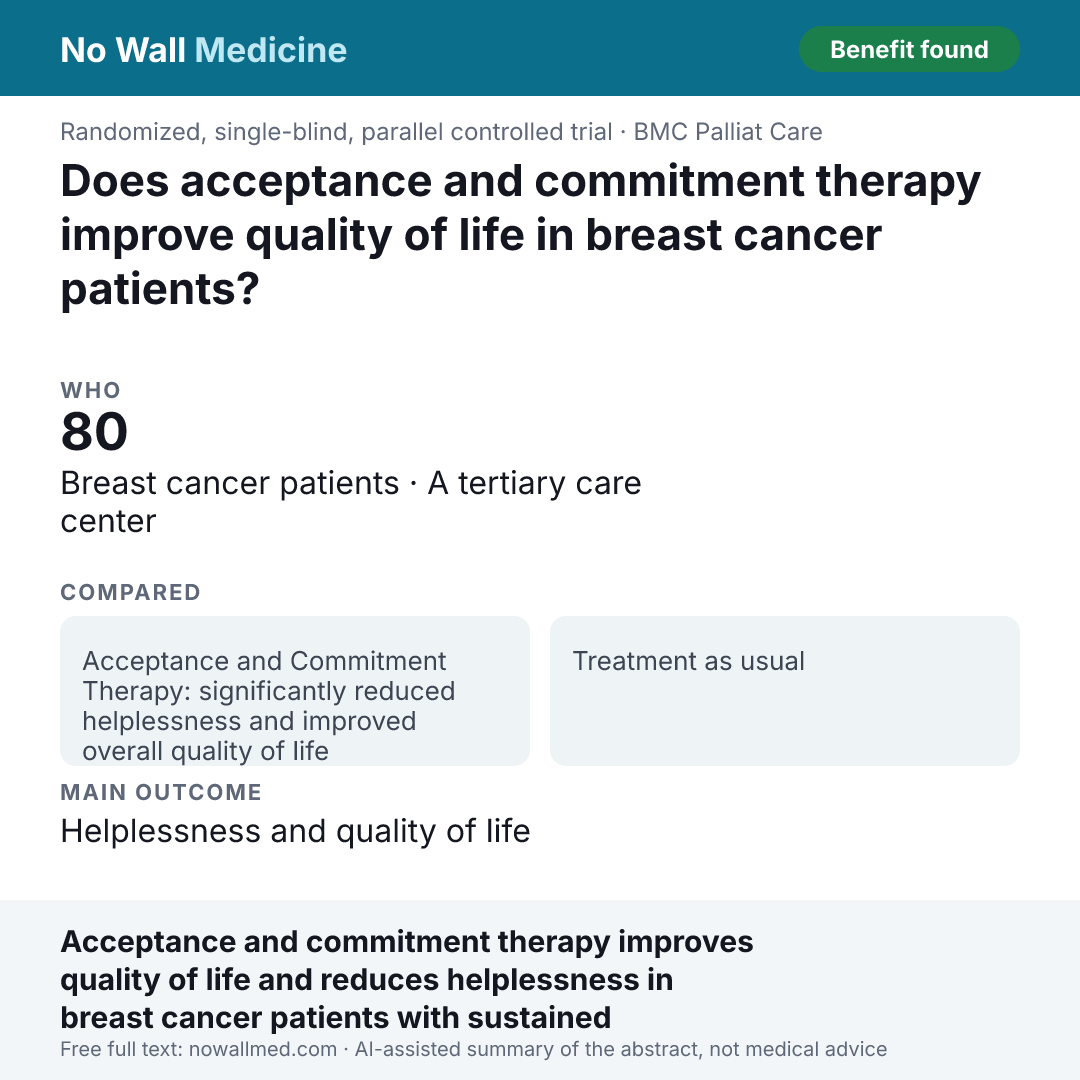
Clinical question: Does acceptance and commitment therapy improve quality of life in breast cancer patients?
Why it matters: The role of acceptance and commitment therapy in targeting helplessness and enhancing quality of life in breast cancer patients has not been fully established.
Key points
- Researchers studied 80 breast cancer patients who were randomly assigned to receive either acceptance and commitment therapy or treatment-as-usual.
- The acceptance and commitment therapy group showed significant reductions in helplessness and improvements in overall quality of life compared to the usual care group.
- The improvements in quality of life and reductions in helplessness were maintained at a 12-week follow-up assessment.
Headline and key points written with AI from the paper’s abstract, with every number checked against it. Read the paper before relying on them.
Was this summary helpful?
Subject terms
Headline, design, result, key points, caveat and citation as plain text.
Cite this article
Song W, Shari NI, Abdullah MFILB, Hussin HB, Zhang R, Mansor NS. Acceptance and commitment therapy improves the quality of life of breast cancer patients by reducing helplessness: a randomized controlled trial. BMC Palliat Care. 2026;25(1). doi:10.1186/s12904-026-02049-5
Spotted a mistake? Suggest a correction