Scheduled acetaminophen and ibuprofen resulted in lower temperatures and fewer seizures in children with malaria
Acetaminophen and Ibuprofen in Pediatric Central Nervous System Malaria: A Randomized Clinical Trial
Randomized clinical trialBenefit found
Does aggressive antipyretic therapy compare to usual care in pediatric central nervous system malaria?
Who
256
Children aged 2 to 11 years with central nervous system malaria · Hospitals in Zambia and Malawi
Compared
Aggressive antipyretic therapy: 38.6 °C
Usual care: 39.2 °C
Main outcome
Maximum temperature over 72 hours
Result: difference, -0.62 °C (95% CI, -0.82 to -0.42)
Bottom line: Aggressive antipyretic therapy reduced maximum temperature and improved acute seizure outcomes in children with central nervous system malaria.
JAMA Neurol · 2024-06-10Download image
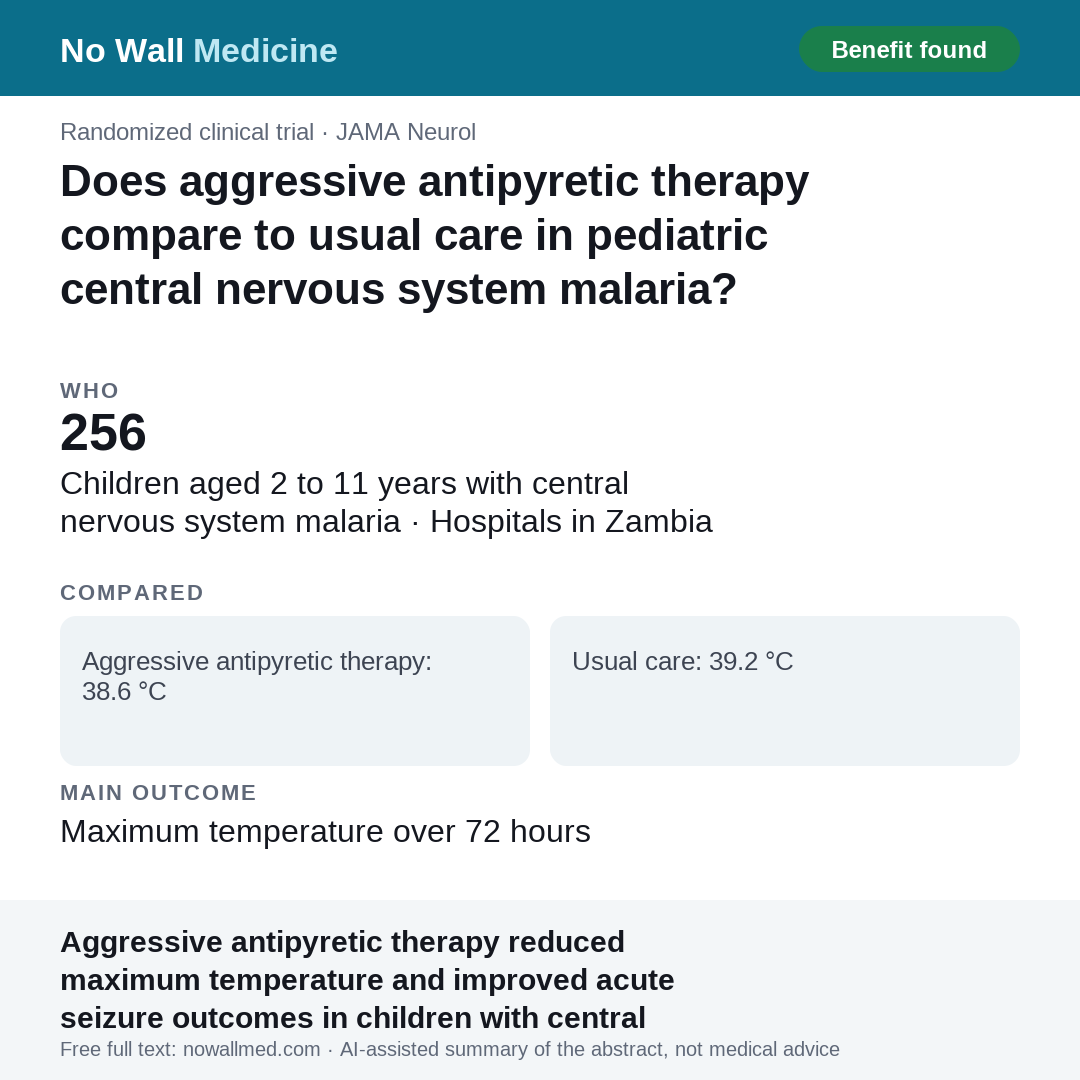
Clinical question: Does aggressive antipyretic therapy compare to usual care in pediatric central nervous system malaria?
Why it matters: It is unknown if aggressive fever management using scheduled acetaminophen and ibuprofen improves temperature control or seizure outcomes in children with central nervous system malaria.
Key points
- Researchers studied 256 children aged 2 to 11 years with central nervous system malaria in Zambia and Malawi.
- The aggressive therapy group had a lower maximum temperature of 38.6 °C compared to 39.2 °C in the usual care group.
- The aggressive group had lower odds of multiple or prolonged seizures, with 10 (8%) compared to 34 (27%) in the usual care group.
Headline and key points written with AI from the paper’s abstract, with every number checked against it. Read the paper before relying on them.
Was this summary helpful?
Subject terms
Cite this article
Birbeck GL, Seydel KB, Mwanza S, Tembo D, Chilombe M, Watts A. Acetaminophen and Ibuprofen in Pediatric Central Nervous System Malaria: A Randomized Clinical Trial. JAMA Neurol. 2024. doi:10.1001/jamaneurol.2024.1677
Spotted a mistake? Suggest a correction
Top studies every Monday
The week’s key trials and guidelines in your specialties, plus any topics you follow. By email, free.
Get the weekly digest