Intensive blood pressure control was achieved in 62.5% of participants in the ESPRIT trial
Achieving Intensive Blood Pressure Control in High-Risk Patients: Implementation Insights From the ESPRIT Trial
Analysis of the ESPRIT trialBenefit found
Is targeting systolic blood pressure below 120 mm Hg achievable and effective in high-risk patients?
Who
11255
Diverse hypertensive patients with high cardiovascular risk
Compared
Intensive arm: 62.5% achieved intensive blood pressure control
Standard arm
Main outcome
Achieved average blood pressure and major vascular events
Bottom line: Sustaining systolic blood pressure below 120 mm Hg is achievable with modest additional medical resources in high-risk patients.
JACC · 2026-04-01Download image
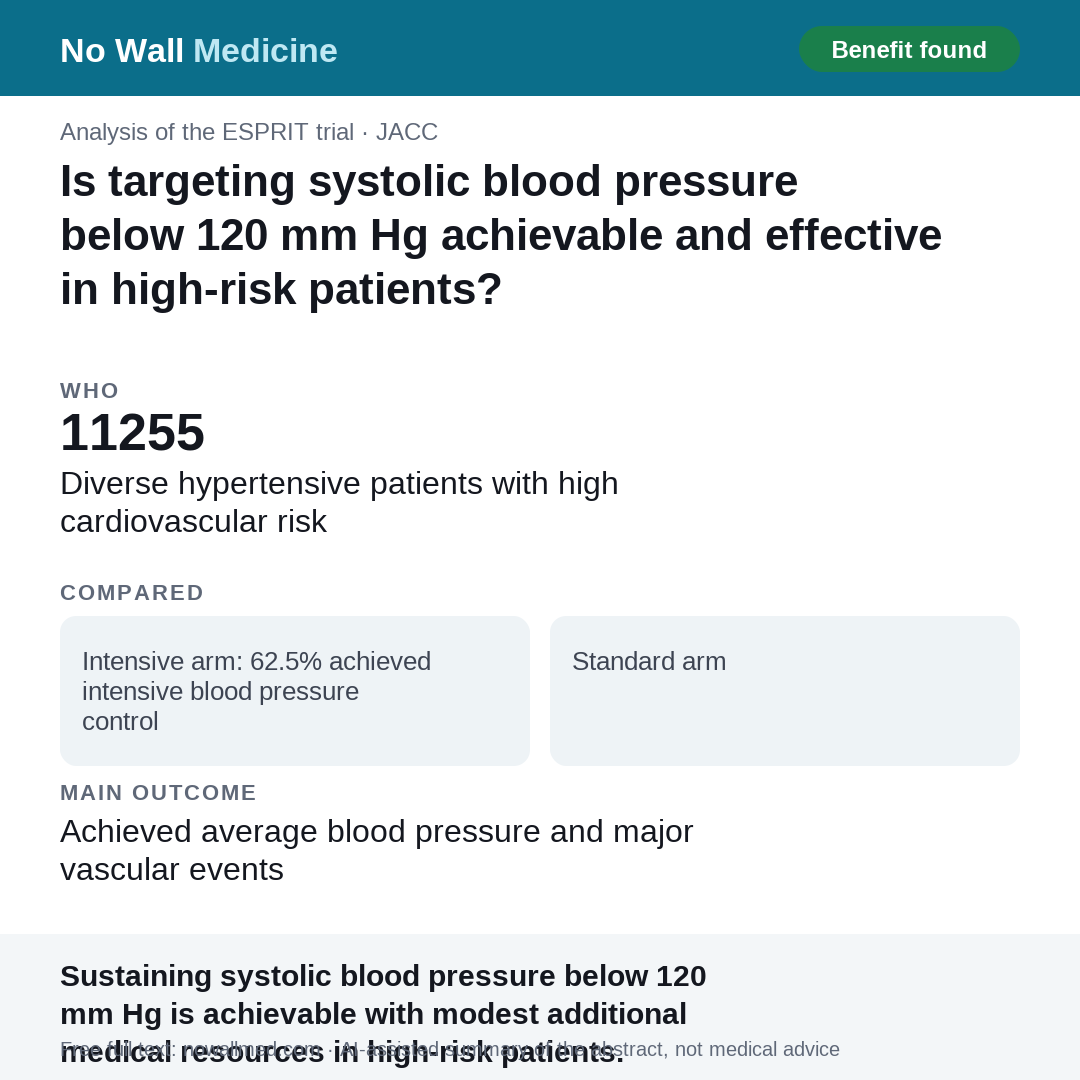
Clinical question: Is targeting systolic blood pressure below 120 mm Hg achievable and effective in high-risk patients?
Why it matters: Rigorous evidence is lacking on how to implement targeting systolic blood pressure below 120 mm Hg in real-world settings.
Key points
- Researchers analyzed 11,255 participants with high cardiovascular risk to see how well they could reach a systolic blood pressure of less than 120 mm Hg.
- The median systolic blood pressure in the intensive group was 117 mm Hg, and it took a median of 62 days to reach this intensive control.
- Male patients, those with obesity or diabetes, and those with a longer history of high blood pressure were less likely to achieve sustained intensive control.
Headline and key points written with AI from the paper’s abstract, with every number checked against it. Read the paper before relying on them.
Topics
Cite this article
Peng Y, Li Y, Li S, Zhang L, Zhao L, Liu J. Achieving Intensive Blood Pressure Control in High-Risk Patients: Implementation Insights From the ESPRIT Trial. JACC. 2026. doi:10.1016/j.jacc.2026.01.083
Spotted a mistake? Suggest a correction