Acquired Genomic Alterations on First-Line Chemotherapy With Cetuximab in Advanced Colorectal Cancer: Circulating Tumor DNA Analysis of the CALGB/SWOG-80405 Trial (Alliance)
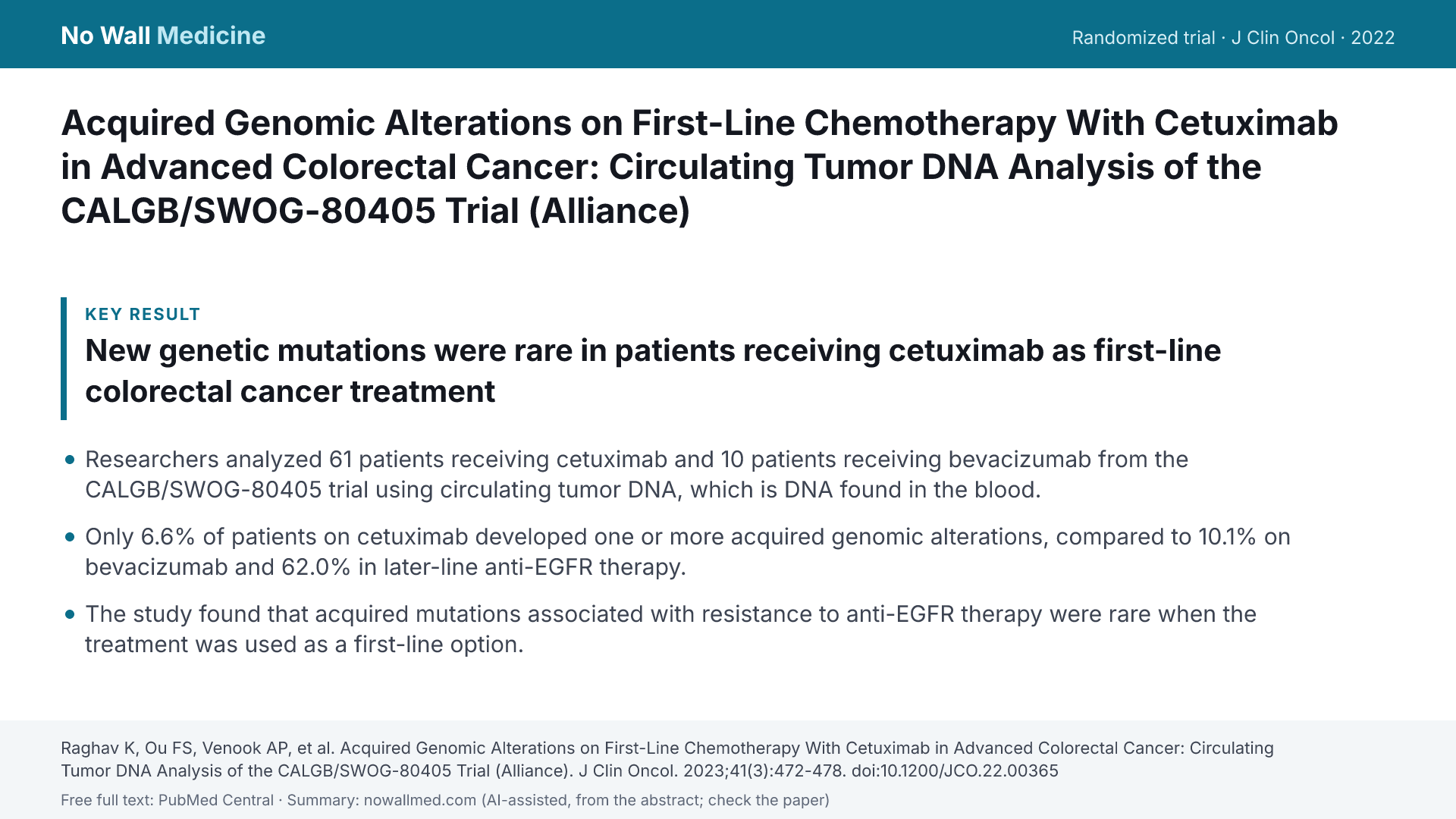
Key result: New genetic mutations were rare in patients receiving cetuximab as first-line colorectal cancer treatment
Key points
- Researchers analyzed 61 patients receiving cetuximab and 10 patients receiving bevacizumab from the CALGB/SWOG-80405 trial using circulating tumor DNA, which is DNA found in the blood.
- Only 6.6% of patients on cetuximab developed one or more acquired genomic alterations, compared to 10.1% on bevacizumab and 62.0% in later-line anti-EGFR therapy.
- The study found that acquired mutations associated with resistance to anti-EGFR therapy were rare when the treatment was used as a first-line option.
Why it matters: It was unknown if acquired genomic alterations emerge under the selective pressure of first-line anti-EGFR-chemotherapy in metastatic colorectal cancer.
Discussion prompts
- Would these patients look like yours? Who was left out?
- Is the main outcome one that matters to patients?
- Is the difference large enough to change what you do?
Cite: Raghav K, Ou FS, Venook AP, et al. Acquired Genomic Alterations on First-Line Chemotherapy With Cetuximab in Advanced Colorectal Cancer: Circulating Tumor DNA Analysis of the CALGB/SWOG-80405 Trial (Alliance). J Clin Oncol. 2022. doi:10.1200/JCO.22.00365
Free full text: PubMed Central · Summary and visual abstract: nowallmed.com/a/acquired-genomic-alterations-on-first-line-chemotherapy-with-5cnh5u/ (AI-assisted from the abstract; check the paper before relying on it).