Addressing chronic pain with Focused Acceptance and Commitment Therapy in integrated primary care: findings from a mixed methods pilot randomized controlled trial
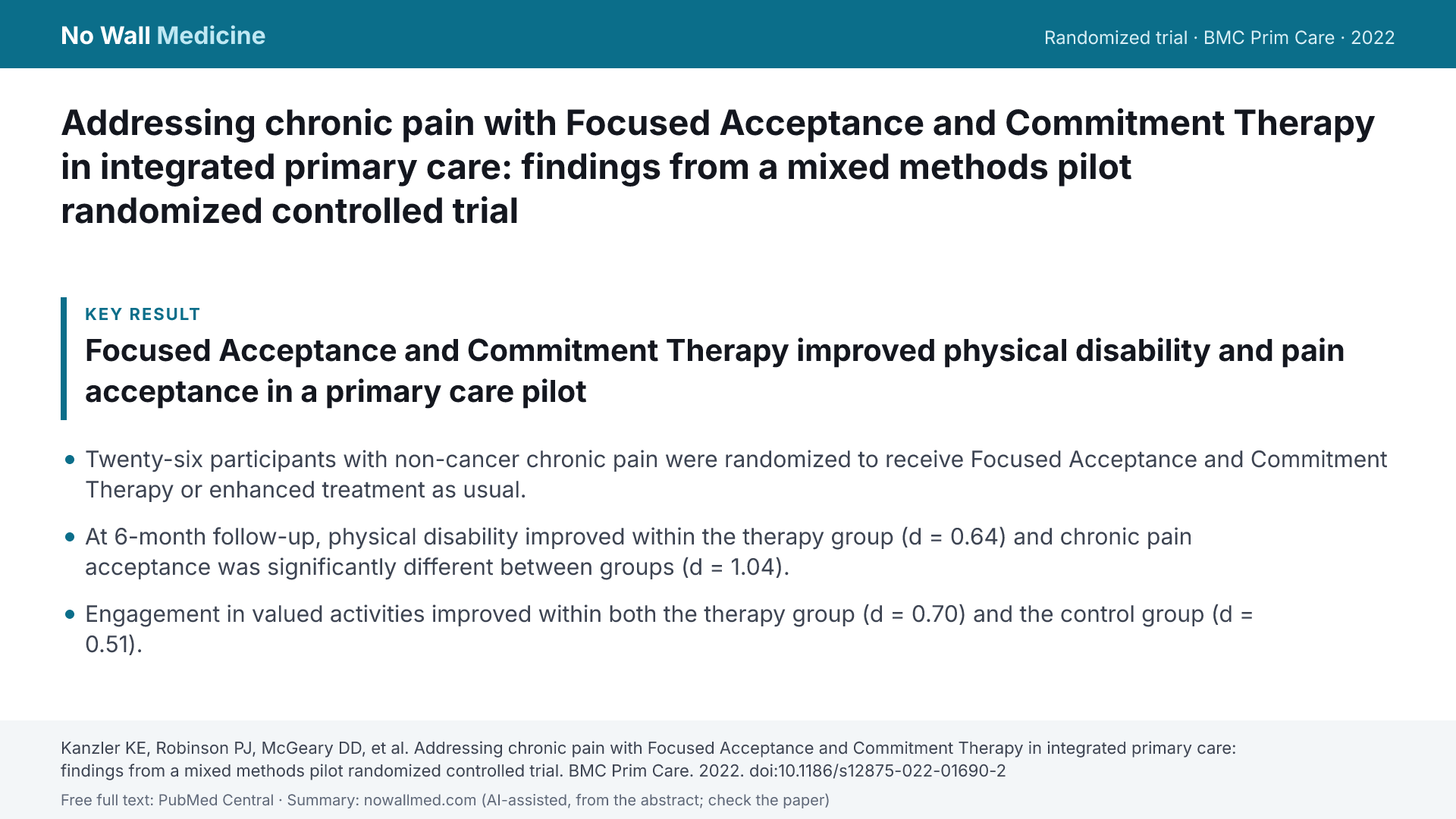
Key result: Focused Acceptance and Commitment Therapy improved physical disability and pain acceptance in a primary care pilot
Key points
- Twenty-six participants with non-cancer chronic pain were randomized to receive Focused Acceptance and Commitment Therapy or enhanced treatment as usual.
- At 6-month follow-up, physical disability improved within the therapy group (d = 0.64) and chronic pain acceptance was significantly different between groups (d = 1.04).
- Engagement in valued activities improved within both the therapy group (d = 0.70) and the control group (d = 0.51).
Why it matters: Evidence-based behavioral treatments targeting pain-related disability are not typically provided in primary care settings where most people with chronic pain receive treatment.
Limitation the authors note: The authors state that a larger pragmatic trial is warranted based on the data gathered in this pilot.
Discussion prompts
- Would these patients look like yours? Who was left out?
- Is the main outcome one that matters to patients?
- Is the difference large enough to change what you do?
Cite: Kanzler KE, Robinson PJ, McGeary DD, et al. Addressing chronic pain with Focused Acceptance and Commitment Therapy in integrated primary care: findings from a mixed methods pilot randomized controlled trial. BMC Prim Care. 2022. doi:10.1186/s12875-022-01690-2
Free full text: PubMed Central · Summary and visual abstract: nowallmed.com/a/addressing-chronic-pain-with-focused-acceptance-and-commitment-163j6og/ (AI-assisted from the abstract; check the paper before relying on it).