Adherence to and persistence with antidiabetic medications and associations with clinical and economic outcomes in people with type 2 diabetes mellitus: A systematic literature review
Systematic literature reviewBenefit found
How do antidiabetic medication adherence and persistence associate with clinical and economic outcomes?
Who
Adults with type 2 diabetes · United States
Compared
Adherent or persistent patients
Less adherent or persistent patients
Main outcome
Glycaemic control, complications, hospitalizations, and healthcare costs
Bottom line: Better adherence and persistence associate with fewer complications, fewer hospitalizations, and lower or budget-neutral total healthcare costs.
Diabetes Obes Metab · 2021-12-09Download image
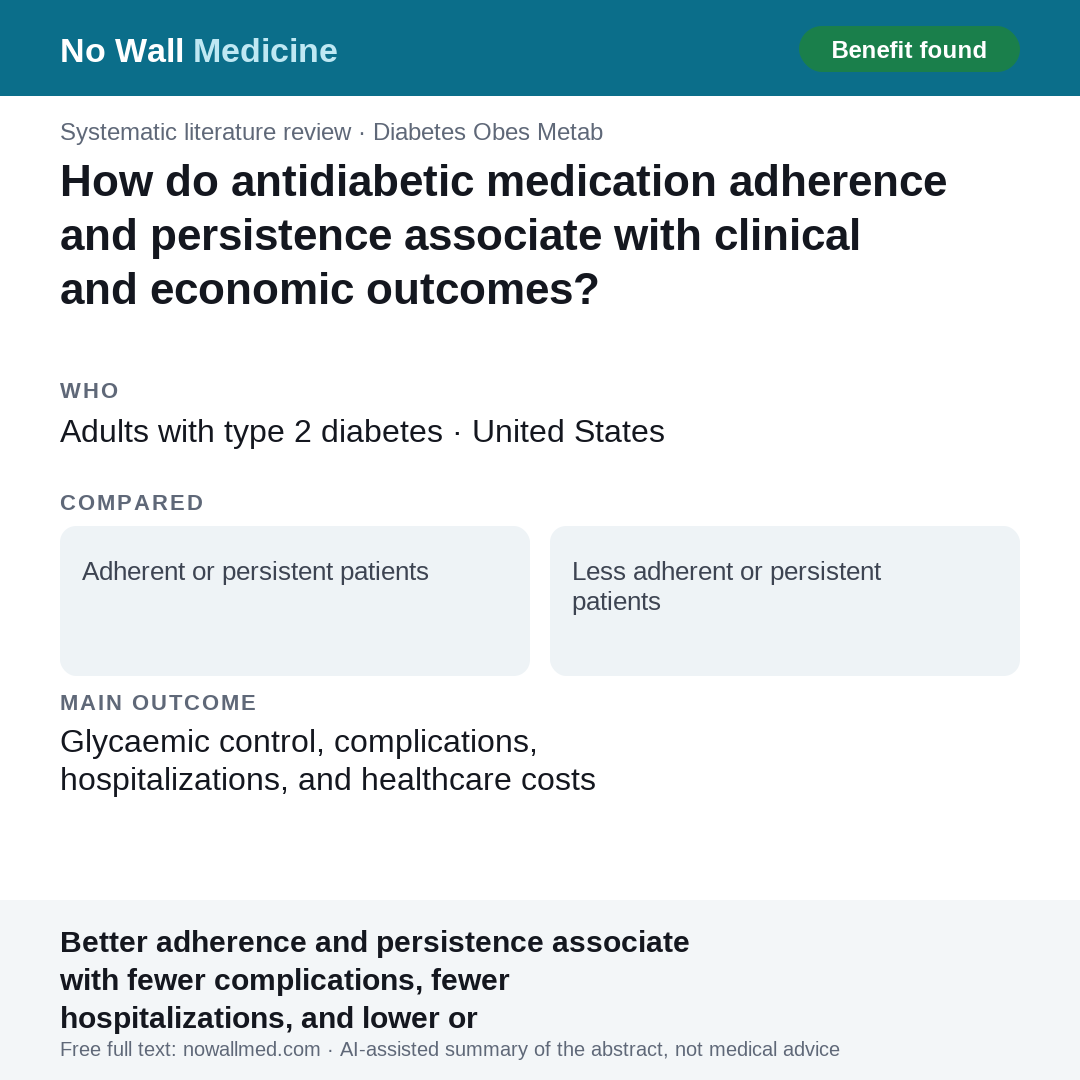
Clinical question: How do antidiabetic medication adherence and persistence associate with clinical and economic outcomes?
Abstract
We designed a systematic literature review to identify available evidence on adherence to and persistence with antidiabetic medication in people with type 2 diabetes (T2D). Electronic screening and congress searches identified real-world noninterventional studies (published between 2010 and October 2020) reporting estimates of adherence to and persistence with antidiabetic medication in adults with T2D, and associations with glycaemic control, microvascular and/or macrovascular complications, hospitalizations and healthcare costs. Ninety-two relevant studies were identified, the majority of which were retrospective and reported US data. The proportions of patients considered adherent (median [range] 51.2% [9.4%-84.3%]) or persistent (median [range] 47.7% [16.9%-94.0%]) varied widely across studies. Multiple studies reported an association between greater adherence/persistence and greater reductions in glycated haemoglobin levels. Better adherence/persistence was associated with fewer microvascular and/or macrovascular outcomes, although there was little consistency across studies in terms of which outcomes were improved. More adherent and more persistent patients were typically less likely to be hospitalized or to have emergency department visits/admissions and spent fewer days in hospital annually than less adherent/persistent patients. Greater adherence and persistence were generally associated with lower hospitalization costs, higher pharmacy costs and lower or budget-neutral total healthcare costs compared with lower adherence/persistence. In conclusion, better adherence and persistence in people with T2D is associated with lower rates of microvascular and/or macrovascular outcomes and inpatient hospitalization, and lower or budget-neutral total healthcare expenditure. Education and treatment strategies to address suboptimal adherence and persistence are needed to improve clinical and economic outcomes.
Subject terms
Cite this article
Evans M, Engberg S, Faurby M, Fernandes JDDR, Hudson P, Polonsky W. Adherence to and persistence with antidiabetic medications and associations with clinical and economic outcomes in people with type 2 diabetes mellitus: A systematic literature review. Diabetes Obes Metab. 2021. doi:10.1111/dom.14603
Spotted a mistake? Suggest a correction
Top studies every Monday
The week’s key trials and guidelines in your specialties, plus any topics you follow. By email, free.
Get the weekly digest