Adipose tissue dysfunction is associated with metabolic and inflammation abnormalities in polycystic ovary syndrome
Adipose Tissue Dysfunction in Polycystic Ovary Syndrome
Systematic reviewUnclear result
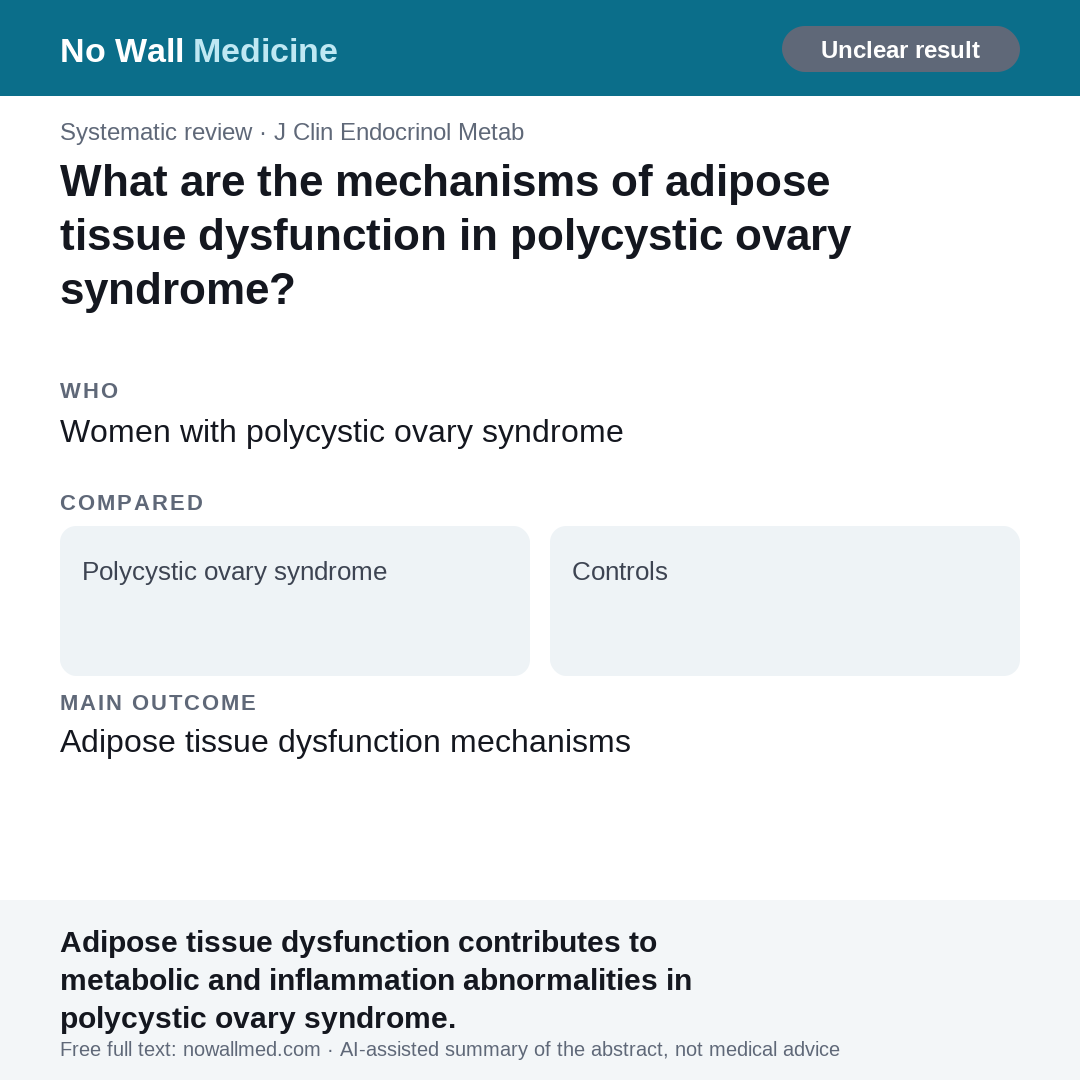
What are the mechanisms of adipose tissue dysfunction in polycystic ovary syndrome?
Who
Women with polycystic ovary syndrome
Compared
Polycystic ovary syndrome
Controls
Main outcome
Adipose tissue dysfunction mechanisms
Bottom line: Adipose tissue dysfunction contributes to metabolic and inflammation abnormalities in polycystic ovary syndrome.
Limitation: Many studies provided contradictory, unclear, or limited data.
J Clin Endocrinol Metab · 2023-06-17Download image
Clinical question: What are the mechanisms of adipose tissue dysfunction in polycystic ovary syndrome?
Why it matters: It is unclear how adipose tissue dysfunction contributes to the metabolic and inflammation abnormalities seen in polycystic ovary syndrome, especially in patients without excess body fat.
Key points
- Researchers conducted a systematic review of studies assessing adipose tissue—the body's fat tissue—function in women with polycystic ovary syndrome.
- Findings showed that decreased glucose transporter-4 expression in fat cells was a consistent abnormality, leading to less insulin-mediated glucose transport.
- The review identified multiple mechanisms including impaired insulin signaling, subacute inflammation, and mitochondrial dysfunction in the fat tissue of these patients.
Limitation the authors note: Many studies provided contradictory, unclear, or limited data.
Headline and key points written with AI from the paper’s abstract, with every number checked against it. Read the paper before relying on them.
Topics
Cite this article
Bril F, Ezeh U, Amiri M, Hatoum S, Pace L, Chen YH. Adipose Tissue Dysfunction in Polycystic Ovary Syndrome. J Clin Endocrinol Metab. 2023. doi:10.1210/clinem/dgad356
Spotted a mistake? Suggest a correction
Top studies every Monday
The week’s key trials and guidelines in your specialties, plus any topics you follow. By email, free.
Get the weekly digest