Adjunctive Dexamethasone for Tuberculous Meningitis in HIV-Positive Adults
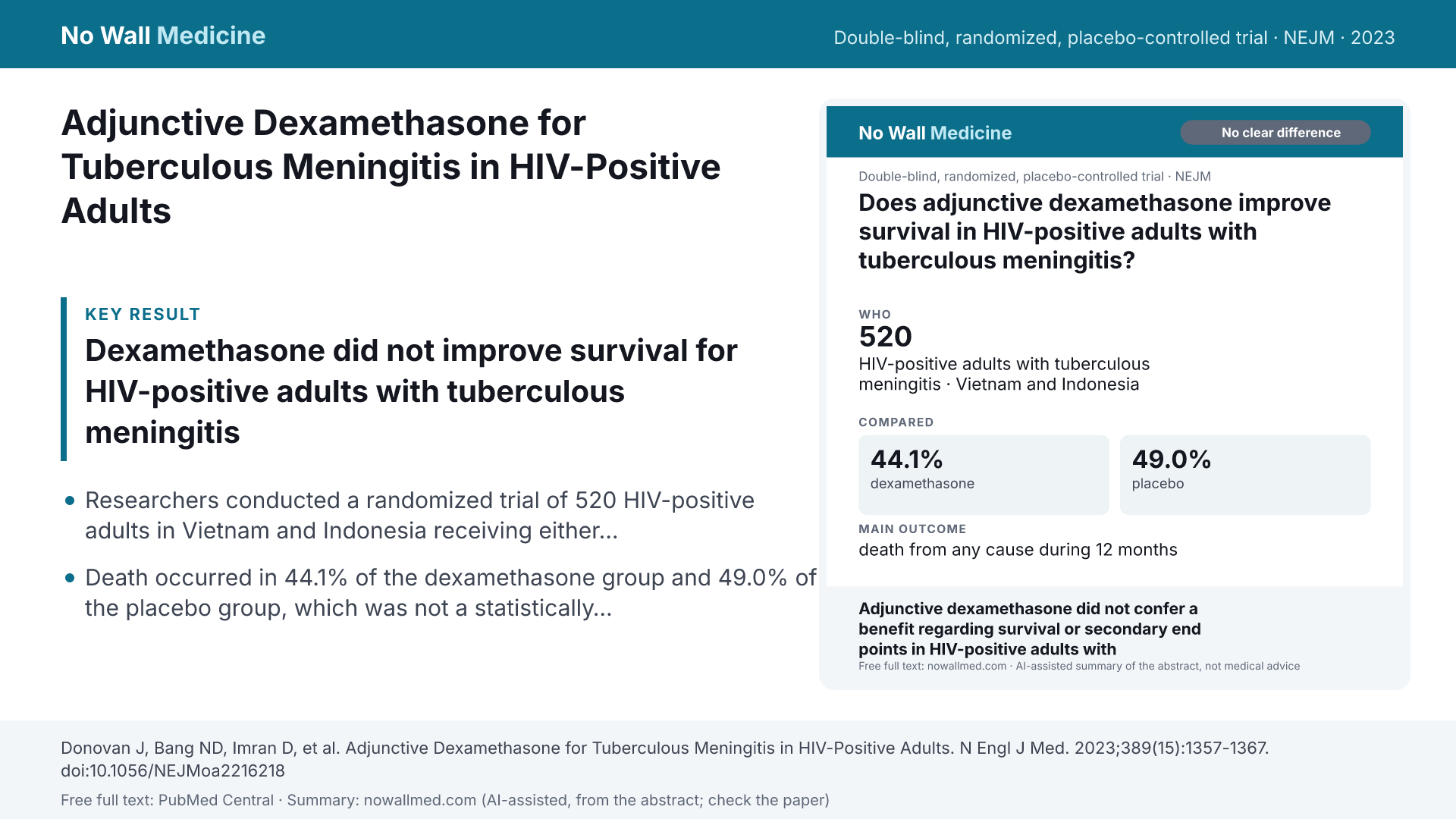
Key result: Dexamethasone did not improve survival for HIV-positive adults with tuberculous meningitis
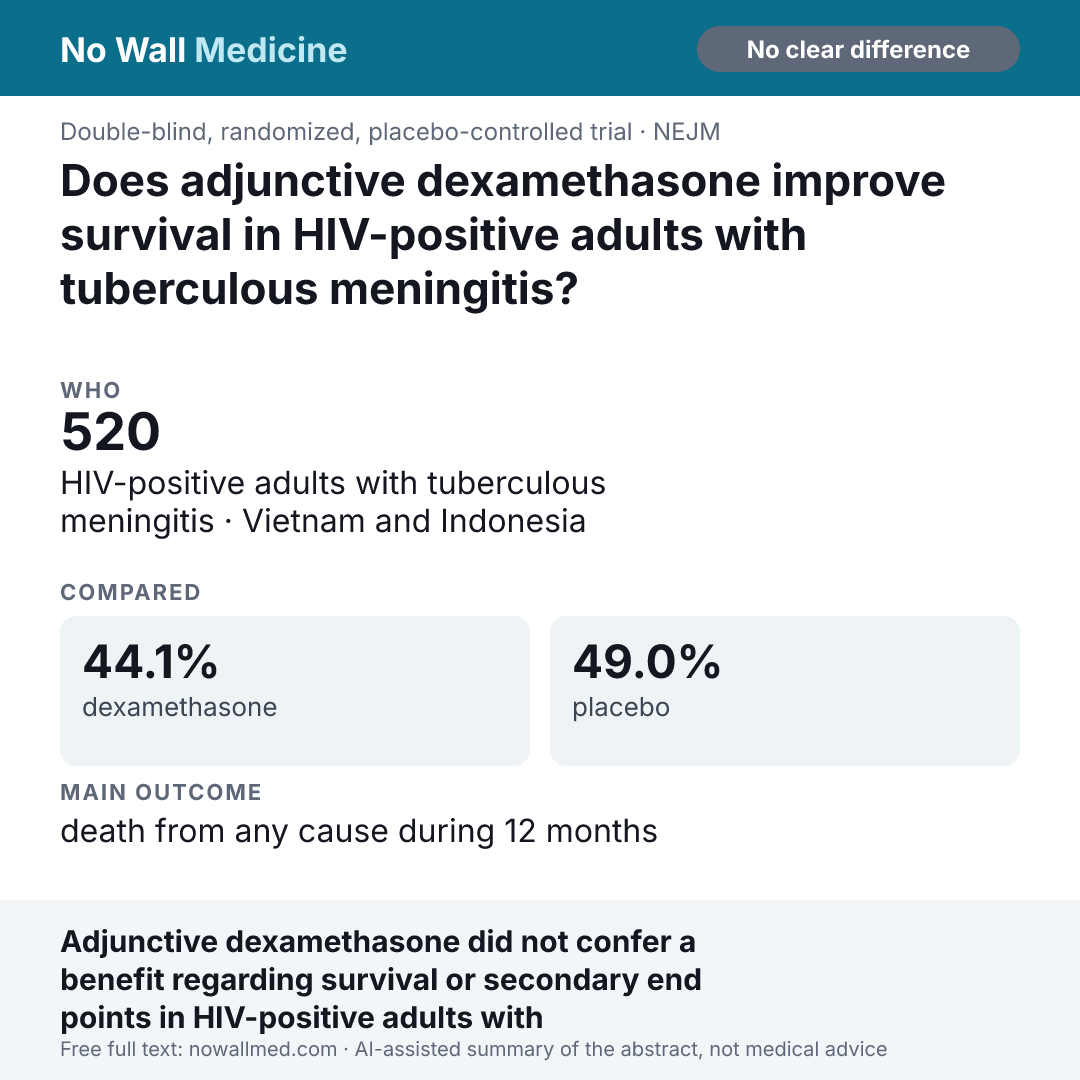
Double-blind, randomized, placebo-controlled trialNo clear difference
Does adjunctive dexamethasone improve survival in HIV-positive adults with tuberculous meningitis?
Who
520
HIV-positive adults with tuberculous meningitis · Vietnam and Indonesia
Compared
44.1%dexamethasone
49.0%placebo
Main outcome
death from any cause during 12 months
Result: hazard ratio 0.85 (95% confidence interval, 0.66 to 1.10)
Bottom line: Adjunctive dexamethasone did not confer a benefit regarding survival or secondary end points in HIV-positive adults with tuberculous meningitis.
Funded by: Wellcome Trust
NEJM · 2023-10-11 · Save PNG
Key points
- Researchers conducted a randomized trial of 520 HIV-positive adults in Vietnam and Indonesia receiving either dexamethasone or a placebo alongside 12 months of tuberculosis treatment.
- Death occurred in 44.1% of the dexamethasone group and 49.0% of the placebo group, which was not a statistically significant difference.
- The incidence of serious adverse events was similar between the dexamethasone group (73.0%) and the placebo group (75.5%).
Why it matters: Glucocorticoids are widely used to treat human immunodeficiency virus-associated tuberculous meningitis despite limited data regarding their safety and efficacy.
Discussion prompts
- Would these patients look like yours? Who was left out?
- Is the main outcome one that matters to patients?
- Is the difference large enough to change what you do?
Cite: Donovan J, Bang ND, Imran D, et al. Adjunctive Dexamethasone for Tuberculous Meningitis in HIV-Positive Adults. N Engl J Med. 2023;389(15):1357-1367. doi:10.1056/NEJMoa2216218
Free full text: PubMed Central · Summary and visual abstract: nowallmed.com/a/adjunctive-dexamethasone-for-tuberculous-meningitis-in-hiv-positive-kfoir1/ (AI-assisted from the abstract; check the paper before relying on it).