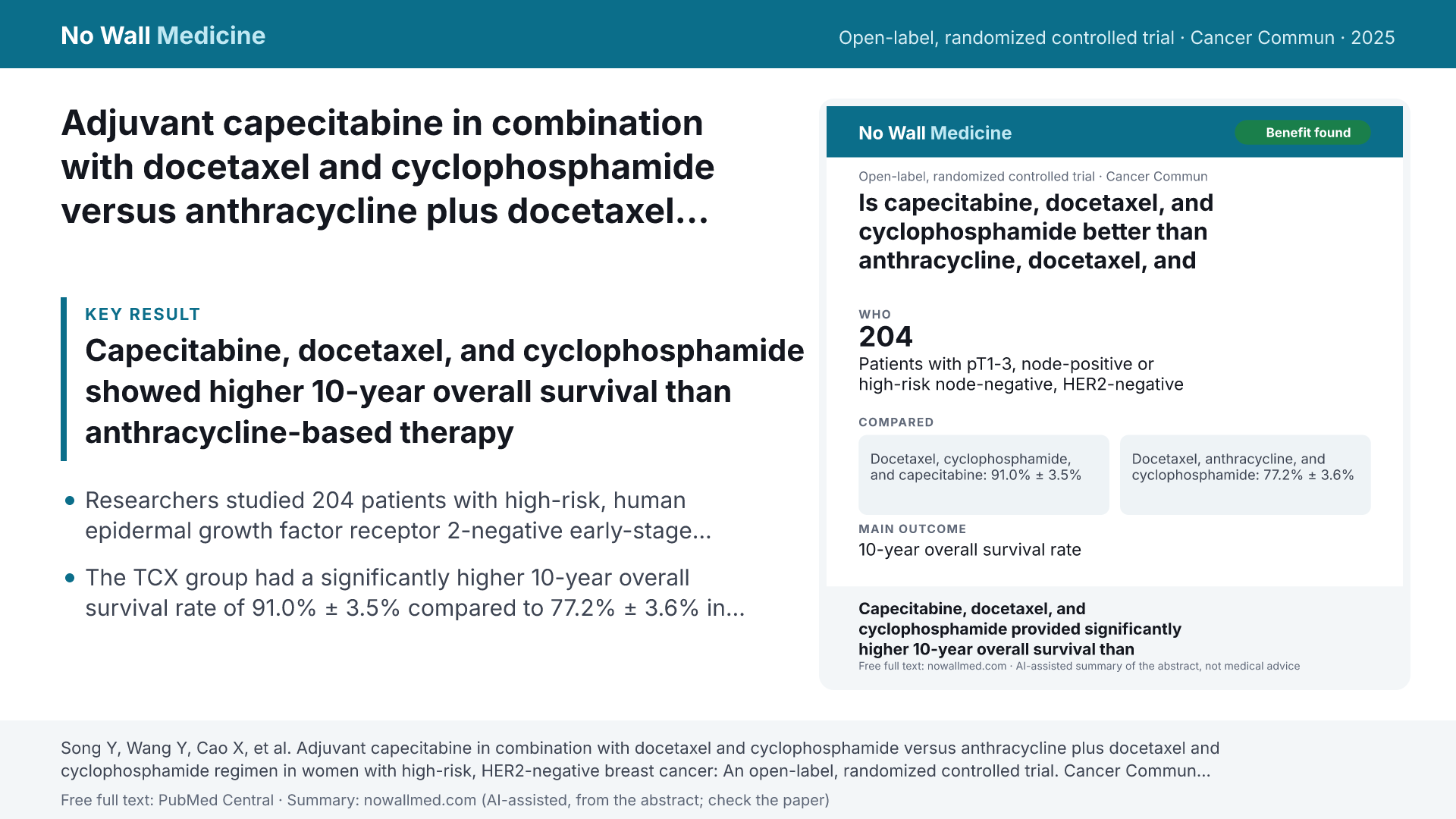
Capecitabine, docetaxel, and cyclophosphamide showed higher 10-year overall survival than anthracycline-based therapy
Adjuvant capecitabine in combination with docetaxel and cyclophosphamide versus anthracycline plus docetaxel and cyclophosphamide regimen in women with high-risk, HER2-negative breast cancer: An open-label, randomized controlled trial
Open-label, randomized controlled trialBenefit found
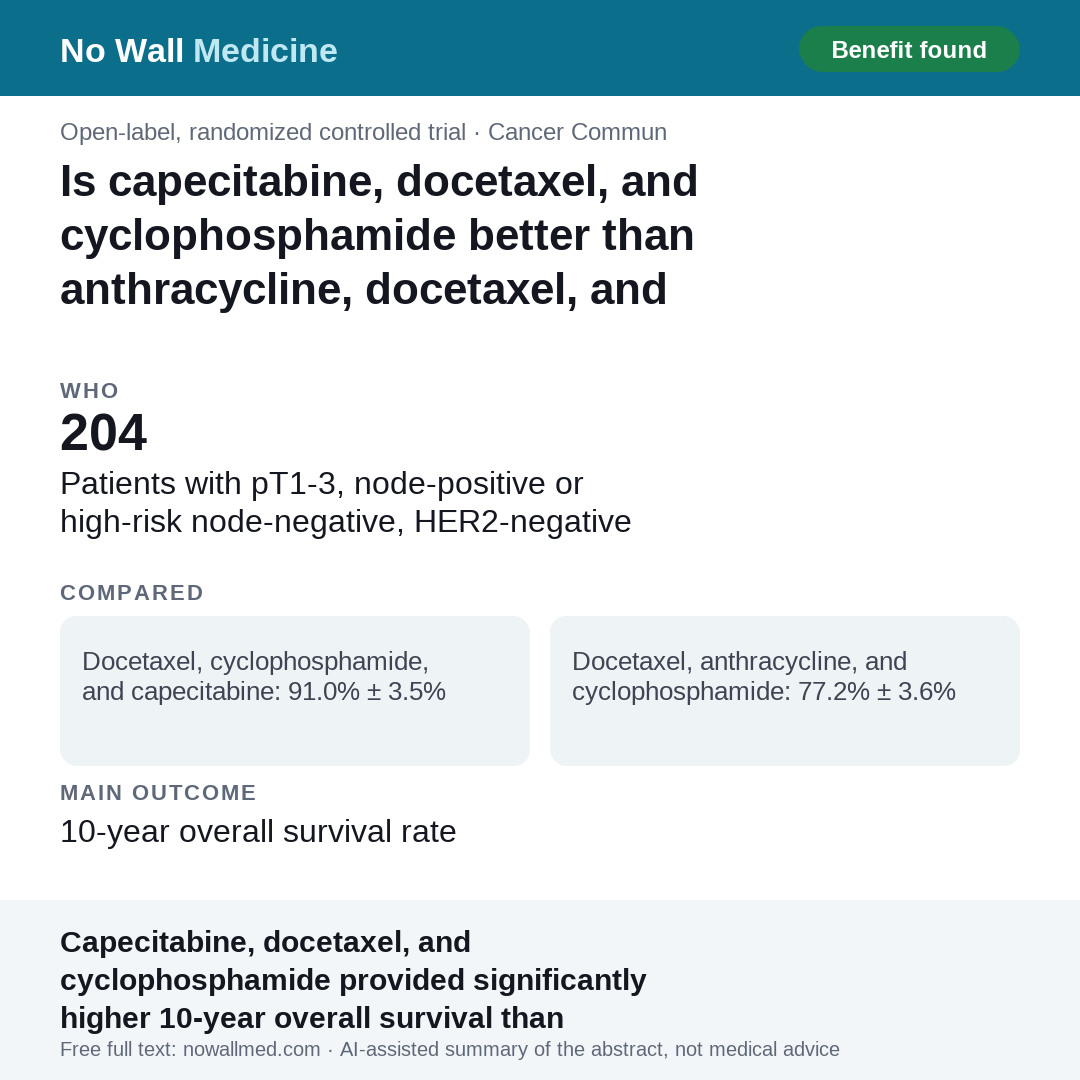
Is capecitabine, docetaxel, and cyclophosphamide better than anthracycline, docetaxel, and cyclophosphamide for high-risk HER2-negative breast cancer?
Who
204
Patients with pT1-3, node-positive or high-risk node-negative, HER2-negative early-stage breast cancer
Compared
Docetaxel, cyclophosphamide, and capecitabine: 91.0% ± 3.5%
Docetaxel, anthracycline, and cyclophosphamide: 77.2% ± 3.6%
Main outcome
10-year overall survival rate
Bottom line: Capecitabine, docetaxel, and cyclophosphamide provided significantly higher 10-year overall survival than anthracycline-based regimens.
Limitation: The study warrants further investigation in larger cohorts.
Cancer Commun · 2025-06-09Download image
Clinical question: Is capecitabine, docetaxel, and cyclophosphamide better than anthracycline, docetaxel, and cyclophosphamide for high-risk HER2-negative breast cancer?
Why it matters: The efficacy of anthracycline-based chemotherapy may be reduced in HER2-negative patients because they lack the primary target of these drugs.
Key points
- Researchers studied 204 patients with high-risk, human epidermal growth factor receptor 2-negative early-stage breast cancer randomized to receive either TAC or TCX regimens.
- The TCX group had a significantly higher 10-year overall survival rate of 91.0% ± 3.5% compared to 77.2% ± 3.6% in the TAC group.
- Grade 3-4 adverse events were significantly more frequent in the TAC group at 67.7% compared to 42.7% in the TCX group.
Headline and key points written with AI from the paper’s abstract, with every number checked against it. Read the paper before relying on them.
Was this summary helpful?
Subject terms
Cite this article
Song Y, Wang Y, Cao X, et al. Adjuvant capecitabine in combination with docetaxel and cyclophosphamide versus anthracycline plus docetaxel and cyclophosphamide regimen in women with high-risk, HER2-negative breast cancer: An open-label, randomized controlled trial. Cancer Commun. 2025. doi:10.1002/cac2.70041
Spotted a mistake? Suggest a correction