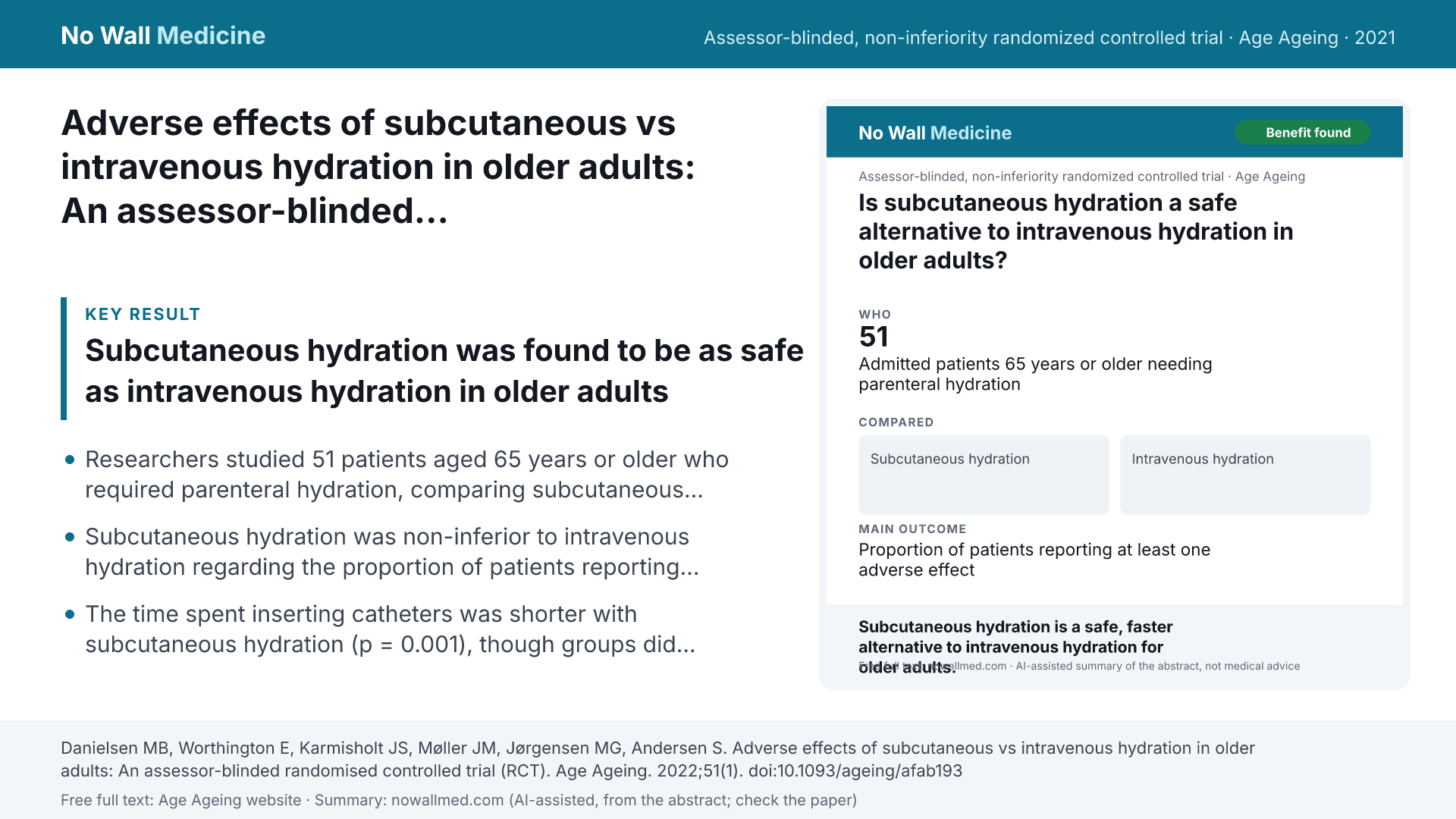
Subcutaneous hydration was found to be as safe as intravenous hydration in older adults
Adverse effects of subcutaneous vs intravenous hydration in older adults: An assessor-blinded randomised controlled trial (RCT)
Assessor-blinded, non-inferiority randomized controlled trialBenefit found
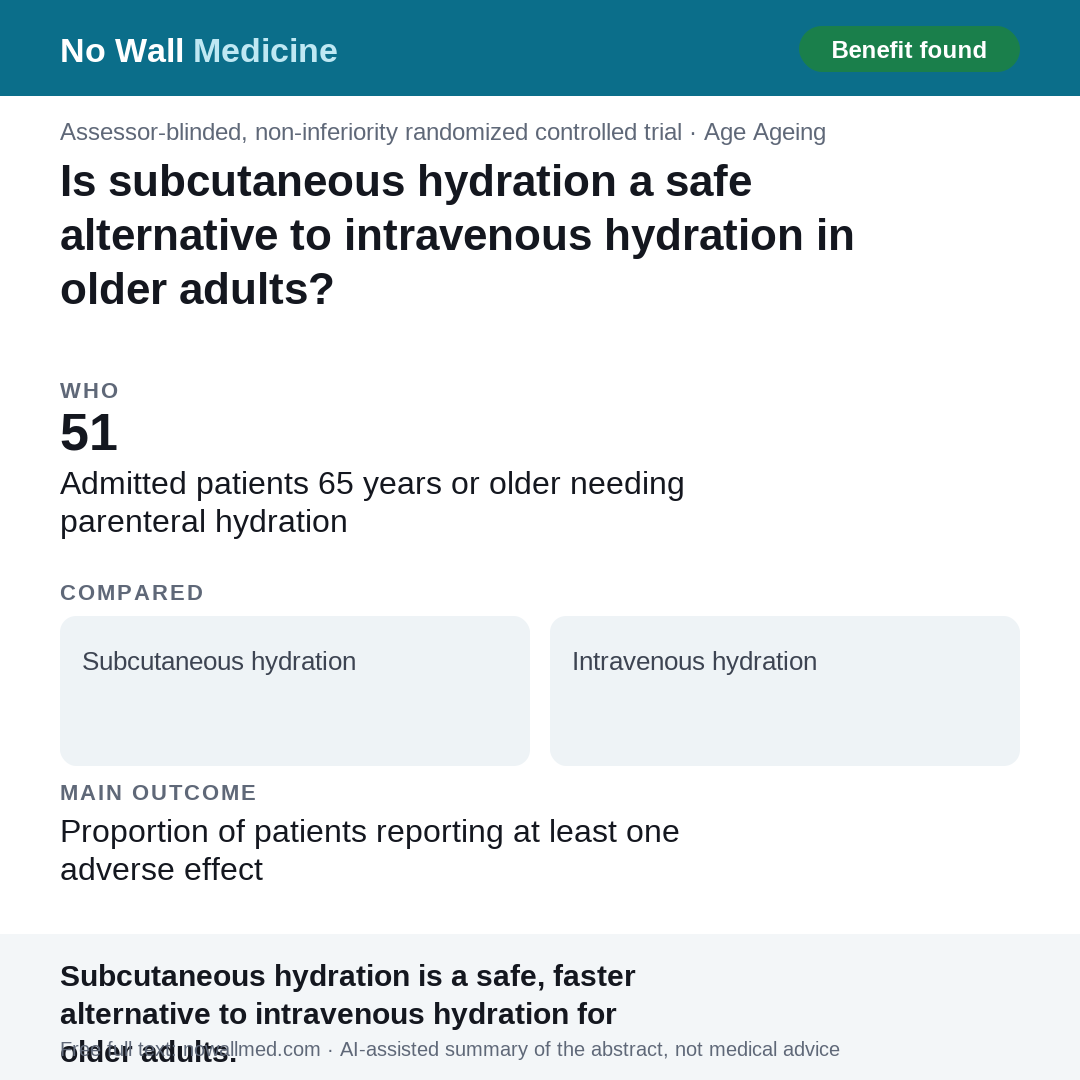
Is subcutaneous hydration a safe alternative to intravenous hydration in older adults?
Who
51
Admitted patients 65 years or older needing parenteral hydration
Compared
Subcutaneous hydration
Intravenous hydration
Main outcome
Proportion of patients reporting at least one adverse effect
Result: p = 0.012
Bottom line: Subcutaneous hydration is a safe, faster alternative to intravenous hydration for older adults.
Limitation: Unable to reach target sample size due to recruitment challenges and COVID-19.
Age Ageing · 2021-10-16Download image
Clinical question: Is subcutaneous hydration a safe alternative to intravenous hydration in older adults?
Key points
- Researchers studied 51 patients aged 65 years or older who required parenteral hydration, comparing subcutaneous hydration to intravenous hydration.
- Subcutaneous hydration was non-inferior to intravenous hydration regarding the proportion of patients reporting at least one adverse effect (p = 0.012).
- The time spent inserting catheters was shorter with subcutaneous hydration (p = 0.001), though groups did not differ in pain, discomfort, or delirium risk.
Limitation the authors note: The study was unable to reach its target sample size due to recruitment challenges, time limitations, and COVID-19.
Headline and key points written with AI from the paper’s abstract, with every number checked against it. Read the paper before relying on them.
Was this summary helpful?
Subject terms
Headline, design, result, key points, caveat and citation as plain text.
Cite this article
Danielsen MB, Worthington E, Karmisholt JS, Møller JM, Jørgensen MG, Andersen S. Adverse effects of subcutaneous vs intravenous hydration in older adults: An assessor-blinded randomised controlled trial (RCT). Age Ageing. 2021. doi:10.1093/ageing/afab193
Spotted a mistake? Suggest a correction