Artificial intelligence technologies show potential for supporting daily living skills in neurodevelopmental conditions
AI technology to support adaptive functioning in neurodevelopmental conditions in everyday environments: a systematic review
Systematic reviewUnclear result
Does artificial intelligence technology support adaptive functioning in neurodevelopmental conditions in everyday environments?
Who
People with neurodevelopmental conditions · Everyday environments
Compared
Artificial intelligence assistive technologies
Existing evidence
Main outcome
Adaptive functioning in neurodevelopmental conditions
Bottom line: Artificial intelligence holds enormous potential to support adaptive functioning for people with neurodevelopmental conditions.
NPJ Digit Med · 2024-12-19Download image
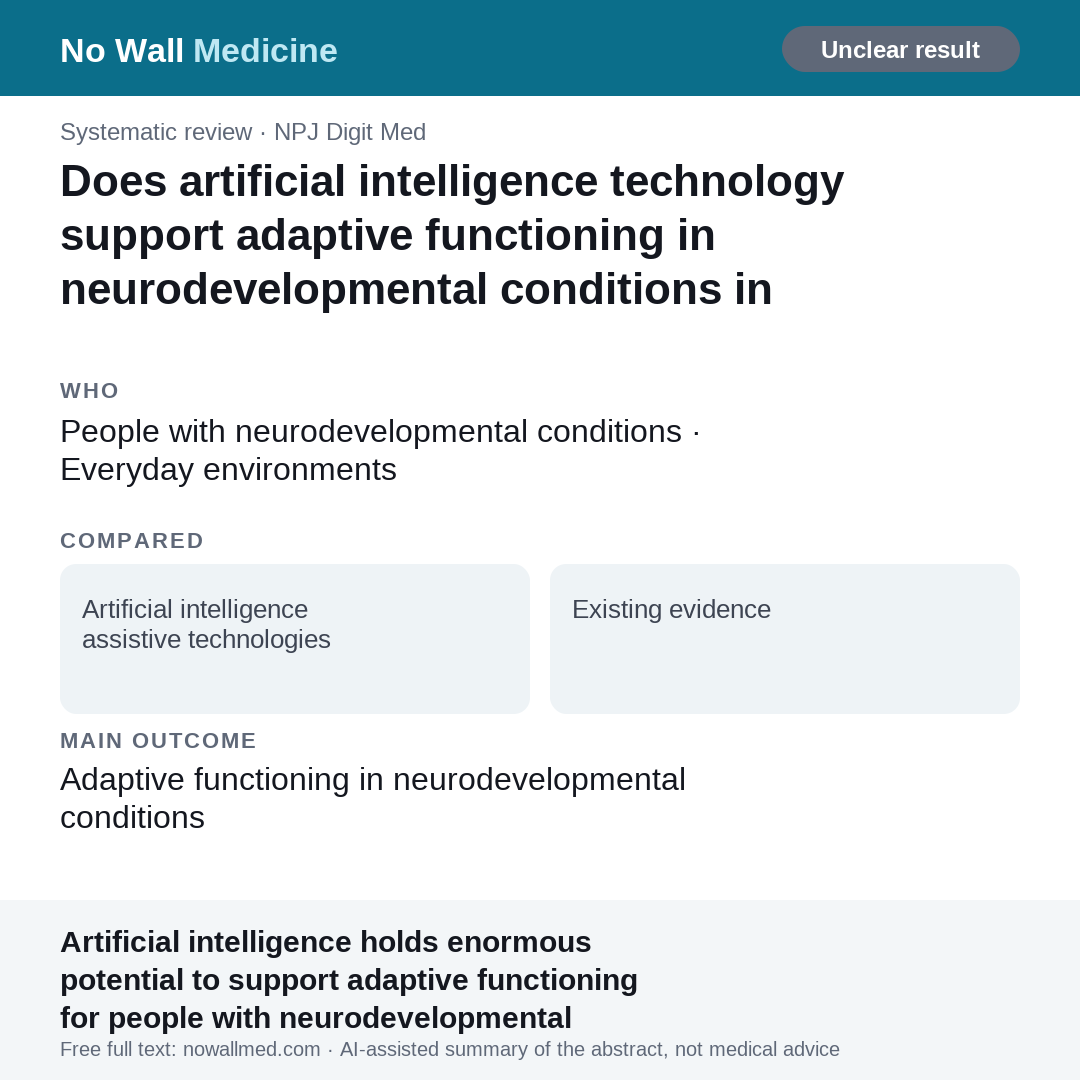
Clinical question: Does artificial intelligence technology support adaptive functioning in neurodevelopmental conditions in everyday environments?
Why it matters: It is unknown how effective artificial intelligence assistive technologies are at supporting adaptive functioning in everyday environments for people with neurodevelopmental conditions.
Key points
- Researchers reviewed 15 studies involving robotics, phones, computers, and virtual reality to support adaptive functioning in people with neurodevelopmental conditions.
- The reviewed studies most frequently focused on children with autism and targeted social skills (47%), daily living skills (26%), and communication (16%).
Headline and key points written with AI from the paper’s abstract, with every number checked against it. Read the paper before relying on them.
Cite this article
Perry N, Sun C, Munro M, Boulton KA, Guastella AJ. AI technology to support adaptive functioning in neurodevelopmental conditions in everyday environments: a systematic review. NPJ Digit Med. 2024. doi:10.1038/s41746-024-01355-7
Spotted a mistake? Suggest a correction
Top studies every Monday
The week’s key trials and guidelines in your specialties, by email. Free.
Get the weekly digest