Automated wearable sensors were feasible for data collection during a weight loss intervention
AI4Food, a feasibility study for the implementation of automated devices in the nutritional advice and follow up within a weight loss intervention
Feasibility prospective and crossover controlled trialBenefit found
Is automated data collection feasible for nutritional advice in weight loss interventions?
Who
93
Overweight and obese participants
Compared
Manual data collection
Automatic data collection
Main outcome
Weight loss and device usability
Bottom line: Automatic data collection devices are feasible and satisfactory for gathering data during nutritional interventions.
Clin Nutr · 2025-03-11Download image
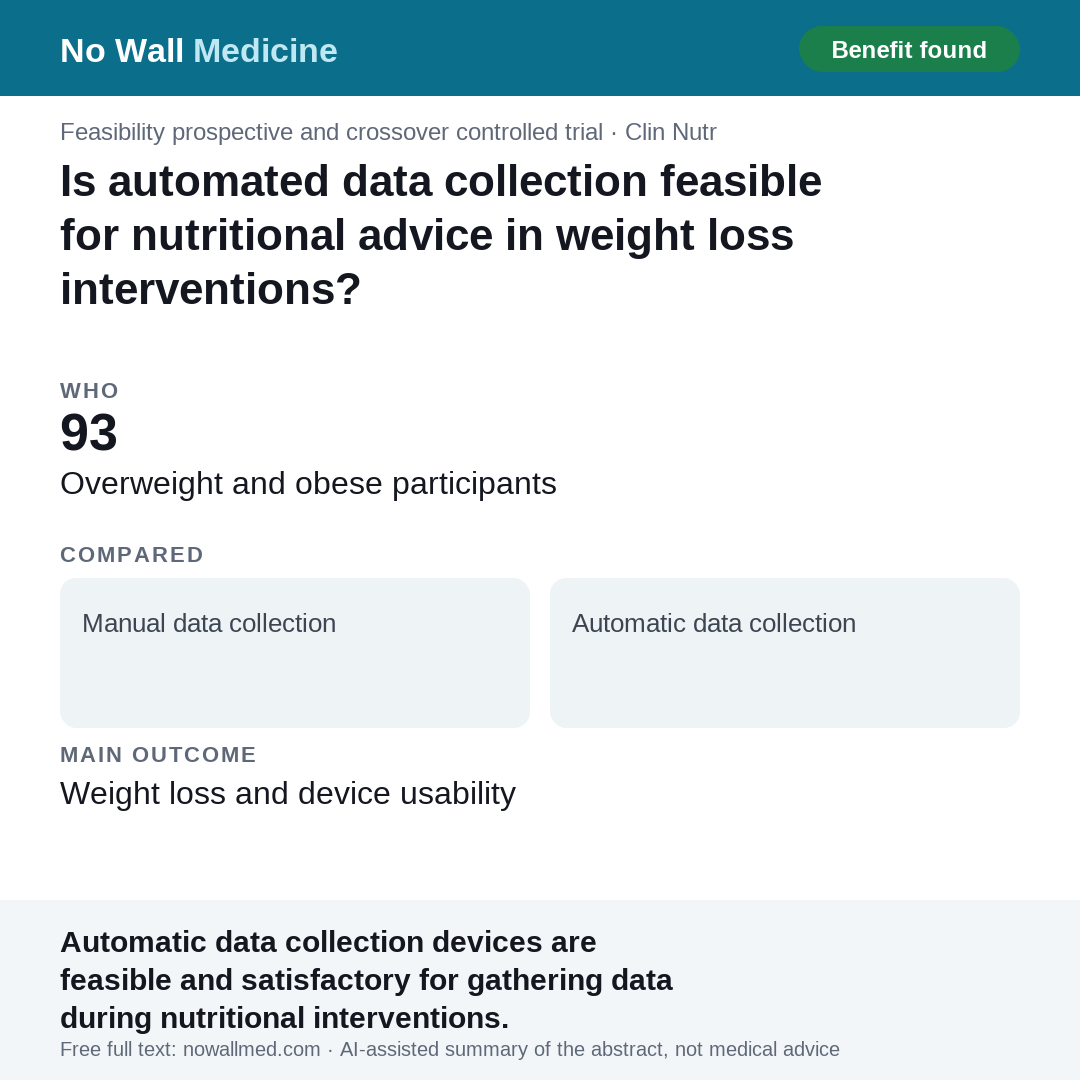
Clinical question: Is automated data collection feasible for nutritional advice in weight loss interventions?
Why it matters: The clinical use of wearable technologies is hindered by a lack of validation against current methodologies and a lack of tools to deliver nutritional strategies.
Key points
- The study involved 93 overweight and obese participants who were randomized to compare manual questionnaires with automatic wearable sensors for data collection.
- Participants achieved a mean weight reduction of 2 kg and showed significant reductions in body mass index, visceral fat, waist circumference, total cholesterol, and HbA1c levels.
- The use of electronic devices was considered satisfactory with a System Usability Scale score of 78.27 ± 12.86.
Headline and key points written with AI from the paper’s abstract, with every number checked against it. Read the paper before relying on them.
Was this summary helpful?
Subject terms
Cite this article
Lacruz-Pleguezuelos B, Bazán GX, Romero-Tapiador S, Freixer G, Tolosana R, Daza R. AI4Food, a feasibility study for the implementation of automated devices in the nutritional advice and follow up within a weight loss intervention. Clin Nutr. 2025. doi:10.1016/j.clnu.2025.03.003
Spotted a mistake? Suggest a correction
Top studies every Monday
The week’s key trials and guidelines in your specialties, plus any topics you follow. By email, free.
Get the weekly digest