Using fans may provide short-term relief for breathlessness in people with serious respiratory illness
Airflow for reducing breathlessness in people with serious respiratory illness: a systematic review
Systematic reviewMixed results
Does airflow reduce breathlessness in people with serious respiratory illness?
Who
413
People with chronic obstructive pulmonary disease, interstitial lung disease, bronchiectasis and asthma · Laboratory, hospital, exercise tests, or daily life settings
Compared
Airflow use
Control
Main outcome
Breathlessness and health-related quality of life
Bottom line: Airflow may provide beneficial acute relief of breathlessness, but long-term effects and quality of life improvements are unclear.
Limitation: Risk of bias was high in all studies and meta-analyses were not feasible.
ERJ Open Res · 2026-03-23Download image
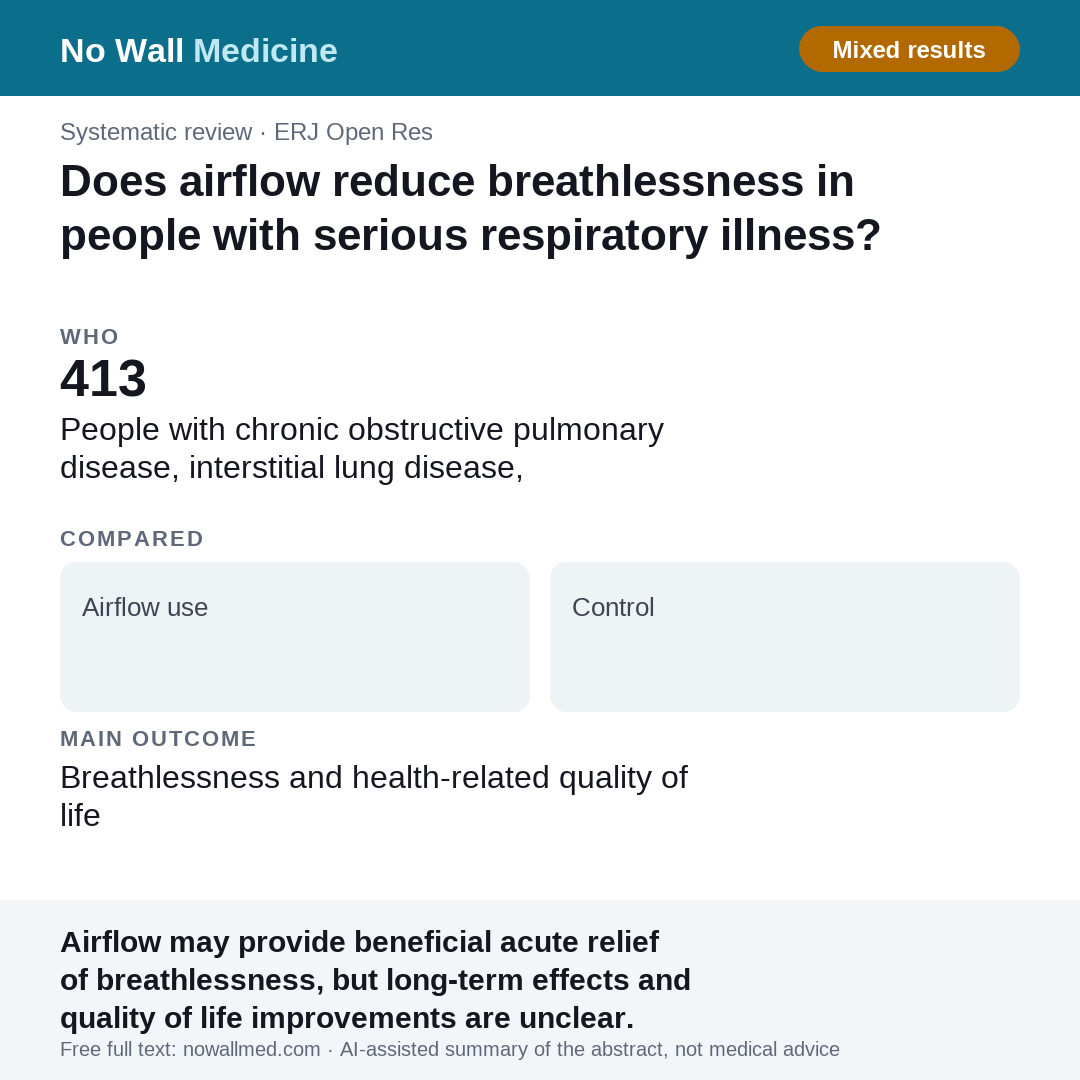
Clinical question: Does airflow reduce breathlessness in people with serious respiratory illness?
Why it matters: It is unclear how effective increased airflow is for reducing breathlessness and improving quality of life in people with serious respiratory illness.
Key points
- Researchers reviewed 10 studies involving 413 participants with asthma, bronchiectasis, interstitial lung disease, and chronic obstructive pulmonary disease.
- Fan use showed an overall beneficial effect for acute breathlessness relief, but results were mixed when assessing long-term effects after 14-60 days.
- One study reported on health-related quality of life, but found no improvement.
Limitation the authors note: The authors stated that risk of bias was high in all studies and meta-analyses were not feasible due to heterogeneity and small sample sizes.
Headline and key points written with AI from the paper’s abstract, with every number checked against it. Read the paper before relying on them.
Spotted a mistake? Suggest a correction