Alcohol use disorder is associated with DNA methylation-based shortening of telomere length and regulated by TESPA1: implications for aging
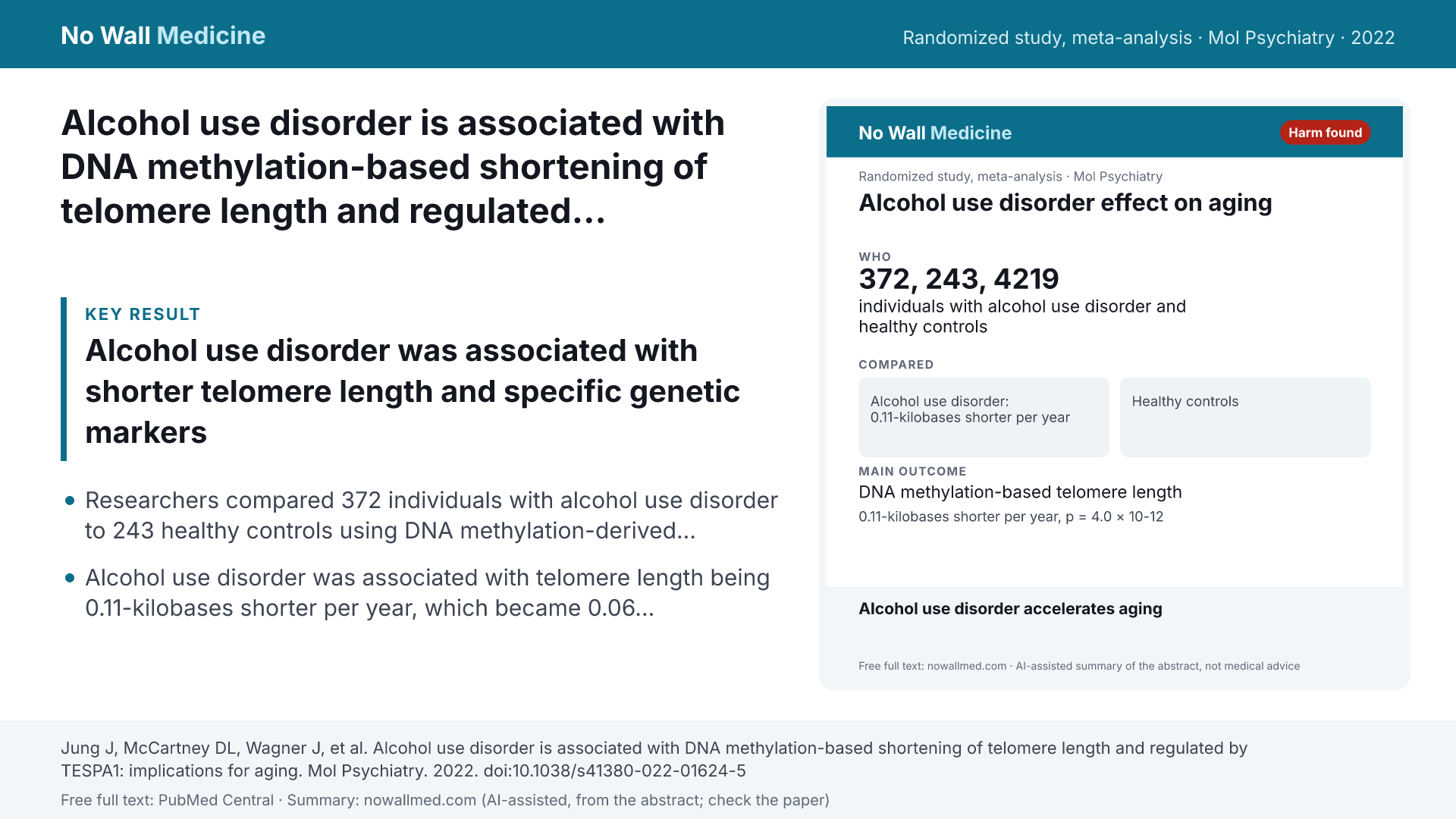
Key result: Alcohol use disorder was associated with shorter telomere length and specific genetic markers
Randomized study, meta-analysisHarm found
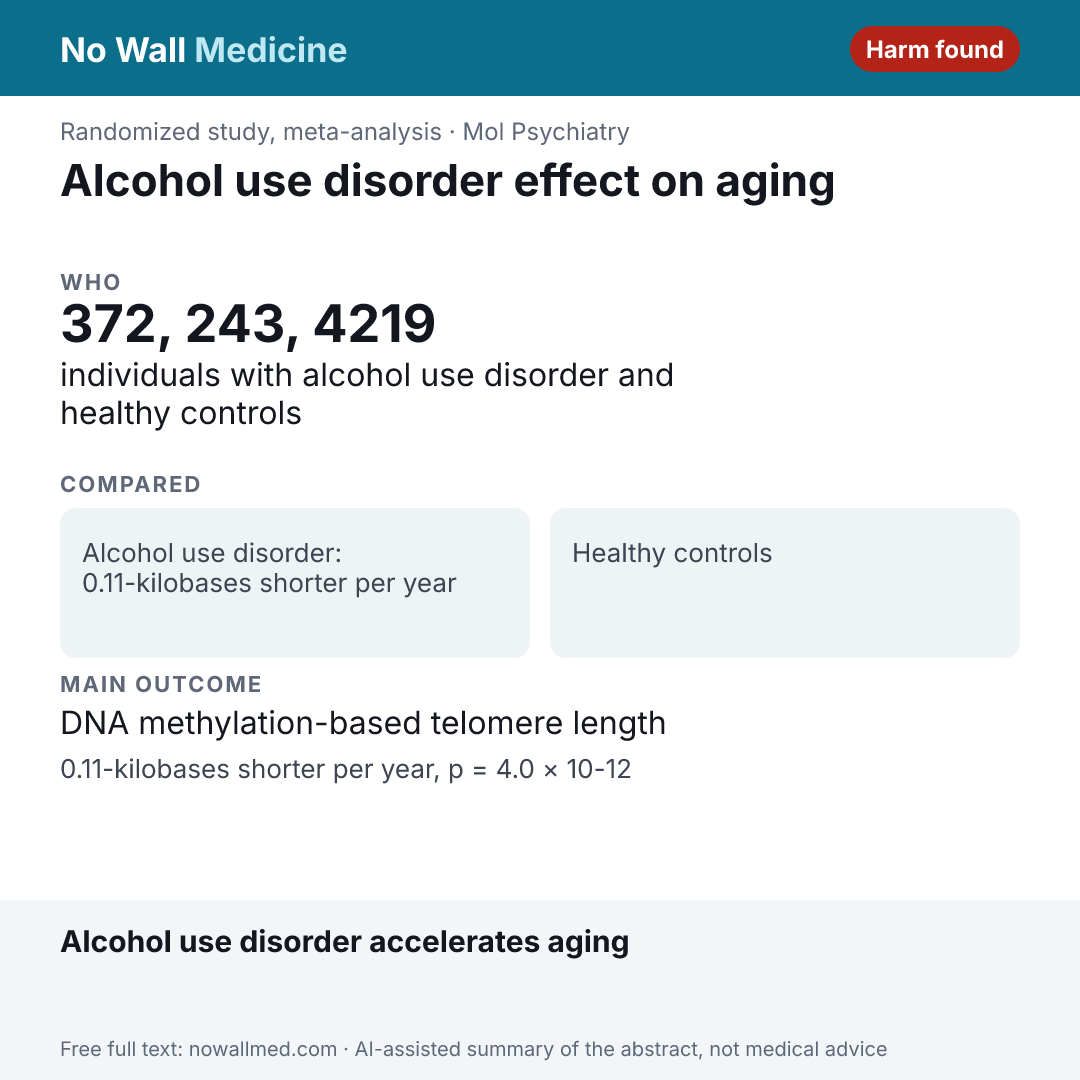
Alcohol use disorder effect on aging
Who
372, 243, 4219
individuals with alcohol use disorder and healthy controls
Compared
Alcohol use disorder: 0.11-kilobases shorter per year
Healthy controls
Main outcome
DNA methylation-based telomere length
Result: 0.11-kilobases shorter per year, p = 4.0 × 10⁻¹²
Bottom line: Alcohol use disorder accelerates aging
Mol Psychiatry · 2022-06-15 · Save PNG
Key points
- Researchers compared 372 individuals with alcohol use disorder to 243 healthy controls using DNA methylation-derived telomere length, a measure of cellular aging.
- Alcohol use disorder was associated with telomere length being 0.11-kilobases shorter per year, which became 0.06 kilobases shorter per year after adjusting for body mass index and smoking.
- The study found that the C allele of a specific genetic variant was associated with shorter telomere length and lower hippocampus volume.
Discussion prompts
- Would these patients look like yours? Who was left out?
- Is the main outcome one that matters to patients?
- Is the difference large enough to change what you do?
Cite: Jung J, McCartney DL, Wagner J, et al. Alcohol use disorder is associated with DNA methylation-based shortening of telomere length and regulated by TESPA1: implications for aging. Mol Psychiatry. 2022. doi:10.1038/s41380-022-01624-5
Free full text: PubMed Central · Summary and visual abstract: nowallmed.com/a/alcohol-use-disorder-is-associated-with-dna-methylation-based-1w4xkal/ (AI-assisted from the abstract; check the paper before relying on it).