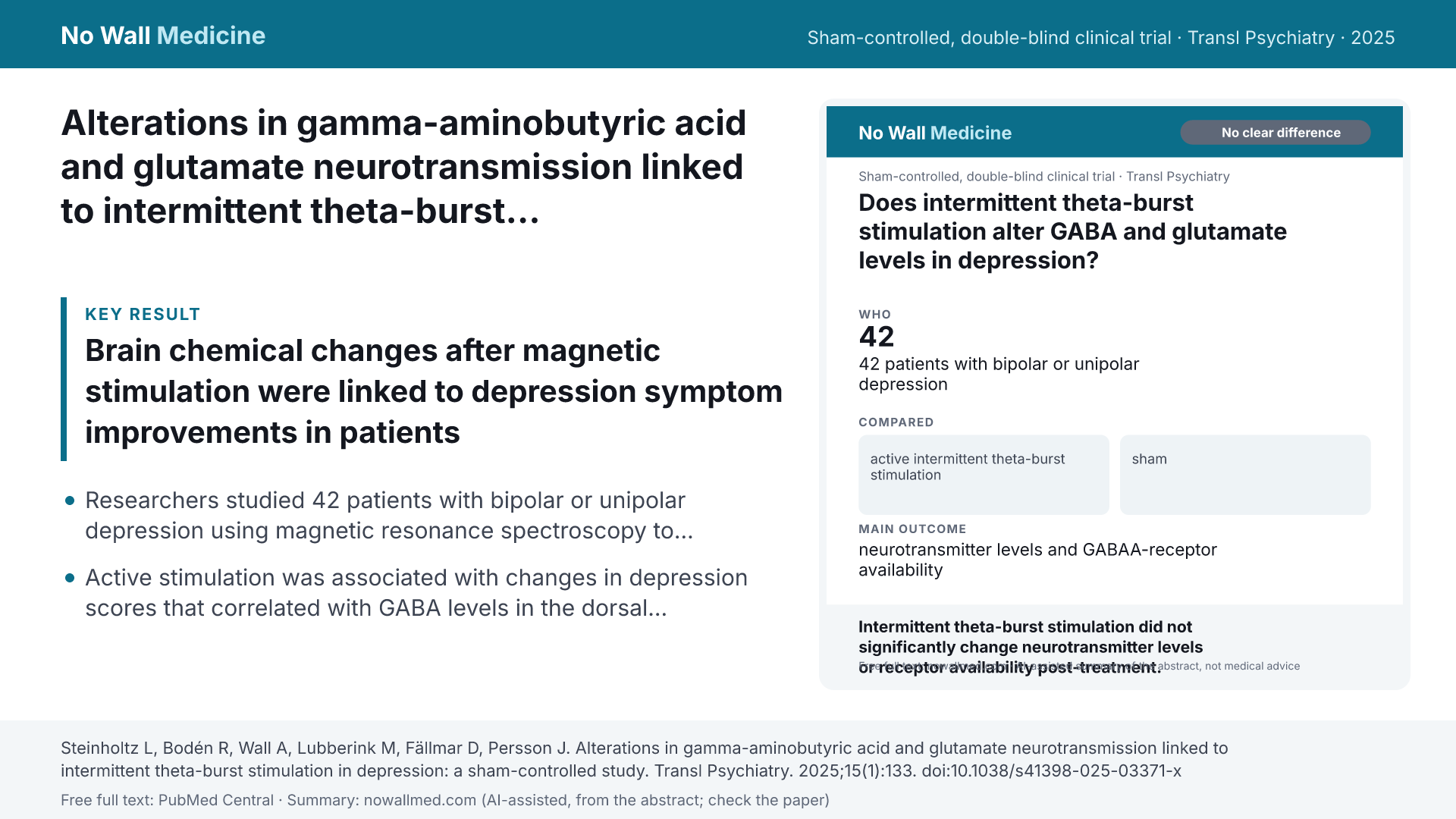
Brain chemical changes after magnetic stimulation were linked to depression symptom improvements in patients
Alterations in gamma-aminobutyric acid and glutamate neurotransmission linked to intermittent theta-burst stimulation in depression: a sham-controlled study
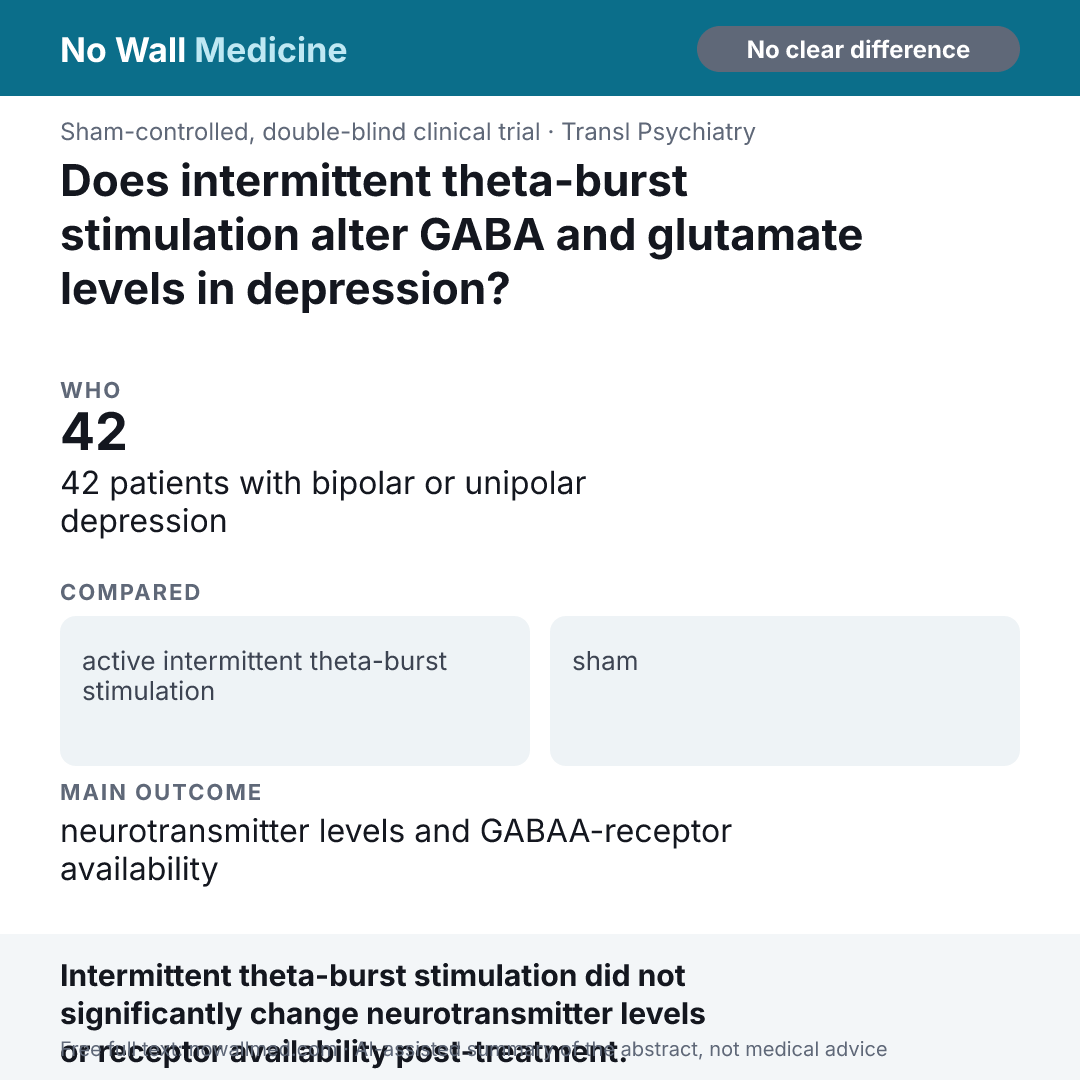
Sham-controlled, double-blind clinical trialNo clear difference
Does intermittent theta-burst stimulation alter GABA and glutamate levels in depression?
Who
42
42 patients with bipolar or unipolar depression
Compared
active intermittent theta-burst stimulation
sham
Main outcome
neurotransmitter levels and GABAA-receptor availability
Bottom line: Intermittent theta-burst stimulation did not significantly change neurotransmitter levels or receptor availability post-treatment.
Transl Psychiatry · 2025-04-08 · Save PNG
Clinical question: Does intermittent theta-burst stimulation alter GABA and glutamate levels in depression?
Why it matters: Findings from magnetic resonance spectroscopy regarding how magnetic brain stimulation affects GABA and glutamate levels have been inconsistent.
Key points
- Researchers studied 42 patients with bipolar or unipolar depression using magnetic resonance spectroscopy to measure neurotransmitter levels before and after magnetic brain stimulation.
- Active stimulation was associated with changes in depression scores that correlated with GABA levels in the dorsal anterior cingulate cortex (r(13) = 0.54, p = 0.04).
- Improvements in depression scores were also associated with baseline GABAA-receptor availability in the nucleus accumbens (r(11) = 0.66, p = 0.02).
Headline and key points written with AI from the paper’s abstract, with every number checked against it. Read the paper before relying on them.
Was this summary helpful?
Subject terms
Headline, design, result, key points, caveat and citation as plain text.
Cite this article
Steinholtz L, Bodén R, Wall A, Lubberink M, Fällmar D, Persson J. Alterations in gamma-aminobutyric acid and glutamate neurotransmission linked to intermittent theta-burst stimulation in depression: a sham-controlled study. Transl Psychiatry. 2025;15(1):133. doi:10.1038/s41398-025-03371-x
Spotted a mistake? Suggest a correction