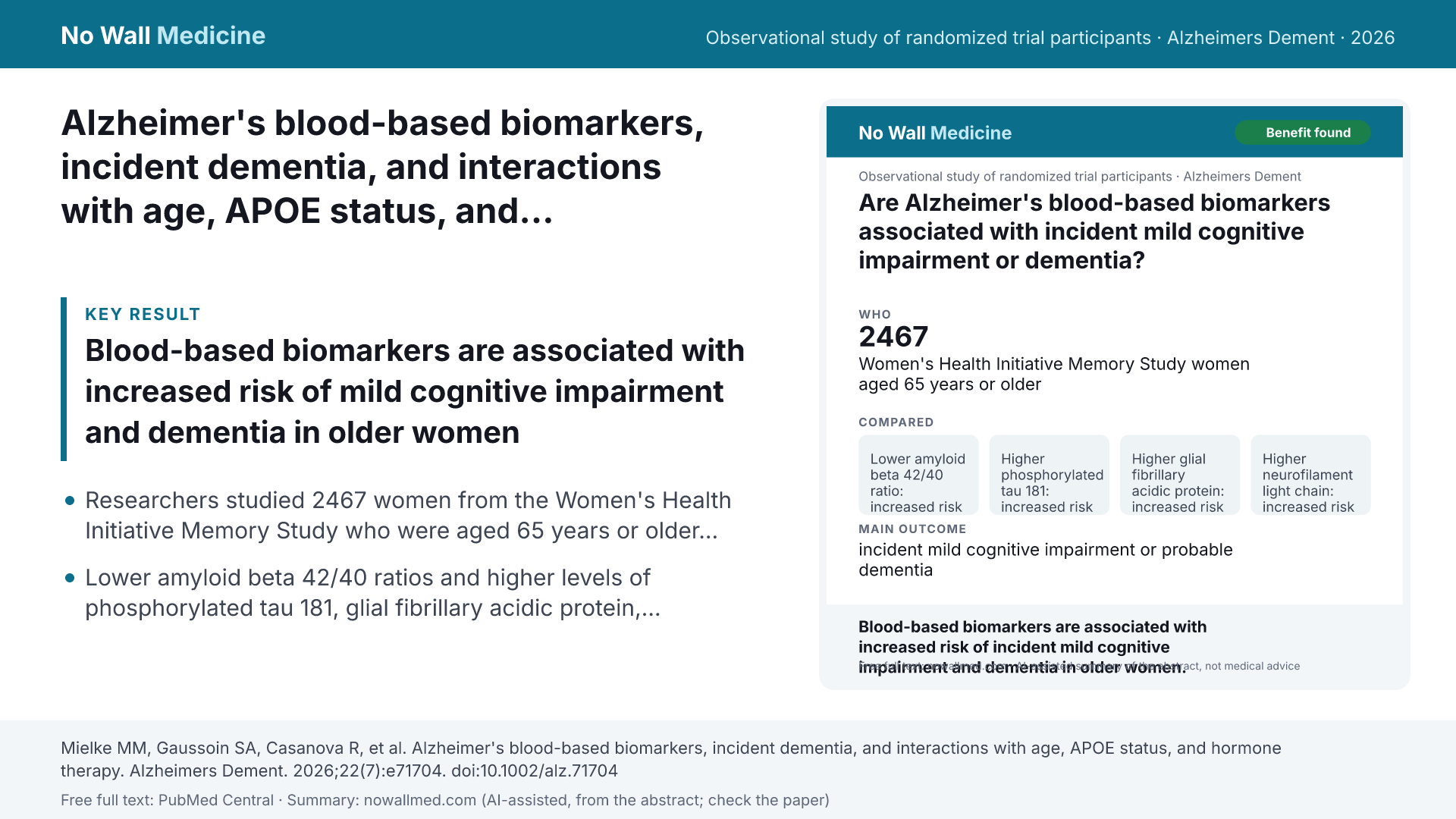
Blood-based biomarkers are associated with increased risk of mild cognitive impairment and dementia in older women
Alzheimer's blood-based biomarkers, incident dementia, and interactions with age, APOE status, and hormone therapy
Observational study of randomized trial participantsBenefit found
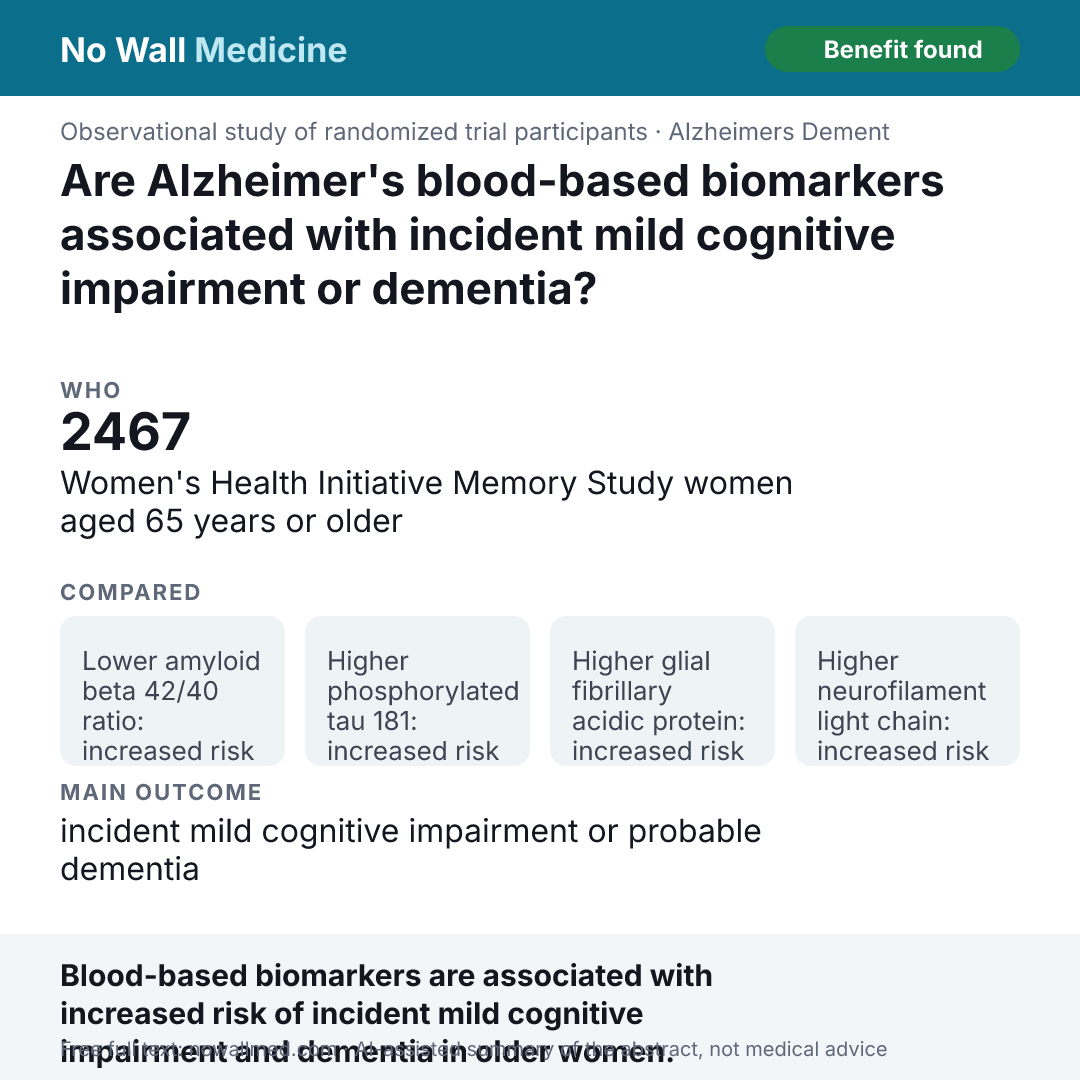
Are Alzheimer's blood-based biomarkers associated with incident mild cognitive impairment or dementia?
Who
2467
Women's Health Initiative Memory Study women aged 65 years or older
Compared
Lower amyloid beta 42/40 ratio: increased risk of MCI and dementia
Higher phosphorylated tau 181: increased risk of MCI and dementia
Higher glial fibrillary acidic protein: increased risk of MCI and dementia
Higher neurofilament light chain: increased risk of MCI and dementia
Main outcome
incident mild cognitive impairment or probable dementia
Bottom line: Blood-based biomarkers are associated with increased risk of incident mild cognitive impairment and dementia in older women.
Alzheimers Dement · 2026-07-28
Why it matters: Cognitive impairment in older adults often involves multiple pathologies and diverse risk factors, making it difficult to predict dementia risk.
Headline and visual abstract written with AI from the paper’s abstract, with every number checked against it. Read the paper before relying on them.
Was this summary helpful?
Subject terms
Cite this article
Mielke MM, Gaussoin SA, Casanova R, et al. Alzheimer's blood-based biomarkers, incident dementia, and interactions with age, APOE status, and hormone therapy. Alzheimers Dement. 2026;22(7):e71704. doi:10.1002/alz.71704
Spotted a mistake? Suggest a correction