Ameliorating Atopy by Compensating Micronutritional Deficiencies in Immune Cells: A Double-Blind Placebo-Controlled Pilot Study
Key result: Micronutrient lozenges reduced nasal symptoms and medication use in women with pollen allergies
Key points
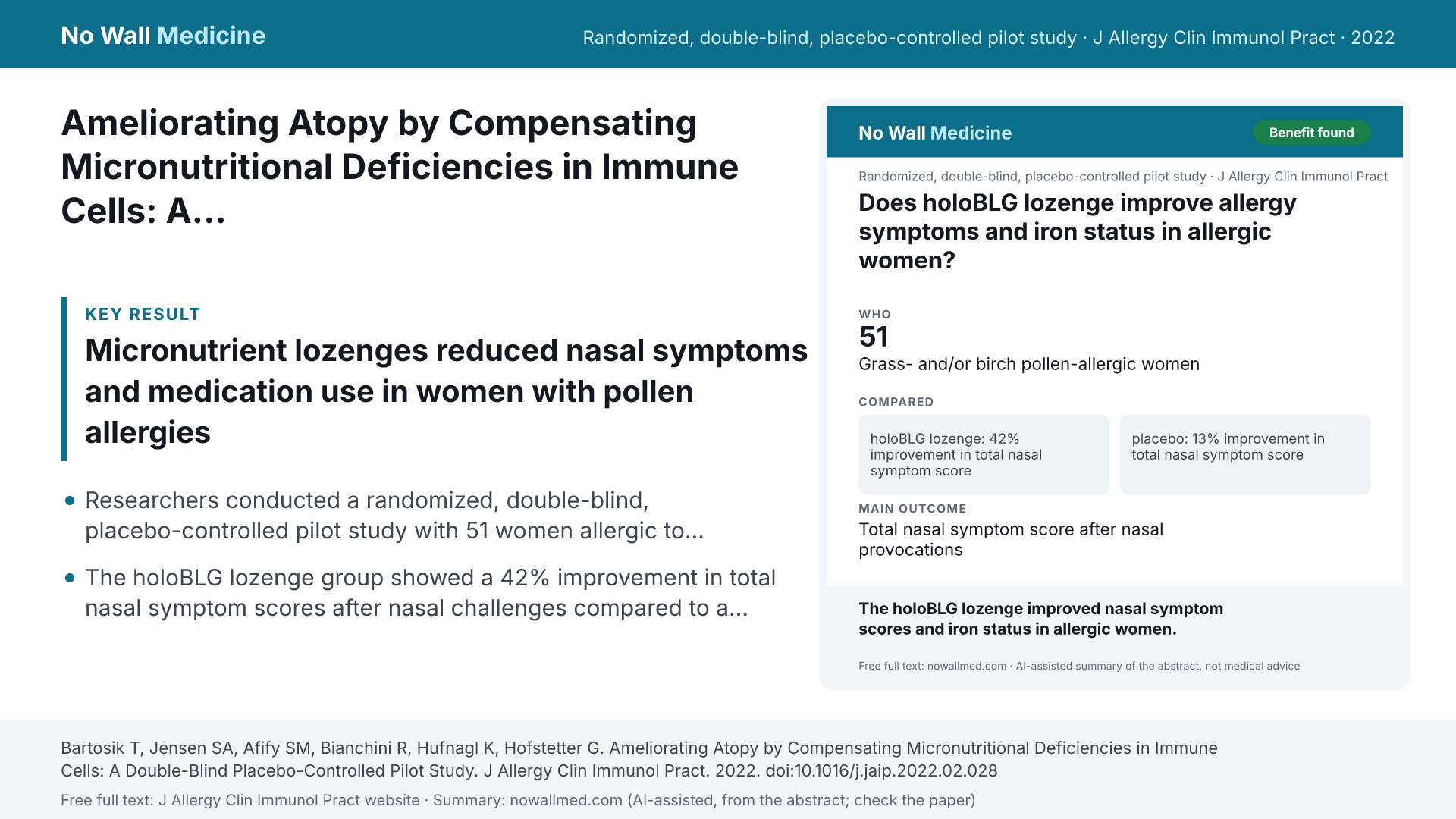
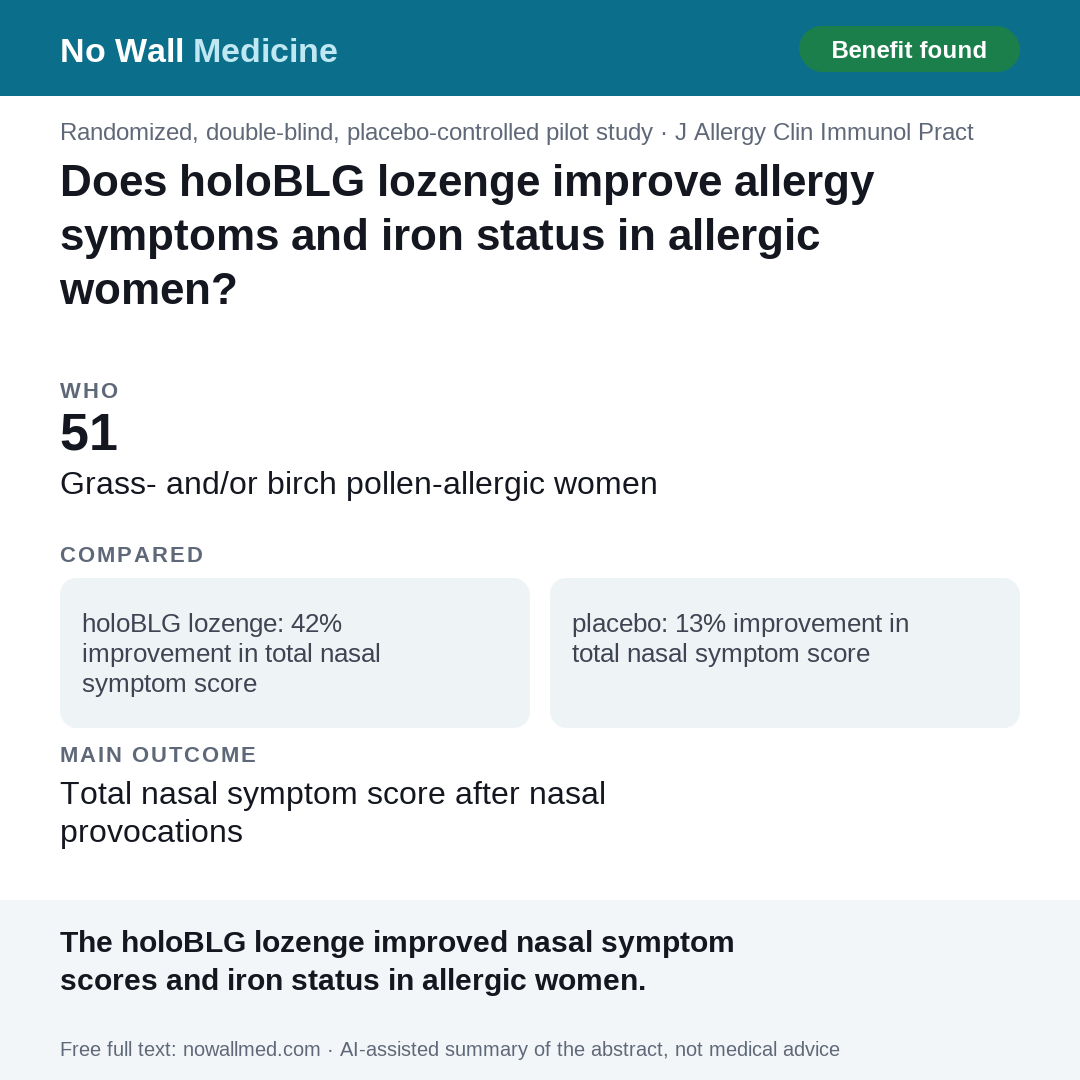
- Researchers conducted a randomized, double-blind, placebo-controlled pilot study with 51 women allergic to grass and/or birch pollen over 6 months.
- The holoBLG lozenge group showed a 42% improvement in total nasal symptom scores after nasal challenges compared to a 13% improvement in the placebo group.
- Medication use during the birch peak and grass pollen seasons improved by 45%, 31%, and 40% in the holoBLG group compared to the placebo arm.
Why it matters: It was unknown if delivering micronutrients like iron, polyphenols, retinoic acid, and zinc directly to immune cells via a carrier could reduce allergy symptoms.
Discussion prompts
- Would these patients look like yours? Who was left out?
- Is the main outcome one that matters to patients?
- Is the difference large enough to change what you do?
Cite: Bartosik T, Jensen SA, Afify SM, Bianchini R, Hufnagl K, Hofstetter G. Ameliorating Atopy by Compensating Micronutritional Deficiencies in Immune Cells: A Double-Blind Placebo-Controlled Pilot Study. J Allergy Clin Immunol Pract. 2022. doi:10.1016/j.jaip.2022.02.028
Free full text: J Allergy Clin Immunol Pract website · Summary and visual abstract: nowallmed.com/a/ameliorating-atopy-by-compensating-micronutritional-deficiencies-in-1ttmhll/ (AI-assisted from the abstract; check the paper before relying on it).