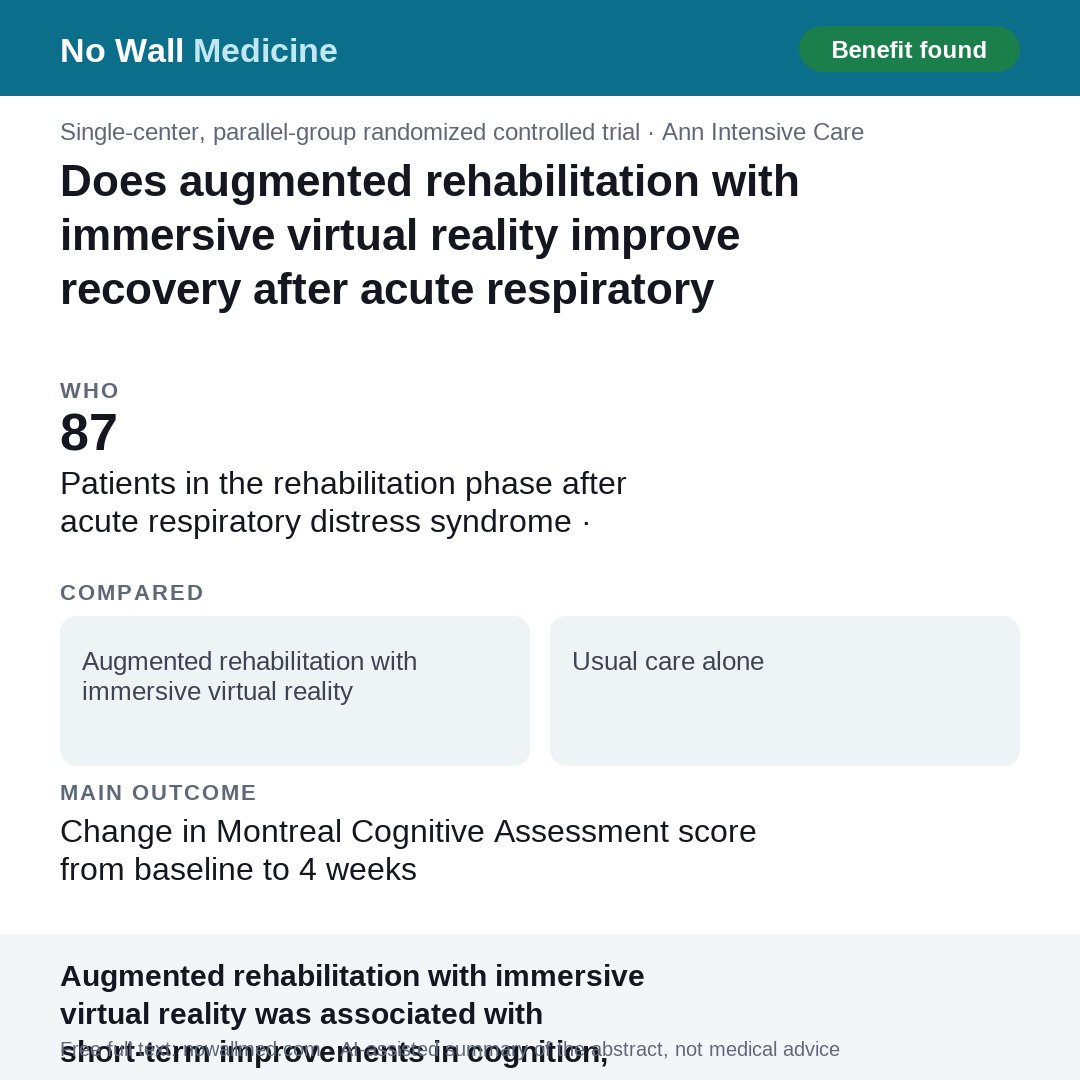
Single-center, parallel-group randomized controlled trialBenefit found
Does augmented rehabilitation with immersive virtual reality improve recovery after acute respiratory distress syndrome?
Who
87
Patients in the rehabilitation phase after acute respiratory distress syndrome · Single-center
Compared
Augmented rehabilitation with immersive virtual reality
Usual care alone
Main outcome
Change in Montreal Cognitive Assessment score from baseline to 4 weeks
Result: adjusted between-group effect: 1.42, 95% CI 0.86-1.98
Bottom line: Augmented rehabilitation with immersive virtual reality was associated with short-term improvements in cognition, quality of life, and anxiety.
Limitation: Differences cannot be attributed specifically to virtual reality because the control was not time- or attention-matched.