An updated systematic review of radiomics in osteosarcoma: utilizing CLAIM to adapt the increasing trend of deep learning application in radiomics
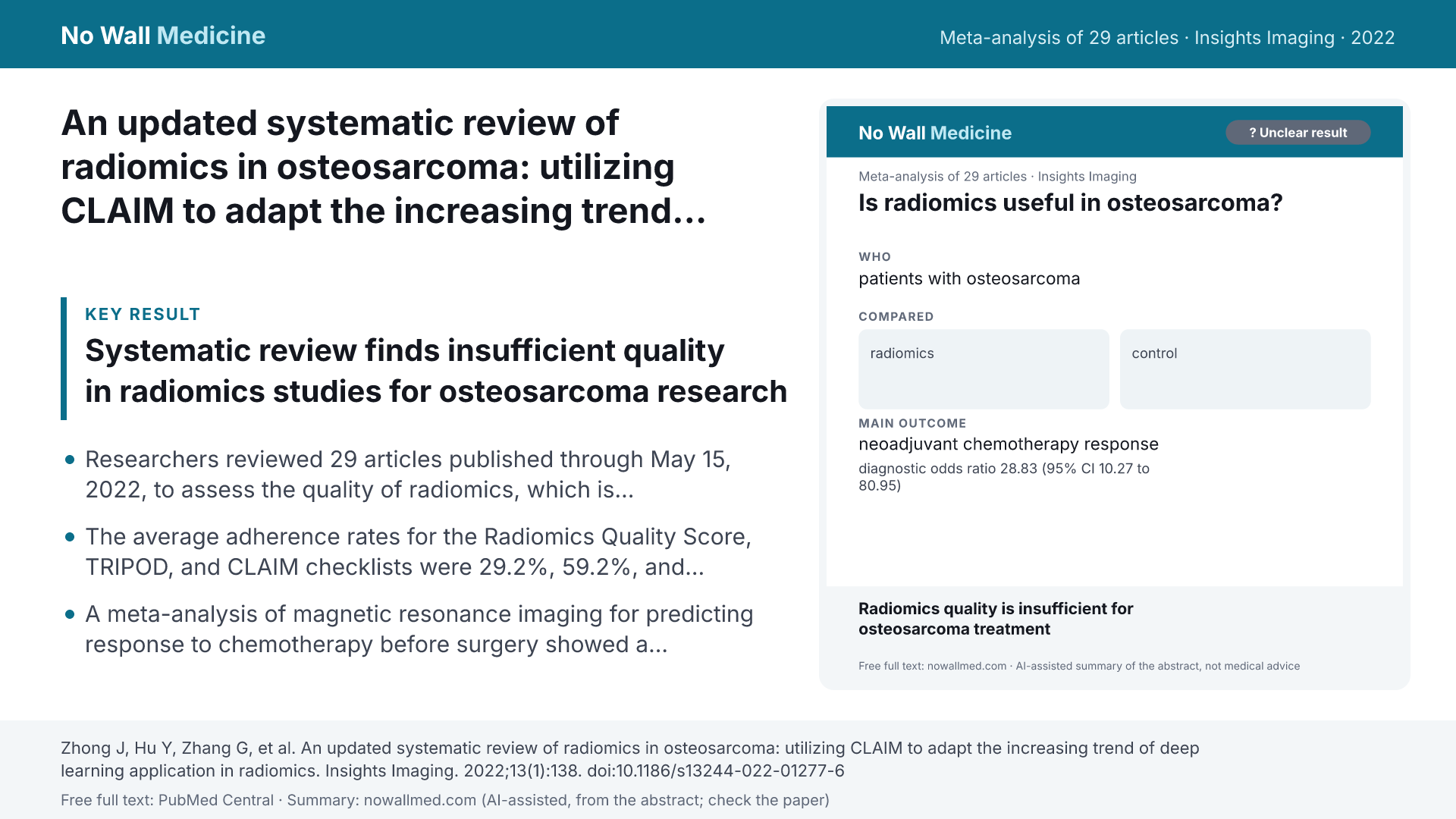
Key result: Systematic review finds insufficient quality in radiomics studies for osteosarcoma research
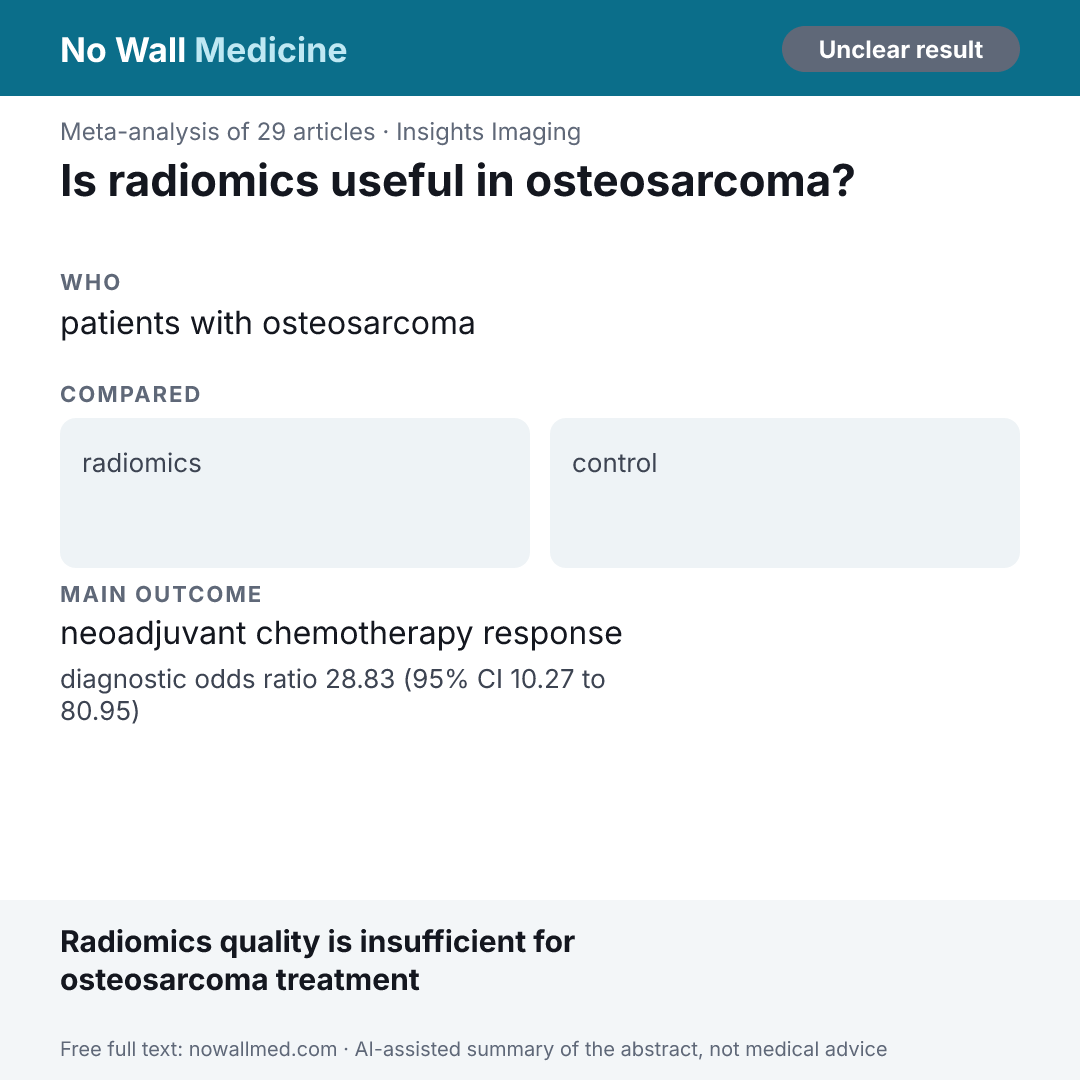
Meta-analysis of 29 articlesUnclear result
Is radiomics useful in osteosarcoma?
Who
patients with osteosarcoma
Compared
radiomics
control
Main outcome
neoadjuvant chemotherapy response
Result: diagnostic odds ratio 28.83 (95% CI 10.27 to 80.95)
Bottom line: Radiomics quality is insufficient for osteosarcoma treatment
Limitation: risk of bias and applicability concerns
Insights Imaging · 2022-08-20 · Save PNG
Key points
- Researchers reviewed 29 articles published through May 15, 2022, to assess the quality of radiomics, which is the extraction of many features from medical images.
- The average adherence rates for the Radiomics Quality Score, TRIPOD, and CLAIM checklists were 29.2%, 59.2%, and 63.7%, respectively.
- A meta-analysis of magnetic resonance imaging for predicting response to chemotherapy before surgery showed a diagnostic odds ratio of 28.83 (95% confidence interval 10.27-80.95).
Why it matters: The quality and reporting standards of radiomics research in osteosarcoma are currently insufficient to optimize treatment.
Discussion prompts
- Would these patients look like yours? Who was left out?
- Is the main outcome one that matters to patients?
- Is the difference large enough to change what you do?
Cite: Zhong J, Hu Y, Zhang G, et al. An updated systematic review of radiomics in osteosarcoma: utilizing CLAIM to adapt the increasing trend of deep learning application in radiomics. Insights Imaging. 2022;13(1):138. doi:10.1186/s13244-022-01277-6
Free full text: PubMed Central · Summary and visual abstract: nowallmed.com/a/an-updated-systematic-review-of-radiomics-in-osteosarcoma-utilizing-1xbosk4/ (AI-assisted from the abstract; check the paper before relying on it).