Methoxyflurane inhaler combined with local anesthesia provided better pain control during knee nerve blocks
Analgesic effectiveness of methoxyflurane inhaler during genicular nerve block in knee osteoarthritis: a randomized controlled trial
Randomized controlled trialBenefit found
Is methoxyflurane inhaler effective for pain during genicular nerve block in knee osteoarthritis?
Who
42
42 adults with refractory knee osteoarthritis
Compared
Methoxyflurane inhaler with local anesthesia: 2 (1, 4) VNRS pain reduction
Local anesthesia only: -1 (-2, 0) VNRS pain reduction
Main outcome
Pain score on a 0-10 verbal numerical rating scale
Bottom line: Methoxyflurane inhaler combined with local anesthesia provided better procedural pain control than local anesthesia alone.
Reg Anesth Pain Med · 2025-12-05Download image
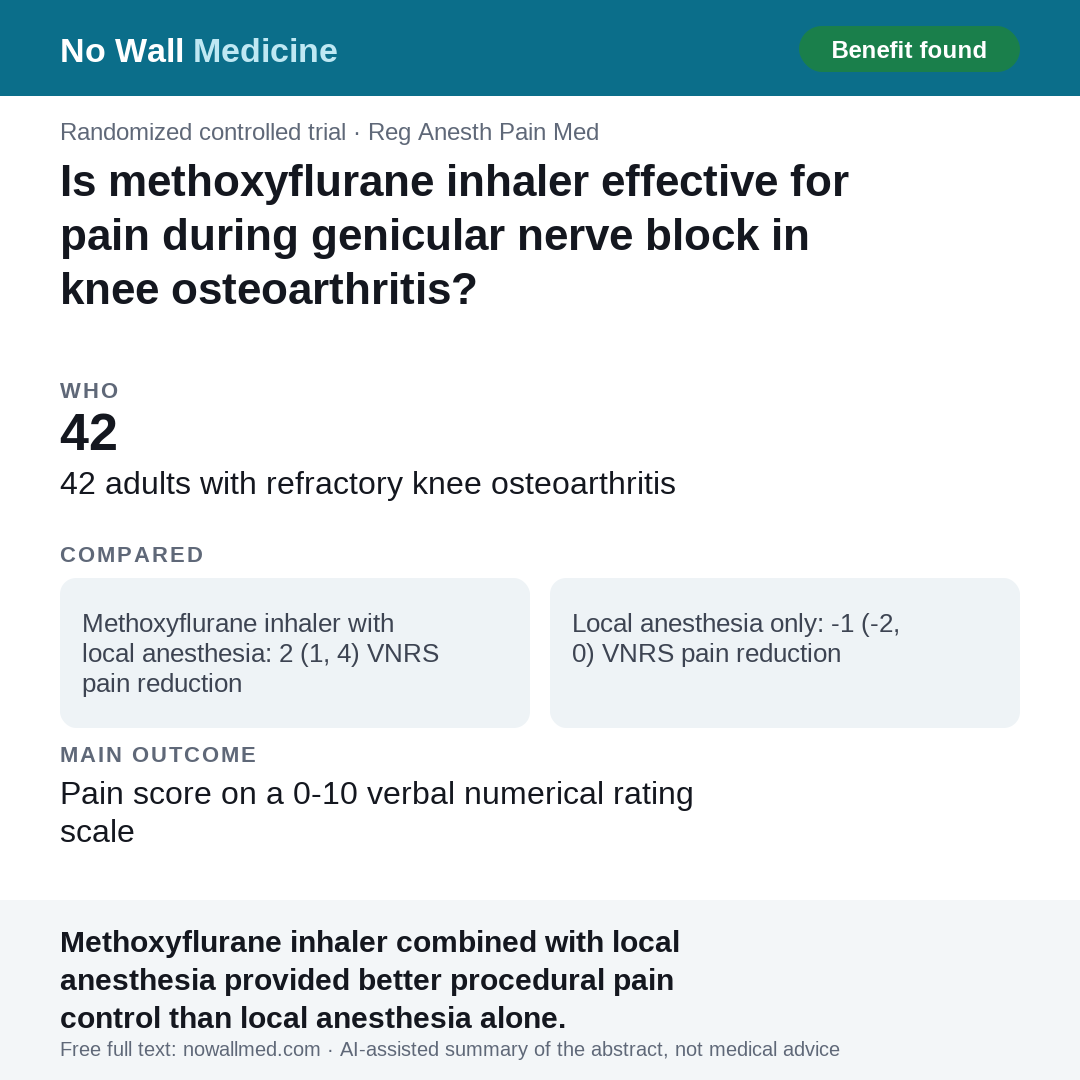
Clinical question: Is methoxyflurane inhaler effective for pain during genicular nerve block in knee osteoarthritis?
Why it matters: Elderly patients with knee osteoarthritis often experience severe pain during procedures and may develop side effects from intravenous sedation.
Key points
- Researchers studied 42 adults with refractory knee osteoarthritis who were randomized to receive either a self-titrated methoxyflurane inhaler with local anesthesia or local anesthesia alone.
- The methoxyflurane group had a significantly greater pain score reduction from baseline (2 (1, 4) vs -1 (-2, 0); p<0.01) and higher sedation scores compared to the lidocaine group.
- Immediately after the procedure, anxiety levels were lower in the methoxyflurane group, though there were no differences in behavioral pain scores or adverse effects between groups.
Headline and key points written with AI from the paper’s abstract, with every number checked against it. Read the paper before relying on them.
Abstract
Background
Up to 30% of patients with knee osteoarthritis (KOA) have evidence of sensitization, with a similar proportion experiencing severe pain during procedures. Most patients with KOA are elderly and often develop side effects from intravenous sedation. Our study investigated the effectiveness of a methoxyflurane inhaler combined with local anesthesia in reducing procedural pain from genicular nerve block compared with local anesthesia alone. Methods
42 adults with refractory KOA were randomized into two groups. Methoxyflurane group received a self-titrated methoxyflurane inhaler with local anesthesia whereas lidocaine group received local anesthesia only. The primary outcome was pain score on a 0-10 verbal numerical rating scale (VNRS) during the procedure. Secondary outcomes included changes in VNRS and behavioral pain scale (critical care pain observational tool) during the procedure, hemodynamic changes, anxiety level, sedation score, and adverse events. Results
42 patients with a mean age of 66±12 years participated in this study. There were no significant baseline differences. During the procedure, the methoxyflurane group experienced a significantly greater VNRS pain reduction from baseline (2 (1, 4) vs -1 (-2, 0); p<0.01) and greater VNRS reduction over time (p=0.01) compared with the lidocaine group, with a higher sedation score (p<0.01). Immediately postprocedure, anxiety levels were lower in the methoxyflurane group compared with the lidocaine group (median State-Trait Anxiety Inventory score 21 (IQR 20, 24) vs 27 (23, 29); p=0.02), but the median reduction in anxiety level was not significant (6 (1, 12) vs 5 (0, 14); p=0.61). There were no differences in behavioral pain scores, hemodynamic parameters, recovery or discharge times, and adverse effects between the two groups. Conclusion
A methoxyflurane inhaler combined with local anesthesia provided better procedural pain control than local anesthesia alone with no observable differences in adverse effects. Future studies evaluating the impact of a methoxyflurane inhaler on different types of painful procedures are warranted.
Abstract reproduced under the article’s CC BY NC licence.
Topics
Cite this article
Sawang S, Kimpee P, Itthichaikulthol W, Tontisirin N, Limpoon S, Seangrung R. Analgesic effectiveness of methoxyflurane inhaler during genicular nerve block in knee osteoarthritis: a randomized controlled trial. Reg Anesth Pain Med. 2025. doi:10.1136/rapm-2024-105777
Spotted a mistake? Suggest a correction
Top studies every Monday
The week’s key trials and guidelines in your specialties, plus any topics you follow. By email, free.
Get the weekly digest