ACE inhibitors or angiotensin receptor blockers were associated with lower mortality after aortic valve replacement
Angiotensin-Converting Enzyme Inhibitors or Angiotensin Receptor Blockers After Transcatheter Aortic Valve Replacement: A Meta-Analysis
Meta-analysis of ten studiesBenefit found
Do angiotensin-converting enzyme inhibitors or angiotensin receptor blockers improve outcomes after transcatheter aortic valve replacement?
Who
Patients after transcatheter aortic valve replacement
Compared
Patients receiving ACEIs/ARBs
Patients not receiving ACEIs/ARBs
Main outcome
All-cause mortality
Result: relative risk 0.74 (95% CI 0.65-0.86)
Bottom line: Angiotensin-converting enzyme inhibitors or angiotensin receptor blockers are associated with lower all-cause mortality after transcatheter aortic valve replacement.
JACC Adv · 2024-04-06 · Save PNG
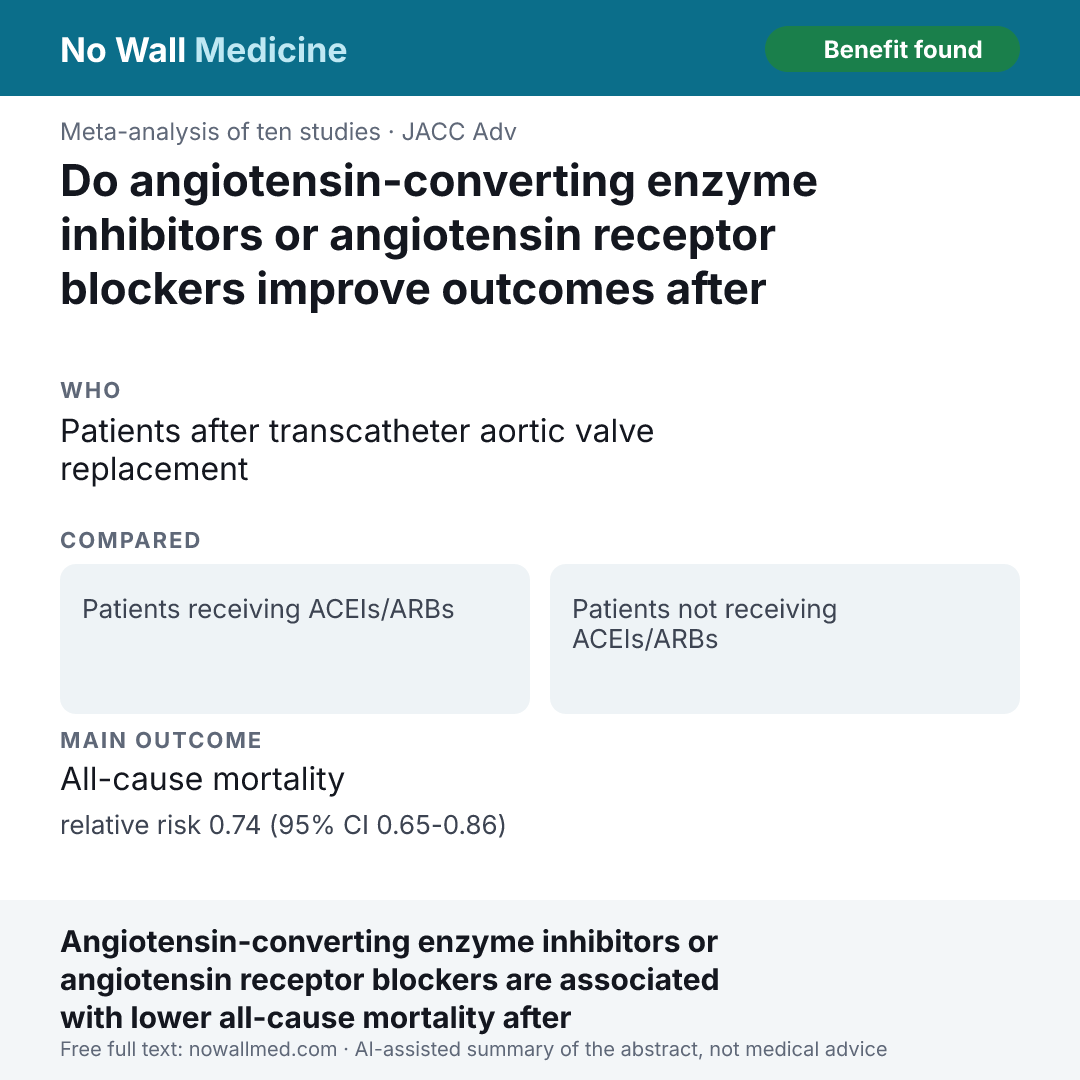
Clinical question: Do angiotensin-converting enzyme inhibitors or angiotensin receptor blockers improve outcomes after transcatheter aortic valve replacement?
Key points
- Researchers analyzed ten studies comparing patients receiving angiotensin-converting enzyme inhibitors or angiotensin receptor blockers to those who did not after transcatheter aortic valve replacement.
- Patients using these medications had a lower risk of all-cause mortality (RR: 0.74, 95% CI: 0.65-0.86), cardiovascular mortality (RR: 0.70, 95% CI: 0.56-0.88), and new-onset atrial fibrillation (RR: 0.71, 95% CI: 0.52-0.96).
- The risk of stroke, heart failure, and major bleeding was similar between the two groups.
Headline and key points written with AI from the paper’s abstract, with every number checked against it. Read the paper before relying on them.
Was this summary helpful?
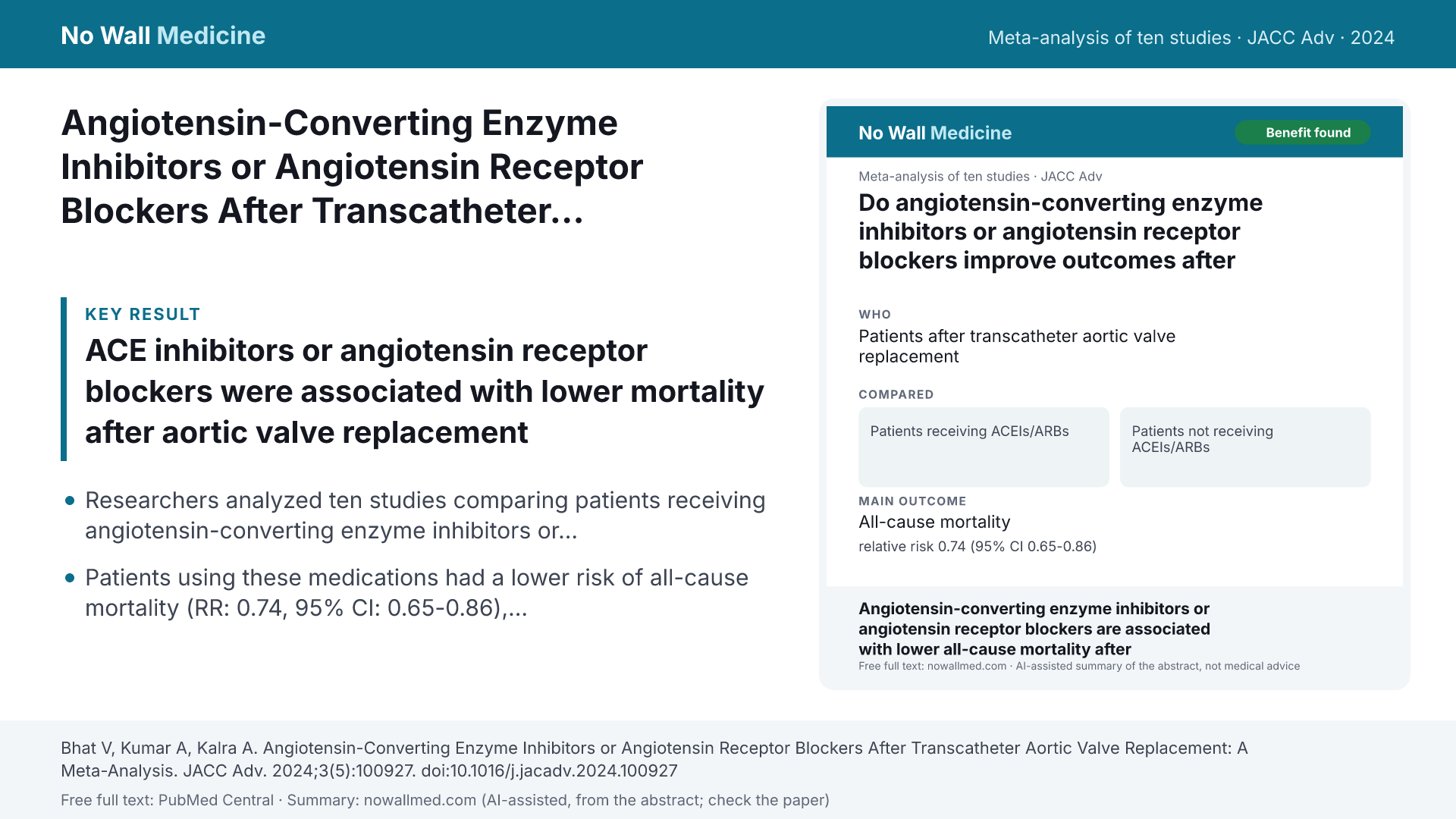
Headline, design, result, key points, caveat and citation as plain text.
Cite this article
Bhat V, Kumar A, Kalra A. Angiotensin-Converting Enzyme Inhibitors or Angiotensin Receptor Blockers After Transcatheter Aortic Valve Replacement: A Meta-Analysis. JACC Adv. 2024;3(5):100927. doi:10.1016/j.jacadv.2024.100927
Spotted a mistake? Suggest a correction