Antibiotic-impregnated catheters were associated with lower rates of bacterial infection in hydrocephalus patients
Antibiotic-Impregnated Ventriculoperitoneal Shunts Decrease Bacterial Shunt Infection: A Systematic Review and Meta-Analysis
Systematic review and meta-analysisBenefit found
Do antibiotic-impregnated shunt catheters reduce bacterial shunt infection in hydrocephalus patients?
Who
27266
Patients with hydrocephalus undergoing shunt operations
Compared
Antibiotic-impregnated shunt catheters
Standard shunt
Main outcome
Rate of bacterial infections
Result: odds ratio 0.42 (95% CI: 0.33-0.54)
Bottom line: Antibiotic-impregnated shunt catheters significantly reduce the rate of bacterial ventriculoperitoneal-shunt infection.
Neurosurgery · 2024-05-29Download image
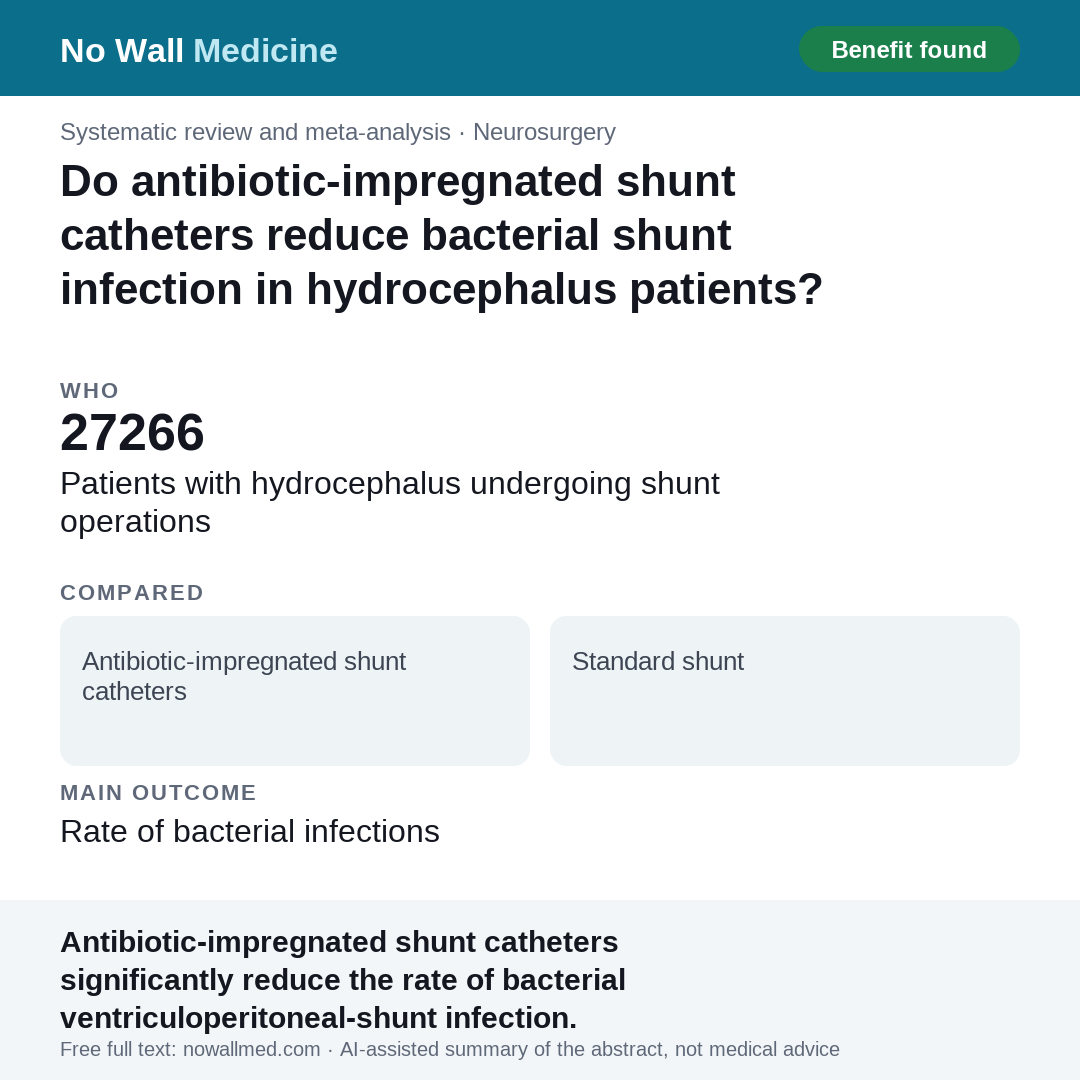
Clinical question: Do antibiotic-impregnated shunt catheters reduce bacterial shunt infection in hydrocephalus patients?
Why it matters: The efficacy of antibiotic-impregnated shunt catheters in reducing bacterial infections and shunt failure in patients with hydrocephalus was not clearly established.
Key points
- Researchers analyzed 27 articles involving 27,266 shunt operations to compare antibiotic-impregnated shunt catheters with standard shunts.
- The use of antibiotic-impregnated catheters was associated with a lower rate of bacterial infection (OR = 0.42; 95% CI: 0.33-0.54).
- There was a tendency toward antibiotic-impregnated catheters being associated with lower shunt failure rates (OR = 0.73; 95% CI: 0.51-1.06).
Headline and key points written with AI from the paper’s abstract, with every number checked against it. Read the paper before relying on them.
Topics
Cite this article
Kovács J, Máté V, Obeidat M, Nagy R, Agócs G, Kiss-Dala S. Antibiotic-Impregnated Ventriculoperitoneal Shunts Decrease Bacterial Shunt Infection: A Systematic Review and Meta-Analysis. Neurosurgery. 2024. doi:10.1227/neu.0000000000003009
Spotted a mistake? Suggest a correction
Top studies every Monday
The week’s key trials and guidelines in your specialties, plus any topics you follow. By email, free.
Get the weekly digest