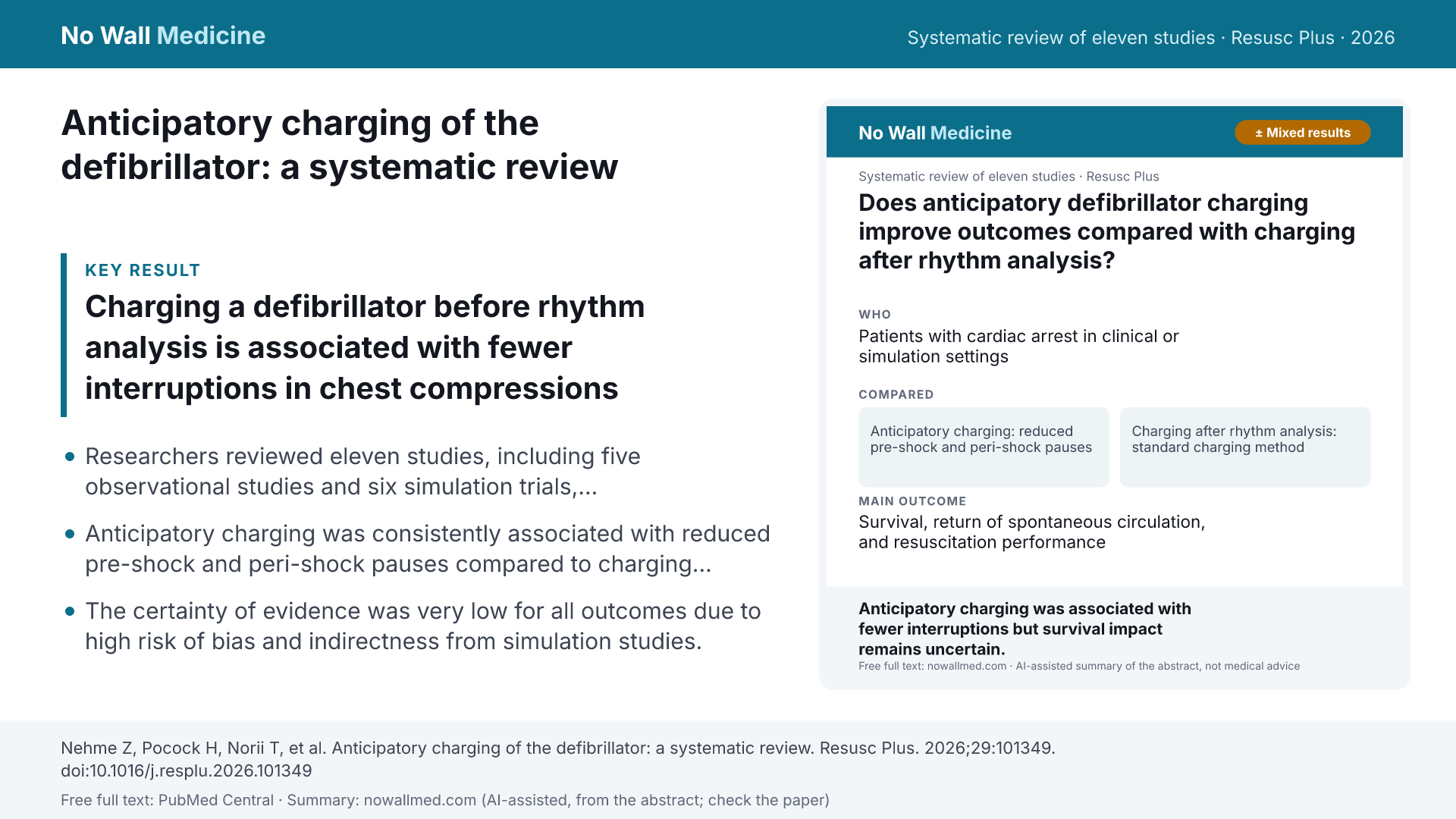
Anticipatory charging of the defibrillator: a systematic review
Key result: Charging a defibrillator before rhythm analysis is associated with fewer interruptions in chest compressions
Systematic review of eleven studiesMixed results
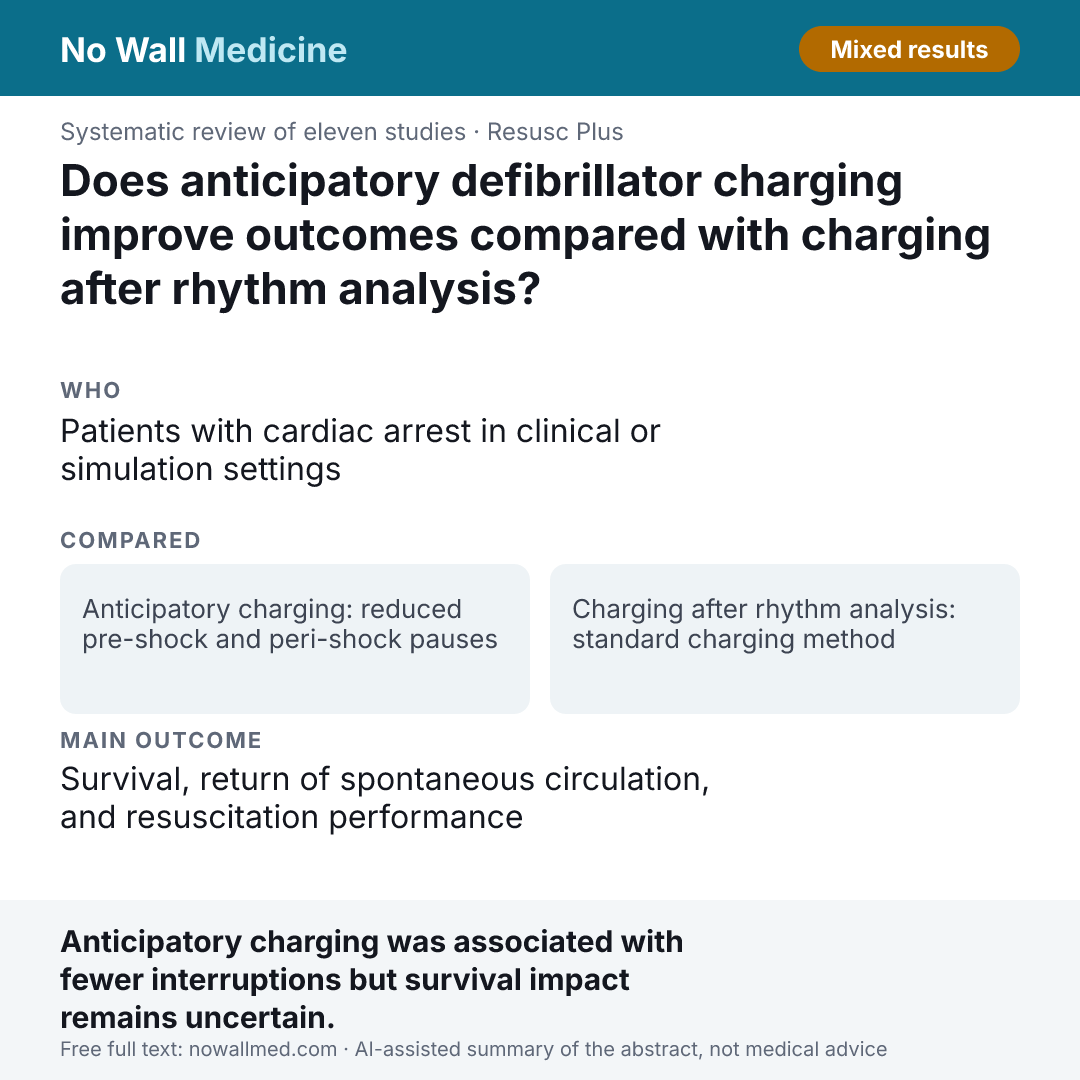
Does anticipatory defibrillator charging improve outcomes compared with charging after rhythm analysis?
Who
Patients with cardiac arrest in clinical or simulation settings
Compared
Anticipatory charging: reduced pre-shock and peri-shock pauses
Charging after rhythm analysis: standard charging method
Main outcome
Survival, return of spontaneous circulation, and resuscitation performance
Bottom line: Anticipatory charging was associated with fewer interruptions but survival impact remains uncertain.
Limitation: Very low certainty of evidence due to high risk of bias and indirectness.
Resusc Plus · 2026-04-28 · Save PNG
Key points
- Researchers reviewed eleven studies, including five observational studies and six simulation trials, comparing charging a defibrillator before versus after rhythm analysis.
- Anticipatory charging was consistently associated with reduced pre-shock and peri-shock pauses compared to charging after rhythm analysis.
- The certainty of evidence was very low for all outcomes due to high risk of bias and indirectness from simulation studies.
Limitation the authors note: The certainty of evidence was very low for all outcomes due to high risk of bias and indirectness from simulation or bundled intervention studies.
Discussion prompts
- Would these patients look like yours? Who was left out?
- Is the main outcome one that matters to patients?
- Is the difference large enough to change what you do?
Cite: Nehme Z, Pocock H, Norii T, et al. Anticipatory charging of the defibrillator: a systematic review. Resusc Plus. 2026;29:101349. doi:10.1016/j.resplu.2026.101349
Free full text: PubMed Central · Summary and visual abstract: nowallmed.com/a/anticipatory-charging-of-the-defibrillator-a-systematic-34bs4g/ (AI-assisted from the abstract; check the paper before relying on it).