Anticoagulant treatment for upper extremity deep vein thrombosis: A systematic review and meta-analysis
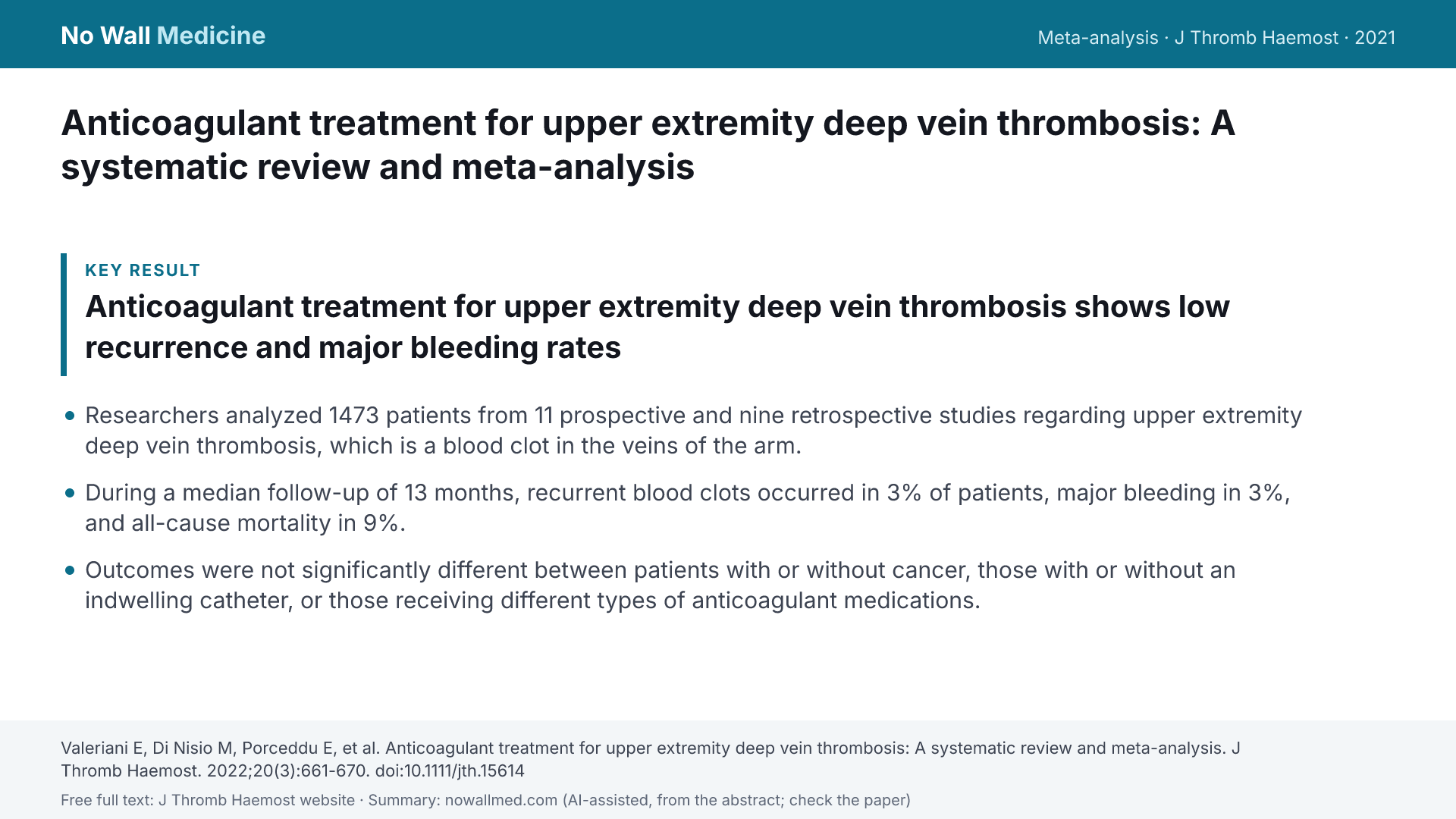
Key result: Anticoagulant treatment for upper extremity deep vein thrombosis shows low recurrence and major bleeding rates
Key points
- Researchers analyzed 1473 patients from 11 prospective and nine retrospective studies regarding upper extremity deep vein thrombosis, which is a blood clot in the veins of the arm.
- During a median follow-up of 13 months, recurrent blood clots occurred in 3% of patients, major bleeding in 3%, and all-cause mortality in 9%.
- Outcomes were not significantly different between patients with or without cancer, those with or without an indwelling catheter, or those receiving different types of anticoagulant medications.
Why it matters: Data regarding the efficacy and safety of anticoagulant therapy for blood clots in the arm are largely derived from studies on blood clots in other parts of the body.
Discussion prompts
- Would these patients look like yours? Who was left out?
- Is the main outcome one that matters to patients?
- Is the difference large enough to change what you do?
Cite: Valeriani E, Di Nisio M, Porceddu E, et al. Anticoagulant treatment for upper extremity deep vein thrombosis: A systematic review and meta-analysis. J Thromb Haemost. 2022;20(3):661-670. doi:10.1111/jth.15614
Free full text: J Thromb Haemost website · Summary and visual abstract: nowallmed.com/a/anticoagulant-treatment-for-upper-extremity-deep-vein-thrombosis-a-tjvtr0/ (AI-assisted from the abstract; check the paper before relying on it).