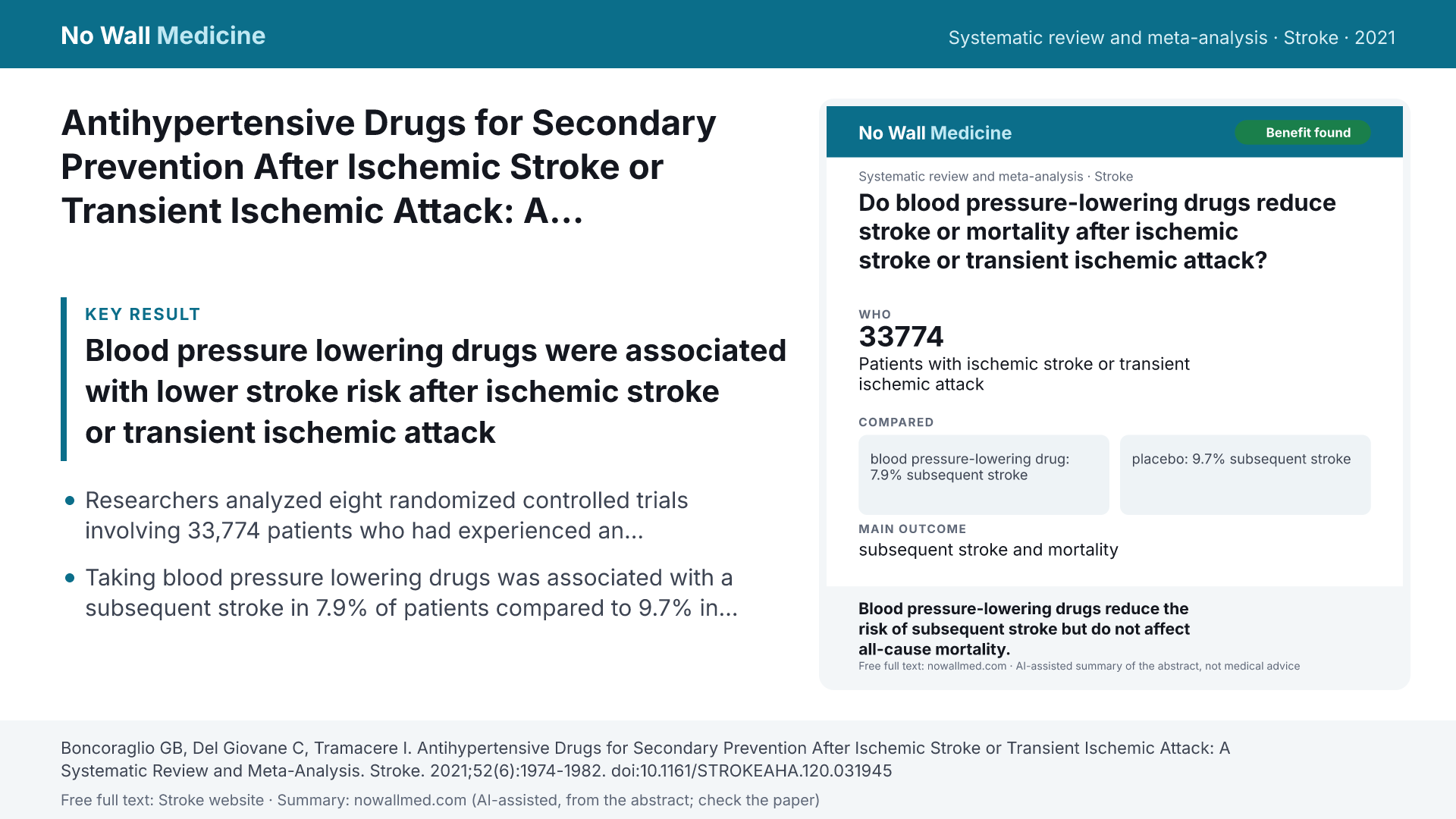
Blood pressure lowering drugs were associated with lower stroke risk after ischemic stroke or transient ischemic attack
Antihypertensive Drugs for Secondary Prevention After Ischemic Stroke or Transient Ischemic Attack: A Systematic Review and Meta-Analysis
Systematic review and meta-analysisBenefit found
Do blood pressure-lowering drugs reduce stroke or mortality after ischemic stroke or transient ischemic attack?
Who
33774
Patients with ischemic stroke or transient ischemic attack
Compared
blood pressure-lowering drug: 7.9% subsequent stroke
placebo: 9.7% subsequent stroke
Main outcome
subsequent stroke and mortality
Result: odds ratio 0.79 (95% CI 0.66-0.94)
Bottom line: Blood pressure-lowering drugs reduce the risk of subsequent stroke but do not affect all-cause mortality.
Stroke · 2021-04-27 · Save PNG
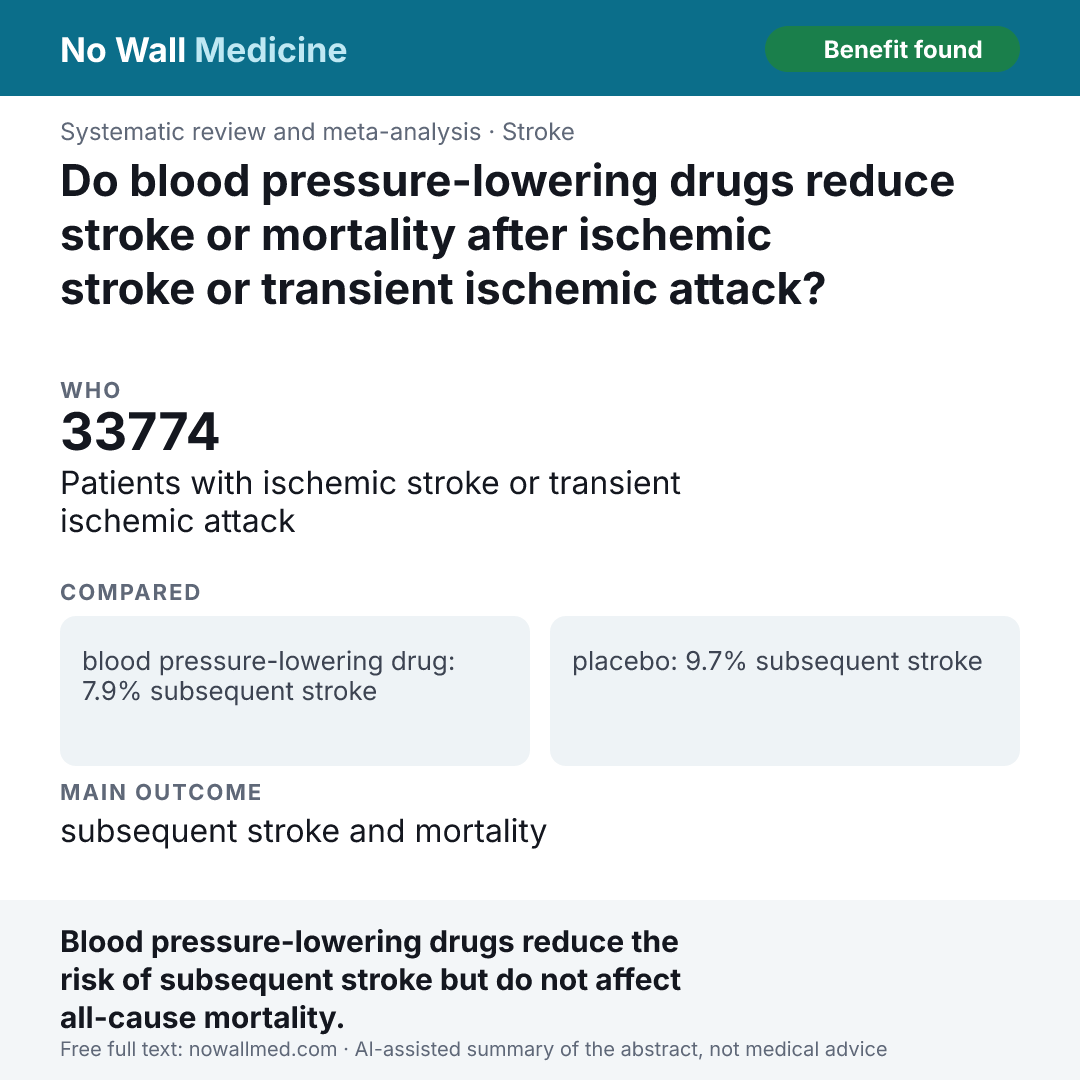
Clinical question: Do blood pressure-lowering drugs reduce stroke or mortality after ischemic stroke or transient ischemic attack?
Why it matters: Current guidelines for preventing a second stroke rely on evidence that combines both ischemic and hemorrhagic stroke patients, which are different medical conditions.
Key points
- Researchers analyzed eight randomized controlled trials involving 33,774 patients who had experienced an ischemic stroke or a transient ischemic attack, which is a temporary period of stroke-like symptoms.
- Taking blood pressure lowering drugs was associated with a subsequent stroke in 7.9% of patients compared to 9.7% in the placebo group.
- The risk of death was similar between groups, with 7.3% of patients taking blood pressure medication and 7.9% of patients taking a placebo dying during follow-up.
Headline and key points written with AI from the paper’s abstract, with every number checked against it. Read the paper before relying on them.
Was this summary helpful?
Subject terms
Headline, design, result, key points, caveat and citation as plain text.
Cite this article
Boncoraglio GB, Del Giovane C, Tramacere I. Antihypertensive Drugs for Secondary Prevention After Ischemic Stroke or Transient Ischemic Attack: A Systematic Review and Meta-Analysis. Stroke. 2021;52(6):1974-1982. doi:10.1161/STROKEAHA.120.031945
Spotted a mistake? Suggest a correction