Higher doses of most antipsychotics are associated with increased risk of movement side effects
Antipsychotic dose, dopamine D2 receptor occupancy and extrapyramidal side-effects: a systematic review and dose-response meta-analysis
Systematic review and dose-response meta-analysisMixed results
How do antipsychotic doses and dopamine D2 receptor occupancy affect extrapyramidal side-effects?
Who
37193
Adults with acute exacerbations of schizophrenia
Compared
Antipsychotics: maximum ORs ranged from OR = 1.57 95%CI [0.97, 2.56] to OR = 7.56 95%CI [3.16, 18.08]
Placebo
Main outcome
Number of participants receiving antiparkinsonian medication or extrapyramidal side-effects
Bottom line: Most antipsychotics show dose-dependent extrapyramidal side-effects, except for quetiapine and sertindole which have negligible risks.
Mol Psychiatry · 2023-08-03Download image
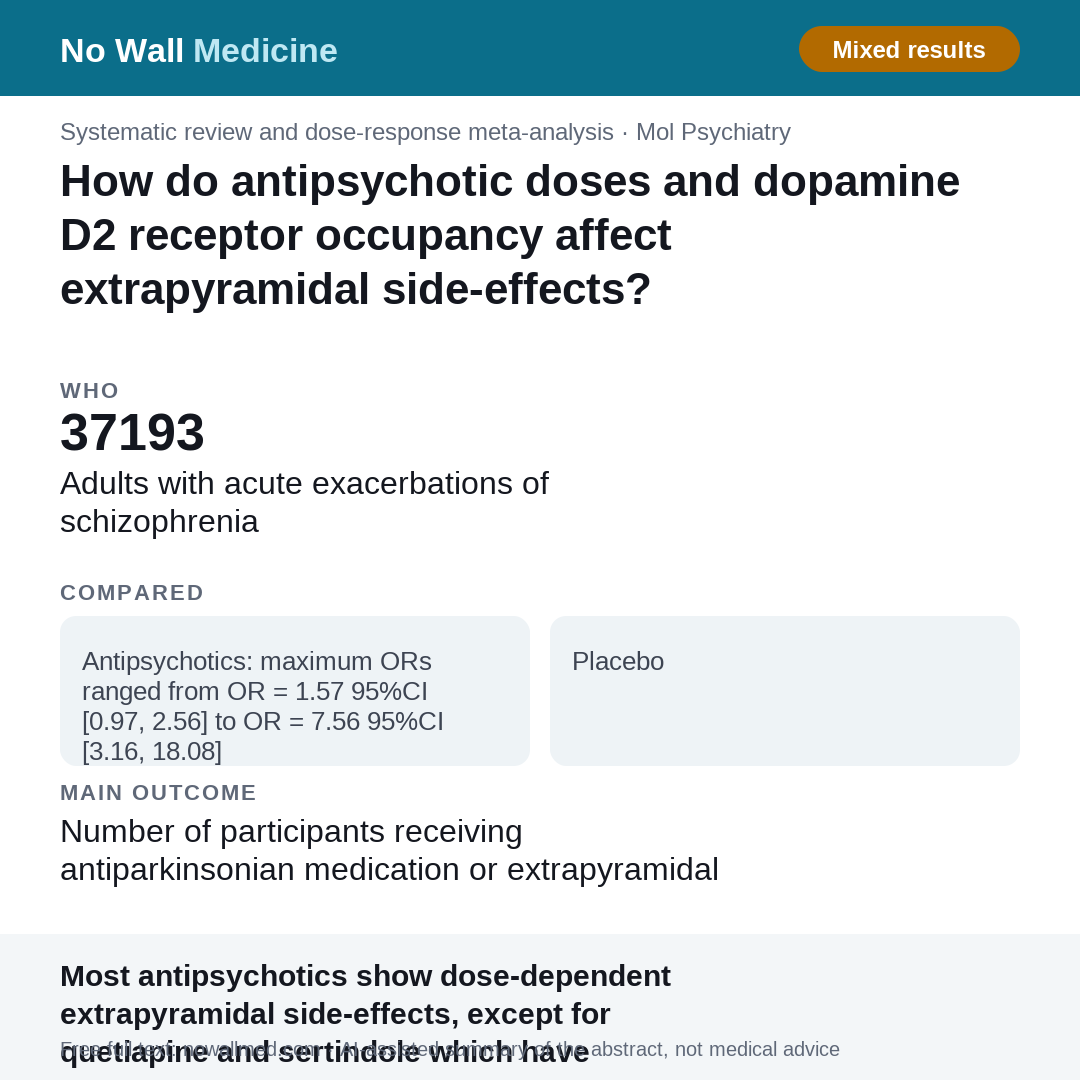
Clinical question: How do antipsychotic doses and dopamine D2 receptor occupancy affect extrapyramidal side-effects?
Why it matters: The relationship between antipsychotic doses, dopamine D2 receptor occupancy, and the risk of movement side-effects remains unclear.
Key points
- Researchers analyzed 110 studies involving 37193 participants to examine how doses of 16 second-generation antipsychotics and haloperidol affect extrapyramidal side-effects, which are movement disorders.
- Most antipsychotics showed a dose-dependent increase in side-effect risk, with maximum odds ratios ranging from 1.57 for aripiprazole to 7.56 for haloperidol at 30 mg/d.
- The risk of movement side-effects increased substantially when dopamine D2 receptor occupancy exceeded 75-85%, though quetiapine and sertindole showed negligible risks across all doses.
Limitation the authors note: Most included studies were short-term with a median duration of 6 weeks.
Headline and key points written with AI from the paper’s abstract, with every number checked against it. Read the paper before relying on them.
Was this summary helpful?
Subject terms
Cite this article
Siafis S, Wu H, Wang D, Burschinski A, Nomura N, Takeuchi H. Antipsychotic dose, dopamine D2 receptor occupancy and extrapyramidal side-effects: a systematic review and dose-response meta-analysis. Mol Psychiatry. 2023. doi:10.1038/s41380-023-02203-y
Spotted a mistake? Suggest a correction
Top studies every Monday
The week’s key trials and guidelines in your specialties, plus any topics you follow. By email, free.
Get the weekly digest