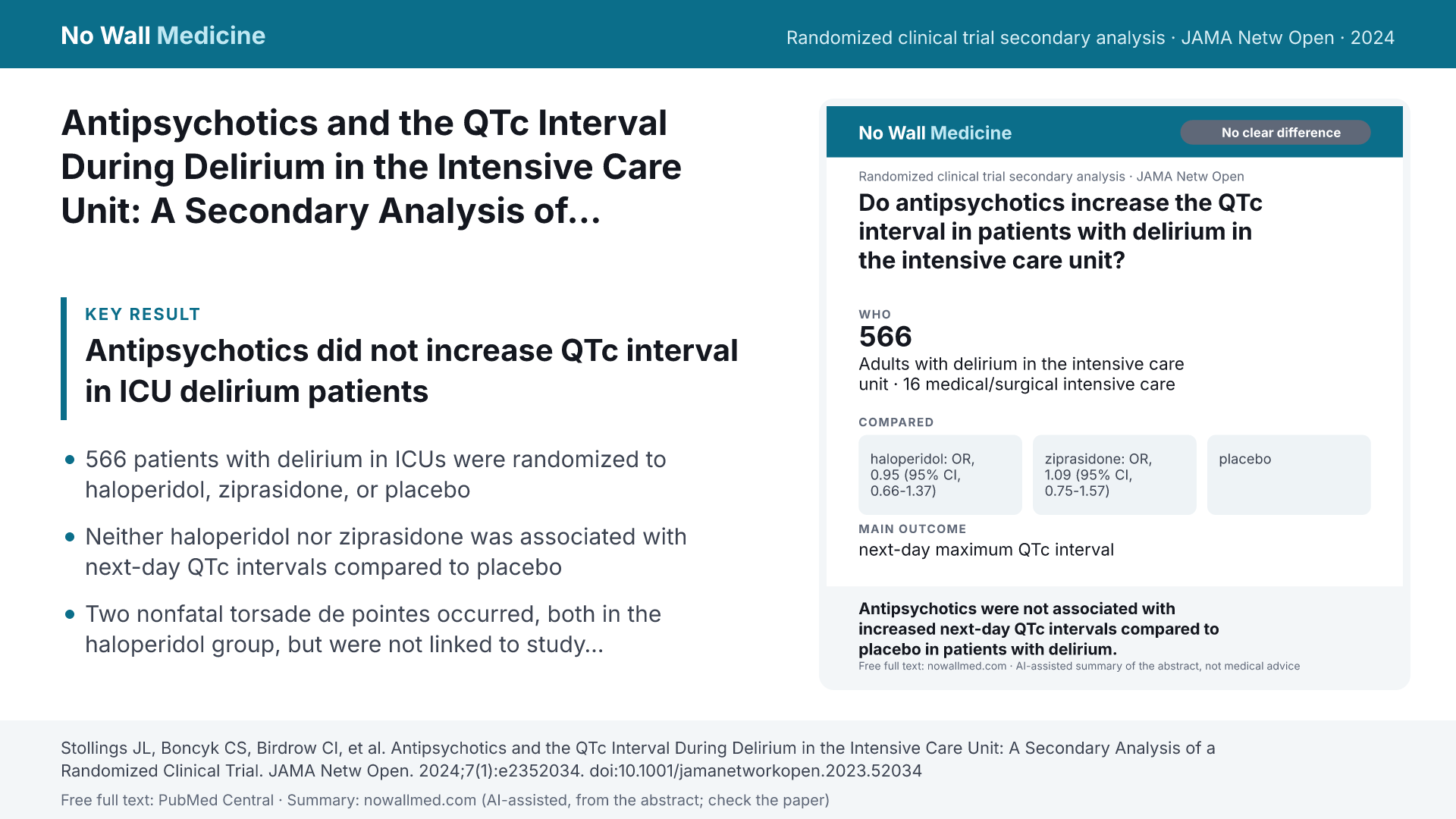
Antipsychotics and the QTc Interval During Delirium in the Intensive Care Unit: A Secondary Analysis of a Randomized Clinical Trial
Key result: Antipsychotics did not increase QTc interval in ICU delirium patients
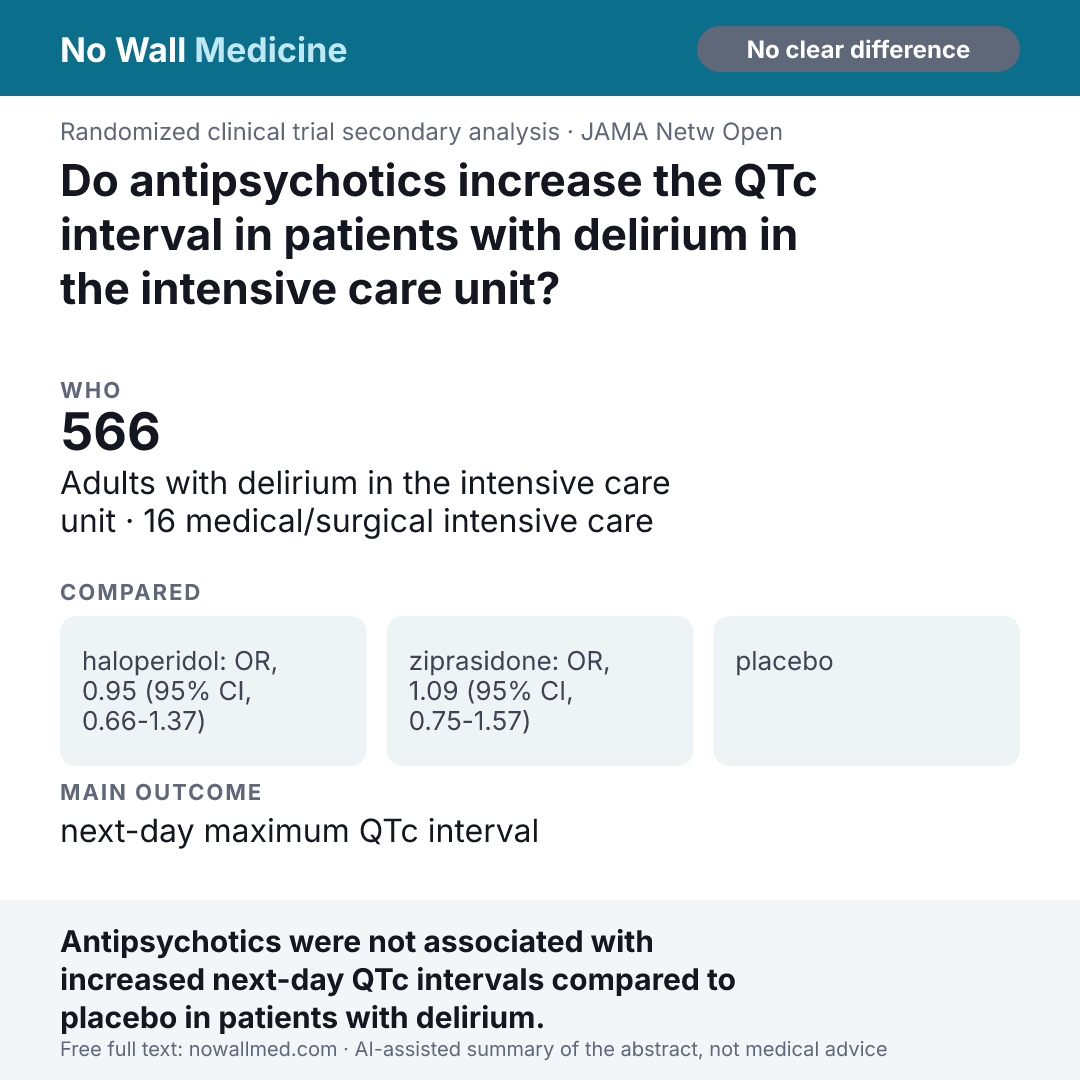
Randomized clinical trial secondary analysisNo clear difference
Do antipsychotics increase the QTc interval in patients with delirium in the intensive care unit?
Who
566
Adults with delirium in the intensive care unit · 16 medical/surgical intensive care centers across the US
Compared
haloperidol: OR, 0.95 (95% CI, 0.66-1.37)
ziprasidone: OR, 1.09 (95% CI, 0.75-1.57)
placebo
Main outcome
next-day maximum QTc interval
Result: OR, 0.95 (95% CI, 0.66-1.37) for haloperidol; OR, 1.09 (95% CI, 0.75-1.57) for ziprasidone
Bottom line: Antipsychotics were not associated with increased next-day QTc intervals compared to placebo in patients with delirium.
JAMA Netw Open · 2024-01-02 · Save PNG
Key points
- 566 patients with delirium in ICUs were randomized to haloperidol, ziprasidone, or placebo.
- Neither haloperidol nor ziprasidone was associated with next-day QTc intervals compared to placebo.
- Two nonfatal torsade de pointes occurred, both in the haloperidol group, but were not linked to study drug administration.
Limitation the authors note: The study had a limited duration of 14 days or until ICU discharge
Discussion prompts
- Would these patients look like yours? Who was left out?
- Is the main outcome one that matters to patients?
- Is the difference large enough to change what you do?
Cite: Stollings JL, Boncyk CS, Birdrow CI, et al. Antipsychotics and the QTc Interval During Delirium in the Intensive Care Unit: A Secondary Analysis of a Randomized Clinical Trial. JAMA Netw Open. 2024;7(1):e2352034. doi:10.1001/jamanetworkopen.2023.52034
Free full text: PubMed Central · Summary and visual abstract: nowallmed.com/a/antipsychotics-and-the-qtc-interval-during-delirium-in-the-intensive-12aa7hb/ (AI-assisted from the abstract; check the paper before relying on it).