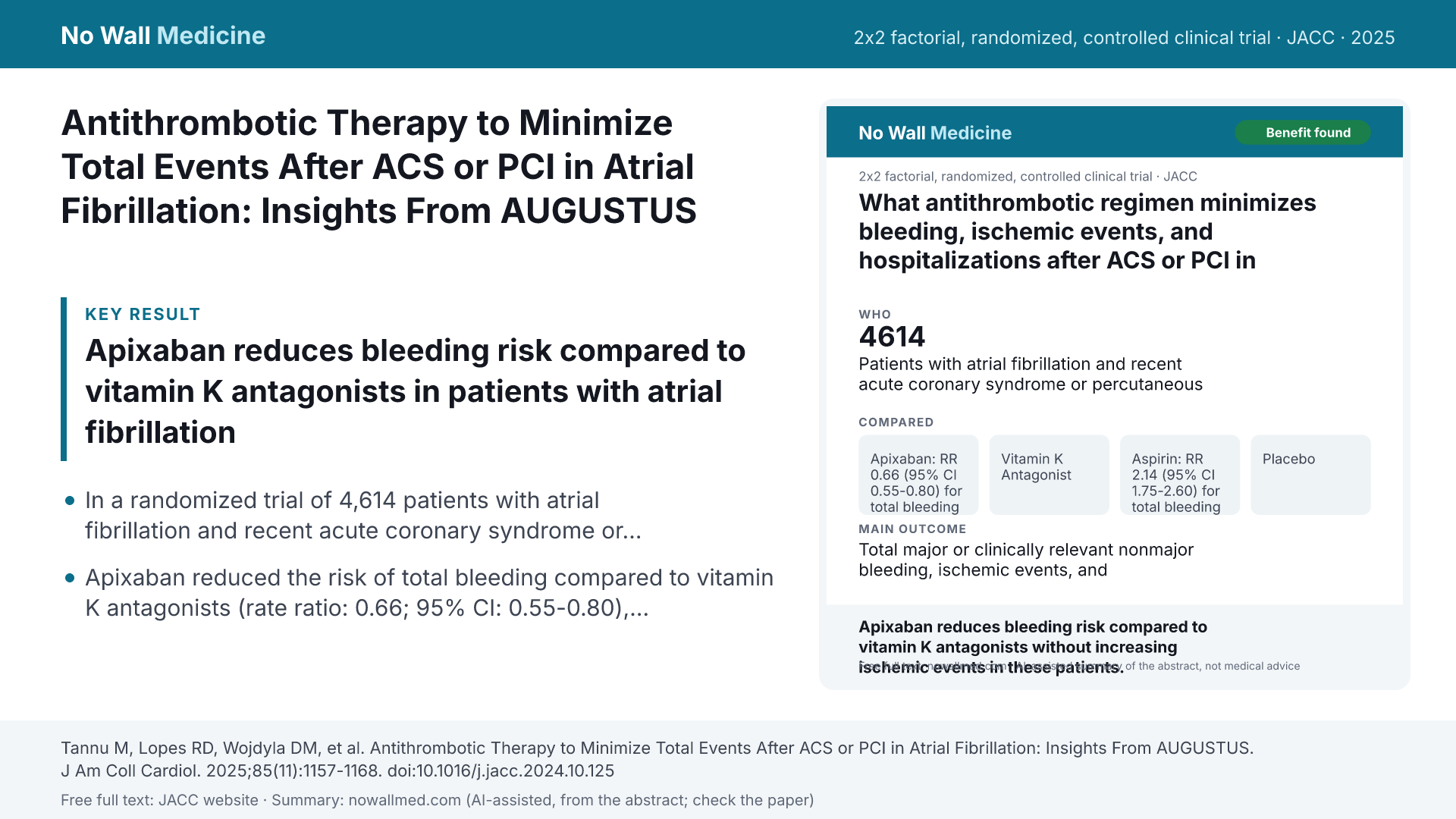
Apixaban reduces bleeding risk compared to vitamin K antagonists in patients with atrial fibrillation
Antithrombotic Therapy to Minimize Total Events After ACS or PCI in Atrial Fibrillation: Insights From AUGUSTUS
Secondary analysis of a trialBenefit found
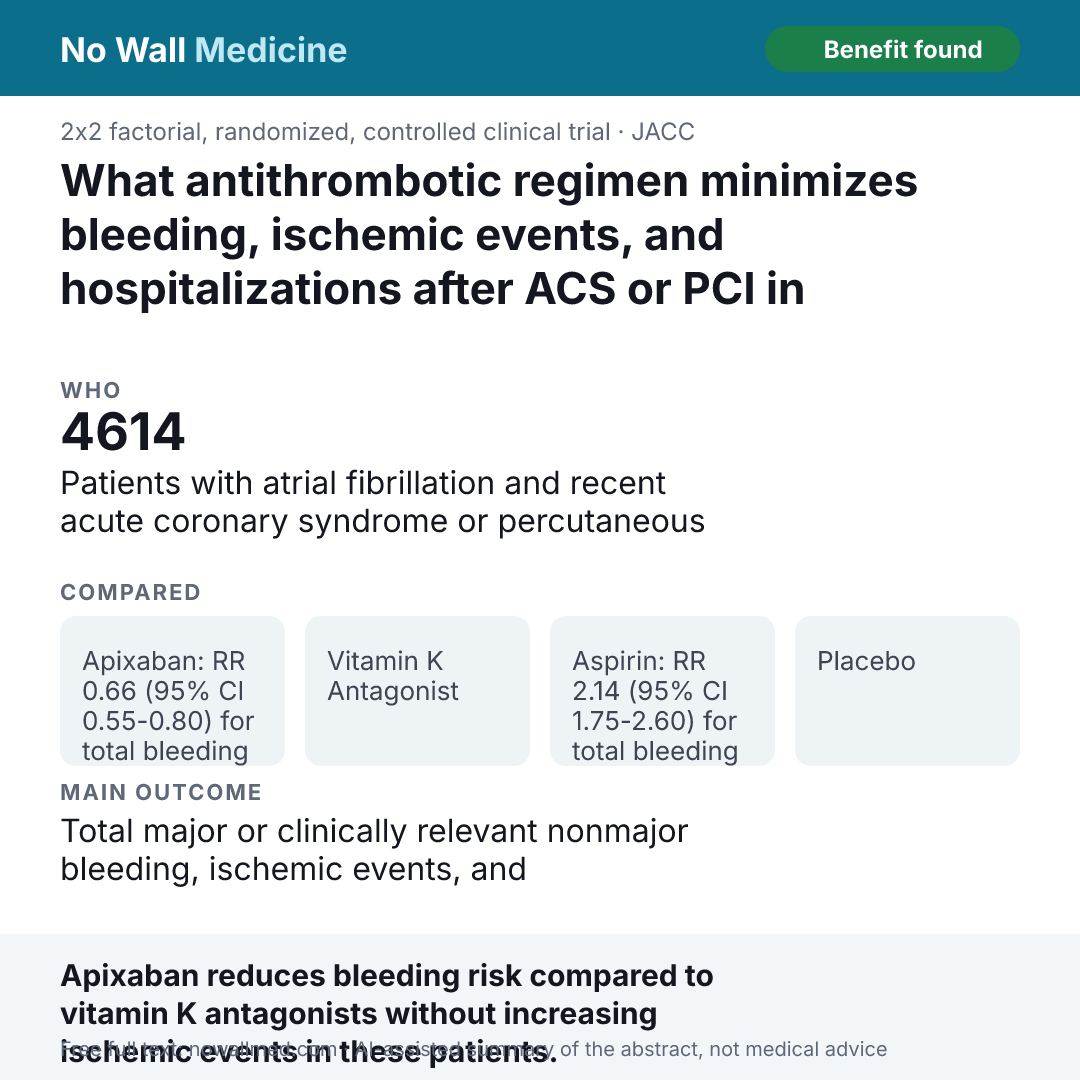
What antithrombotic regimen minimizes bleeding, ischemic events, and hospitalizations after ACS or PCI in atrial fibrillation?
Who
4614
Patients with atrial fibrillation and recent acute coronary syndrome or percutaneous coronary intervention
Compared
Apixaban: RR 0.66 (95% CI 0.55-0.80) for total bleeding
Vitamin K Antagonist
Aspirin: RR 2.14 (95% CI 1.75-2.60) for total bleeding
Placebo
Main outcome
Total major or clinically relevant nonmajor bleeding, ischemic events, and hospitalizations
Result: RR 0.66 (95% CI 0.55-0.80) for bleeding (apixaban vs VKA)
Bottom line: Apixaban reduces bleeding risk compared to vitamin K antagonists without increasing ischemic events in these patients.
JACC · 2025-02-05 · Save PNG
Same trial (NCT02415400)
Papers we list that report this registered trial, oldest first. Read a secondary analysis alongside the main results.
- Main results Benefit found
Apixaban and omitting aspirin were associated with lower bleeding in patients with atrial fibrillation JACC 2022-02 - Secondary analysis Mixed results
Apixaban and aspirin use in patients with atrial fibrillation and recent heart procedures depends on prior stroke history JAMA Cardiol 2022-05 - Related analysis Benefit found
Apixaban and placebo resulted in fewer composite outcomes than other antithrombotic regimens in patients JACC 2024-08 - Secondary analysis Benefit found
This paper JACC 2025-02
Clinical question: What antithrombotic regimen minimizes bleeding, ischemic events, and hospitalizations after ACS or PCI in atrial fibrillation?
Why it matters: The optimal antithrombotic strategy to minimize bleeding and ischemic events is unknown for patients with atrial fibrillation following acute coronary syndrome or percutaneous coronary intervention.
Key points
- In a randomized trial of 4,614 patients with atrial fibrillation and recent acute coronary syndrome or percutaneous coronary intervention, apixaban was compared to vitamin K antagonists and aspirin to placebo.
- Apixaban reduced the risk of total bleeding compared to vitamin K antagonists (rate ratio: 0.66; 95% CI: 0.55-0.80), while aspirin increased bleeding risk compared to placebo (rate ratio: 2.14; 95% CI: 1.75-2.60).
- Apixaban and aspirin both showed similar rates of total ischemic events and total hospitalizations when compared to their respective control groups.
Headline and key points written with AI from the paper’s abstract, with every number checked against it. Read the paper before relying on them.
Was this summary helpful?
Subject terms
Headline, design, result, key points, caveat and citation as plain text.
Cite this article
Tannu M, Lopes RD, Wojdyla DM, et al. Antithrombotic Therapy to Minimize Total Events After ACS or PCI in Atrial Fibrillation: Insights From AUGUSTUS. J Am Coll Cardiol. 2025;85(11):1157-1168. doi:10.1016/j.jacc.2024.10.125
Spotted a mistake? Suggest a correction