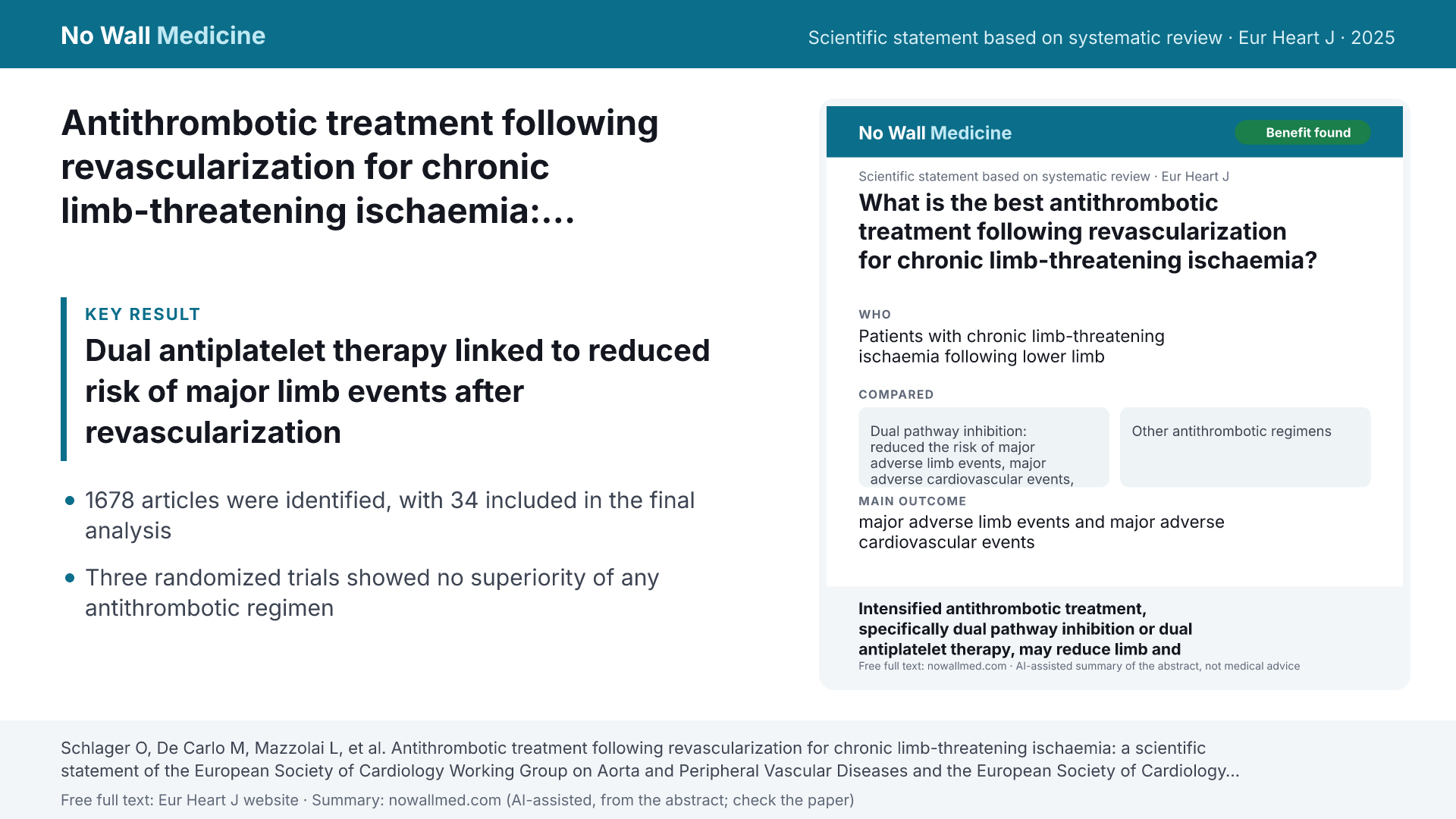
Antithrombotic treatment following revascularization for chronic limb-threatening ischaemia: a scientific statement of the European Society of Cardiology Working Group on Aorta and Peripheral Vascular Diseases and the European Society of Cardiology Working Group on Cardiovascular Pharmacotherapy
Key result: Dual antiplatelet therapy linked to reduced risk of major limb events after revascularization
Key points
- 1678 articles were identified, with 34 included in the final analysis.
- Three randomized trials showed no superiority of any antithrombotic regimen.
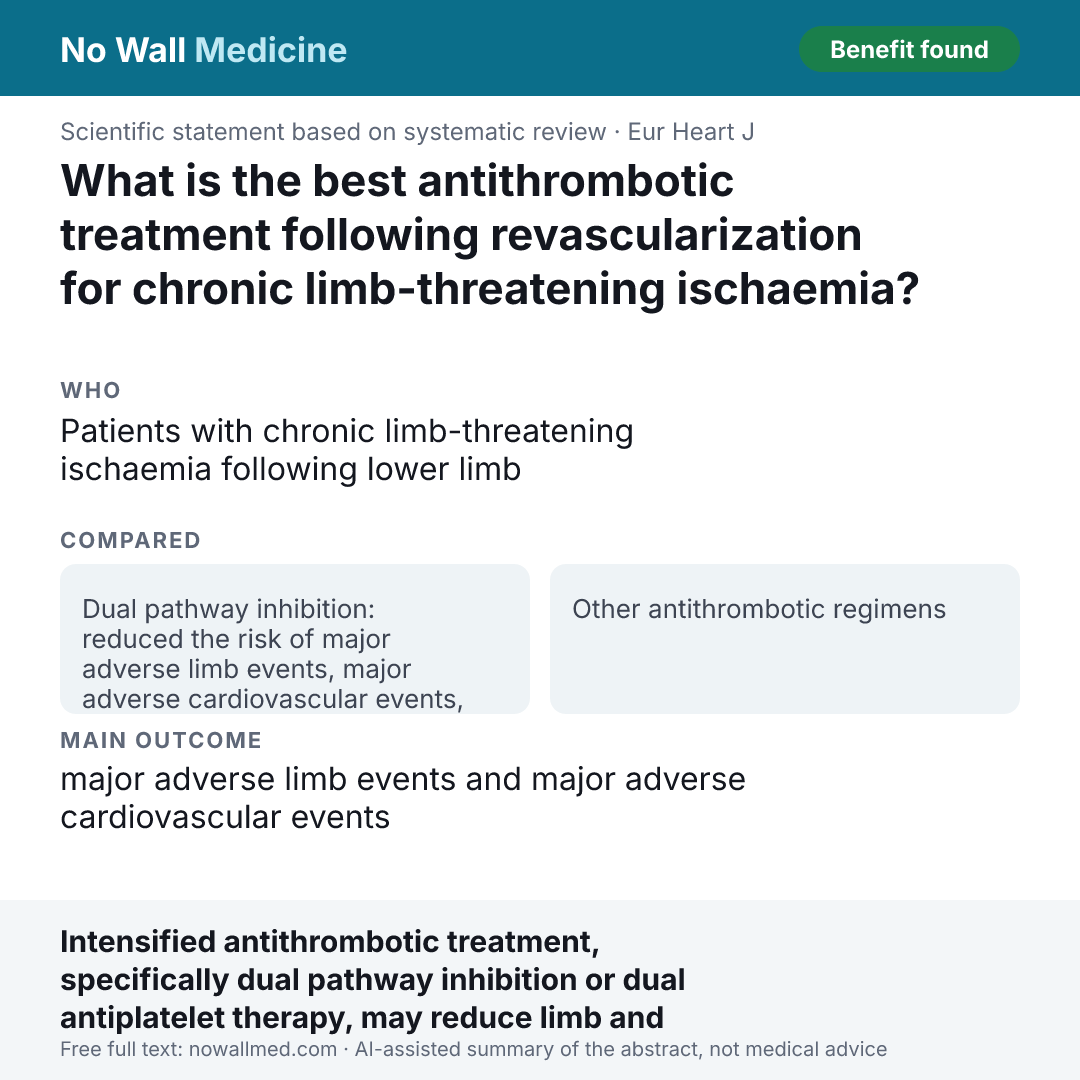
- Dual pathway inhibition reduced risk of major adverse limb events and major adverse cardiovascular events.
Why it matters: Guidance is needed on antithrombotic treatment after revascularization for chronic limb-threatening ischaemia
Limitation the authors note: Randomized controlled trials on antithrombotic therapy in patients with chronic limb-threatening ischaemia following revascularization are scarce
Discussion prompts
- Would these patients look like yours? Who was left out?
- Is the main outcome one that matters to patients?
- Is the difference large enough to change what you do?
Cite: Schlager O, De Carlo M, Mazzolai L, et al. Antithrombotic treatment following revascularization for chronic limb-threatening ischaemia: a scientific statement of the European Society of Cardiology Working Group on Aorta and Peripheral Vascular Diseases and the European Society of Cardiology Working Group on Cardiovascular Pharmacotherapy. Eur Heart J. 2025;46(28):2742-2759. doi:10.1093/eurheartj/ehaf317
Free full text: Eur Heart J website · Summary and visual abstract: nowallmed.com/a/antithrombotic-treatment-following-revascularization-for-chronic-limb-116kzr6/ (AI-assisted from the abstract; check the paper before relying on it).