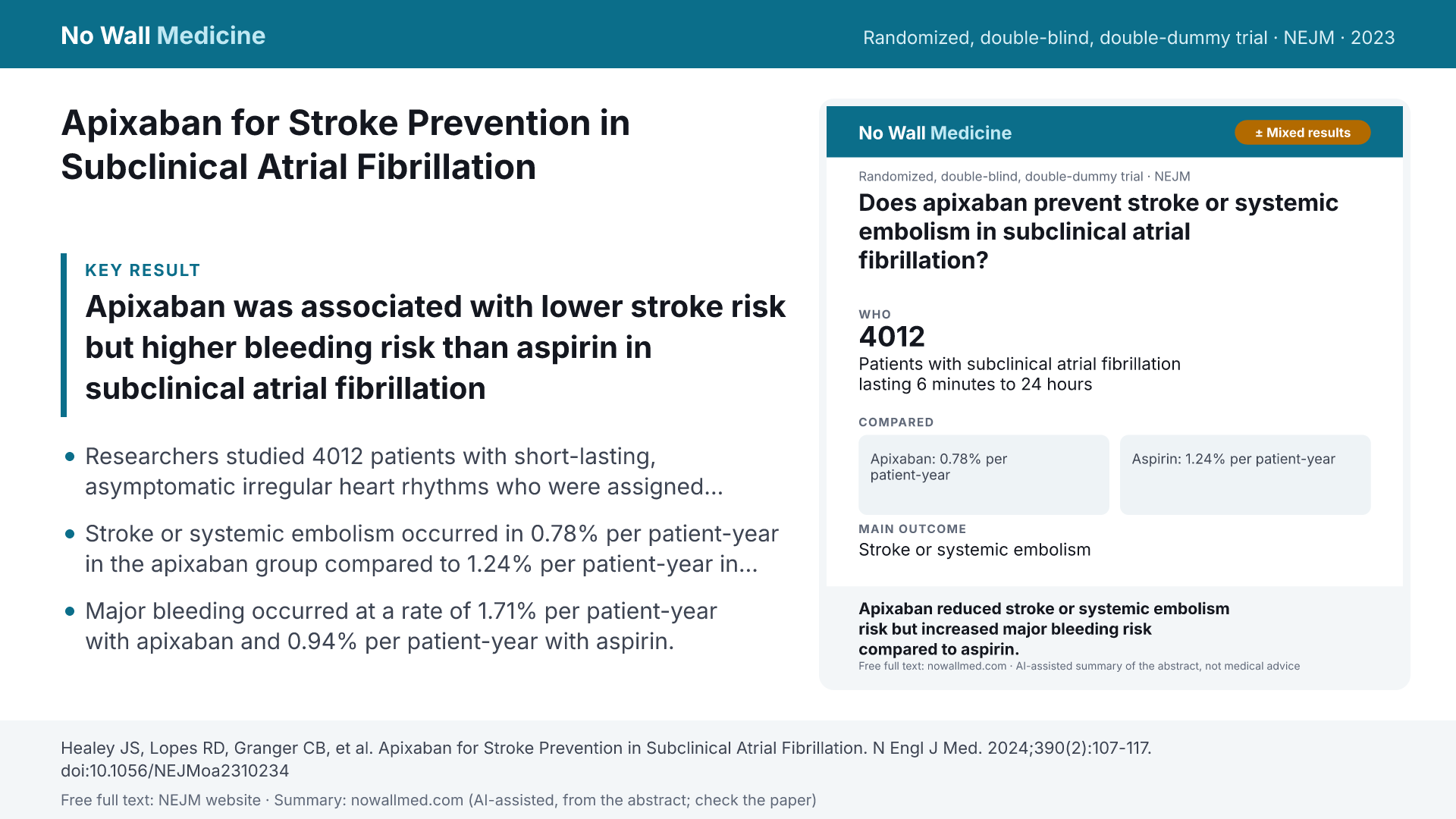
Apixaban was associated with lower stroke risk but higher bleeding risk than aspirin in subclinical atrial fibrillation
Apixaban for Stroke Prevention in Subclinical Atrial Fibrillation
Randomized, double-blind, double-dummy trialMixed results
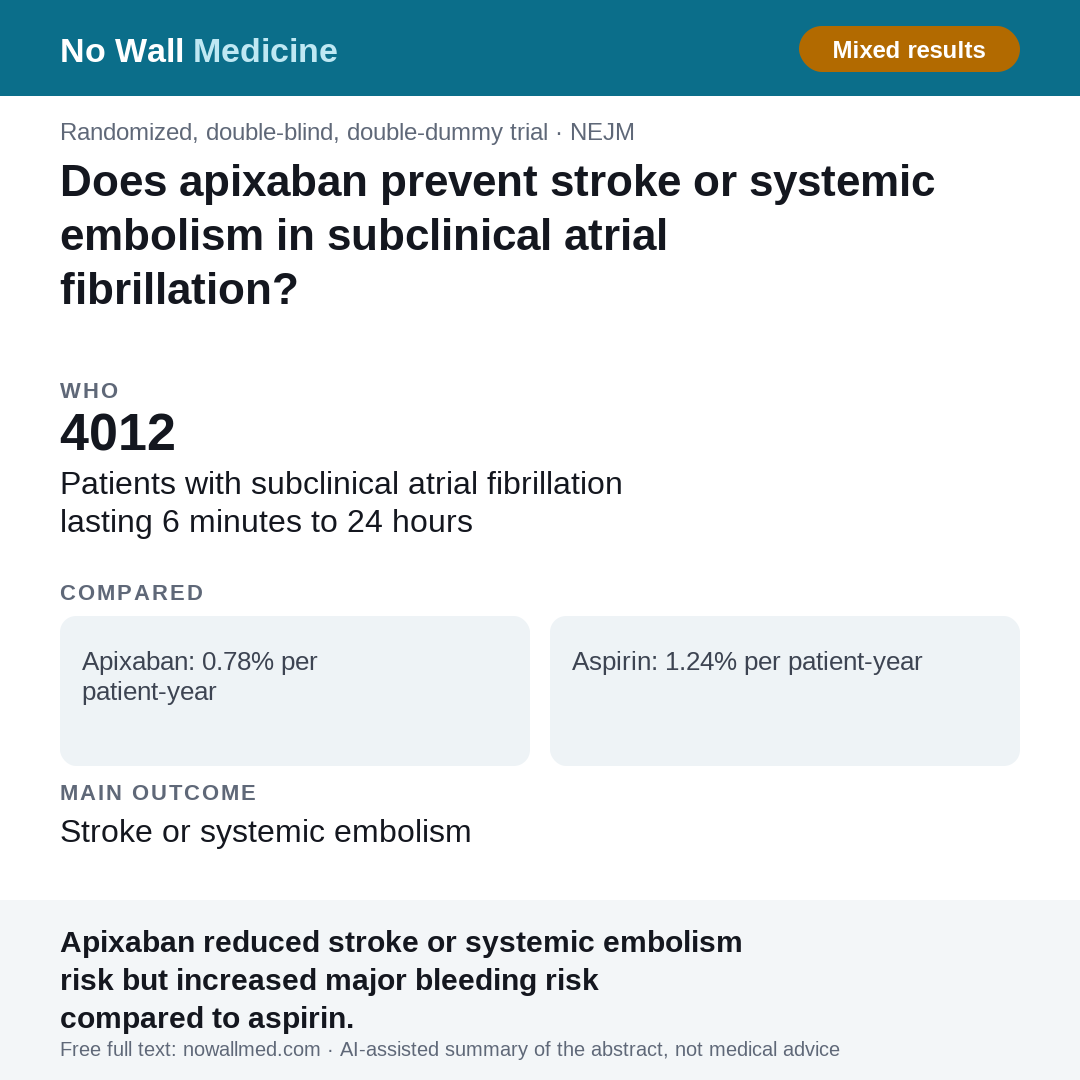
Does apixaban prevent stroke or systemic embolism in subclinical atrial fibrillation?
Who
4012
Patients with subclinical atrial fibrillation lasting 6 minutes to 24 hours
Compared
Apixaban: 0.78% per patient-year
Aspirin: 1.24% per patient-year
Main outcome
Stroke or systemic embolism
Result: hazard ratio 0.63 (95% CI 0.45 to 0.88)
Bottom line: Apixaban reduced stroke or systemic embolism risk but increased major bleeding risk compared to aspirin.
Funded by: Canadian Institutes of Health Research and others
NEJM · 2023-11-12Download image
Clinical question: Does apixaban prevent stroke or systemic embolism in subclinical atrial fibrillation?
Why it matters: The benefit of using oral anticoagulation, a class of drugs that prevents blood clots, is uncertain for patients with subclinical atrial fibrillation.
Key points
- Researchers studied 4012 patients with short-lasting, asymptomatic irregular heart rhythms who were assigned to receive either apixaban or aspirin.
- Stroke or systemic embolism occurred in 0.78% per patient-year in the apixaban group compared to 1.24% per patient-year in the aspirin group.
- Major bleeding occurred at a rate of 1.71% per patient-year with apixaban and 0.94% per patient-year with aspirin.
Headline and key points written with AI from the paper’s abstract, with every number checked against it. Read the paper before relying on them.
Was this summary helpful?
Subject terms
Cite this article
Healey JS, Lopes RD, Granger CB, et al. Apixaban for Stroke Prevention in Subclinical Atrial Fibrillation. NEJM. 2023. doi:10.1056/NEJMoa2310234
Spotted a mistake? Suggest a correction