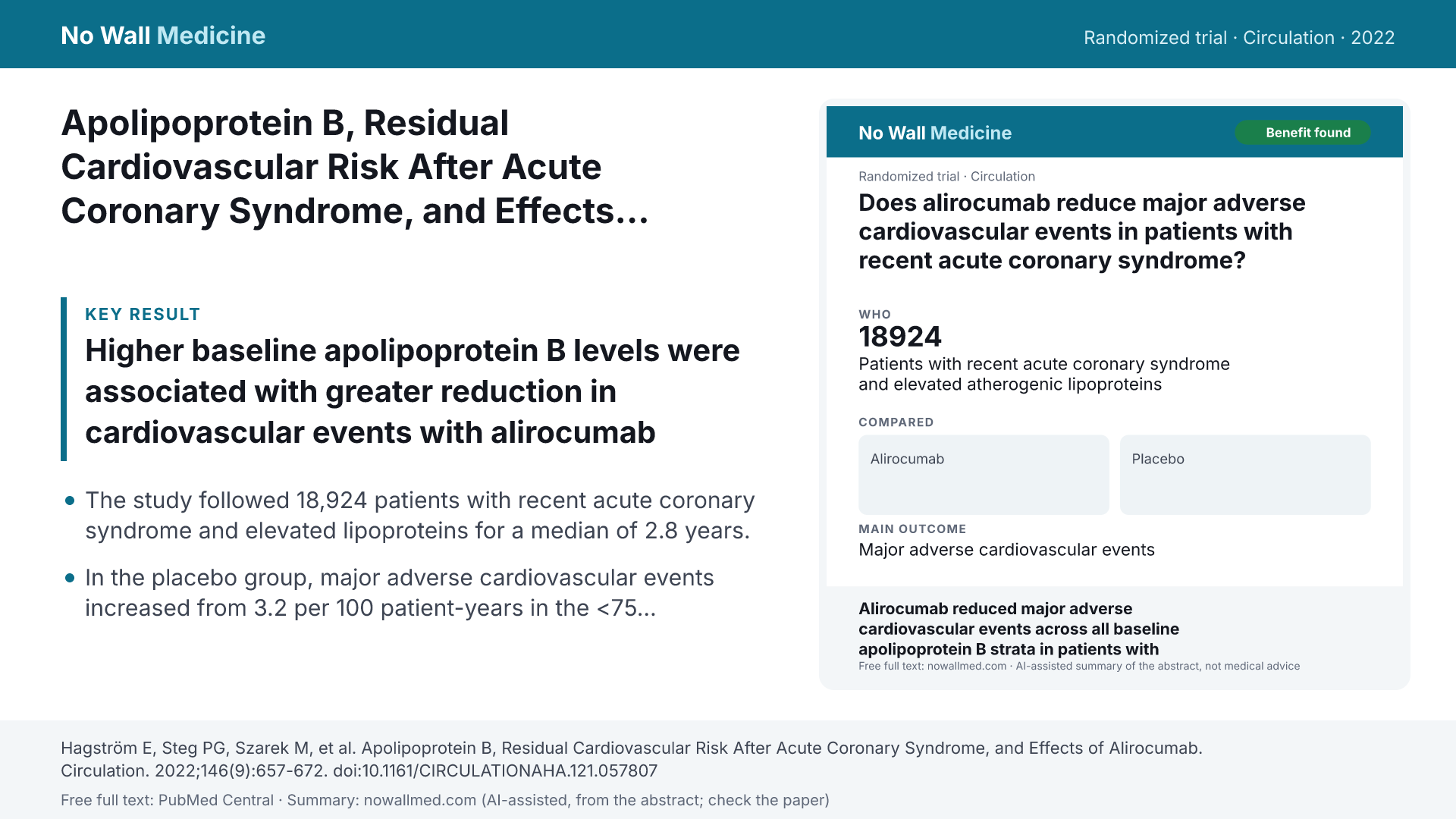
Higher baseline apolipoprotein B levels were associated with greater reduction in cardiovascular events with alirocumab
Apolipoprotein B, Residual Cardiovascular Risk After Acute Coronary Syndrome, and Effects of Alirocumab
Randomized trialBenefit found
Does alirocumab reduce major adverse cardiovascular events in patients with recent acute coronary syndrome?
Who
18924
Patients with recent acute coronary syndrome and elevated atherogenic lipoproteins
Compared
Alirocumab
Placebo
Main outcome
Major adverse cardiovascular events
Bottom line: Alirocumab reduced major adverse cardiovascular events across all baseline apolipoprotein B strata in patients with recent acute coronary syndrome.
Circulation · 2022-06-30Download image
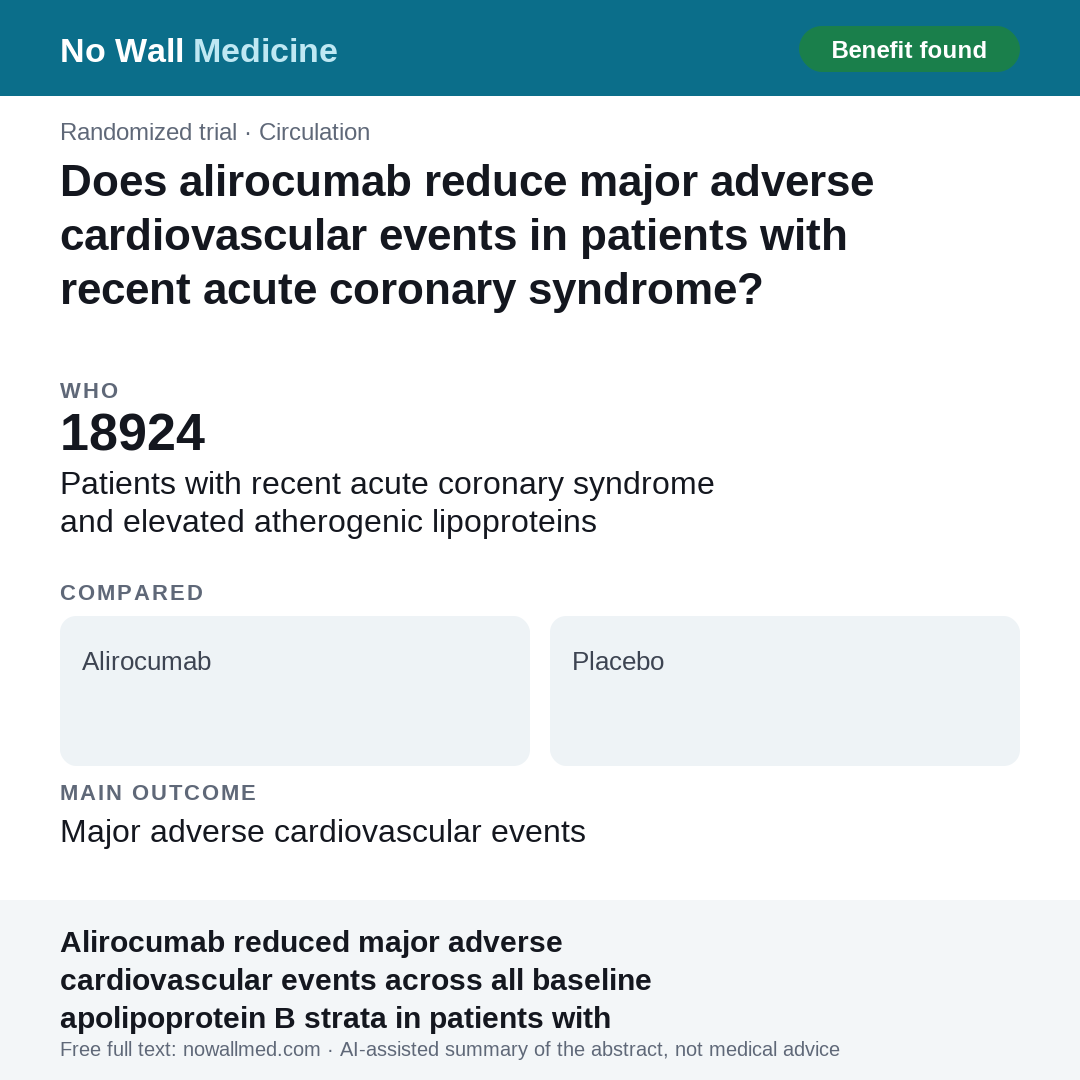
Clinical question: Does alirocumab reduce major adverse cardiovascular events in patients with recent acute coronary syndrome?
Why it matters: It was uncertain if apolipoprotein B levels and lowering them provided additional predictive information for cardiovascular risk beyond low-density lipoprotein cholesterol after acute coronary syndrome.
Key points
- The study followed 18,924 patients with recent acute coronary syndrome and elevated lipoproteins for a median of 2.8 years.
- In the placebo group, major adverse cardiovascular events increased from 3.2 per 100 patient-years in the <75 mg/dL apolipoprotein B group to 5.5 per 100 patient-years in the ≥90 mg/dL group.
- Lower achieved apolipoprotein B levels were associated with lower risk of major adverse cardiovascular events after adjusting for low-density lipoprotein cholesterol.
Headline and key points written with AI from the paper’s abstract, with every number checked against it. Read the paper before relying on them.
Was this summary helpful?
Subject terms
Cite this article
Hagström E, Steg PG, Szarek M, et al. Apolipoprotein B, Residual Cardiovascular Risk After Acute Coronary Syndrome, and Effects of Alirocumab. Circulation. 2022. doi:10.1161/CIRCULATIONAHA.121.057807
Spotted a mistake? Suggest a correction