Low apolipoprotein E levels were associated with higher risks of recurrent stroke and cardiovascular events
Apolipoprotein E Plasma Concentrations Are Predictive of Recurrent Strokes: Insights From the SPARCL Trial
Randomized trial analysisBenefit found
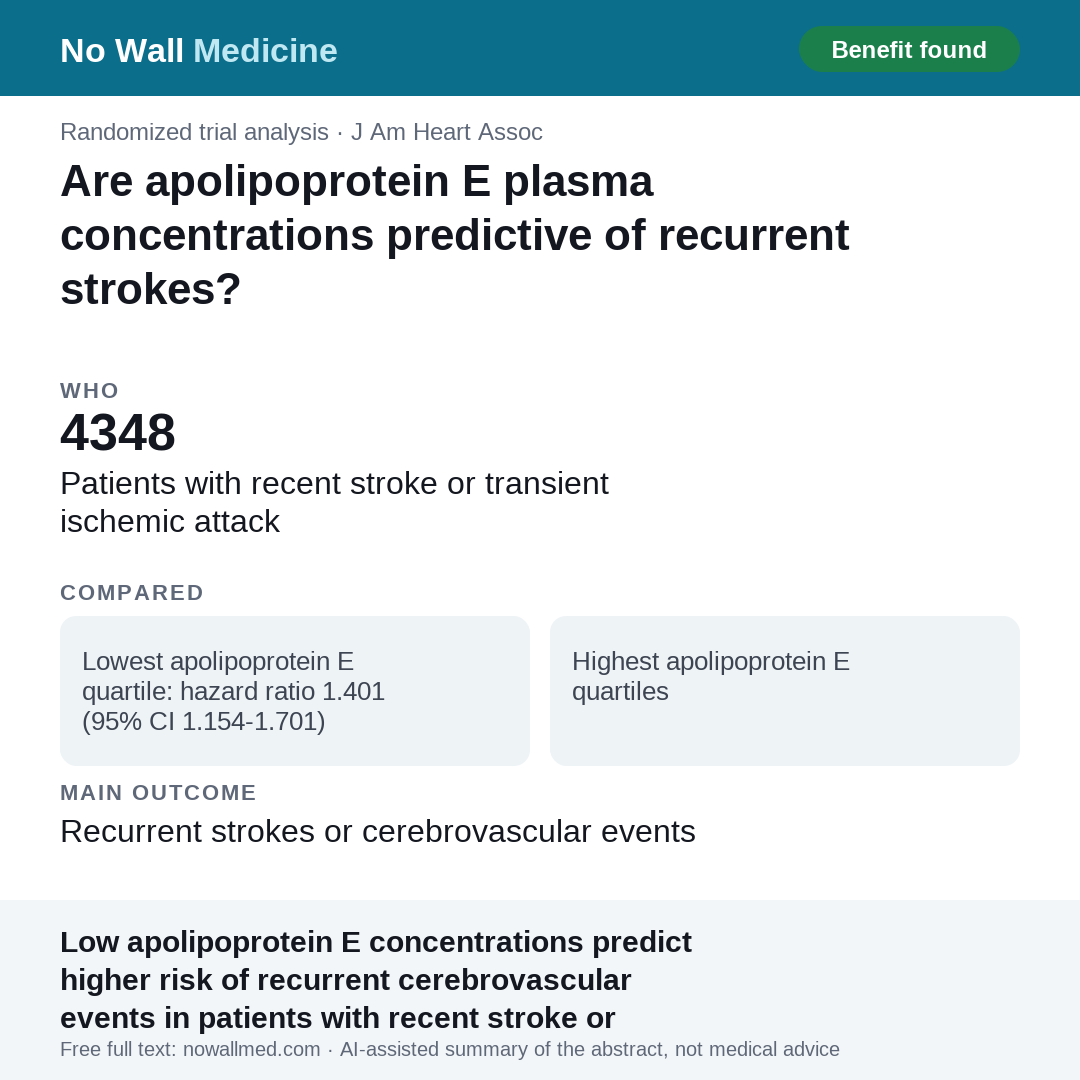
Are apolipoprotein E plasma concentrations predictive of recurrent strokes?
Who
4348
Patients with recent stroke or transient ischemic attack
Compared
Lowest apolipoprotein E quartile: hazard ratio 1.401 (95% CI 1.154-1.701)
Highest apolipoprotein E quartiles
Main outcome
Recurrent strokes or cerebrovascular events
Result: hazard ratio 1.401 (95% CI 1.154-1.701)
Bottom line: Low apolipoprotein E concentrations predict higher risk of recurrent cerebrovascular events in patients with recent stroke or transient ischemic attack.
J Am Heart Assoc · 2025-04-16Download image
Clinical question: Are apolipoprotein E plasma concentrations predictive of recurrent strokes?
Why it matters: It was unclear if apolipoprotein E concentrations could predict the risk of recurrent strokes or cardiovascular events in patients following a stroke or transient ischemic attack.
Key points
- Researchers analyzed 4348 participants from the SPARCL trial to see if apolipoprotein E, a protein involved in fat metabolism, predicted future medical events.
- Low apolipoprotein E concentrations were associated with a higher risk of recurrent strokes or cerebrovascular events, with hazard ratios of 1.401 and 1.467.
- Reduced apolipoprotein E levels were also associated with a higher risk of subsequent coronary events, with a hazard ratio of 1.373 in the entire cohort.
Headline and key points written with AI from the paper’s abstract, with every number checked against it. Read the paper before relying on them.
Was this summary helpful?
Subject terms
Cite this article
Chemello K, Guedon AF, Techer R, Jaafar AK, Guilhen S, Swietek MJ. Apolipoprotein E Plasma Concentrations Are Predictive of Recurrent Strokes: Insights From the SPARCL Trial. J Am Heart Assoc. 2025. doi:10.1161/JAHA.124.036630
Spotted a mistake? Suggest a correction
Top studies every Monday
The week’s key trials and guidelines in your specialties, plus any topics you follow. By email, free.
Get the weekly digest