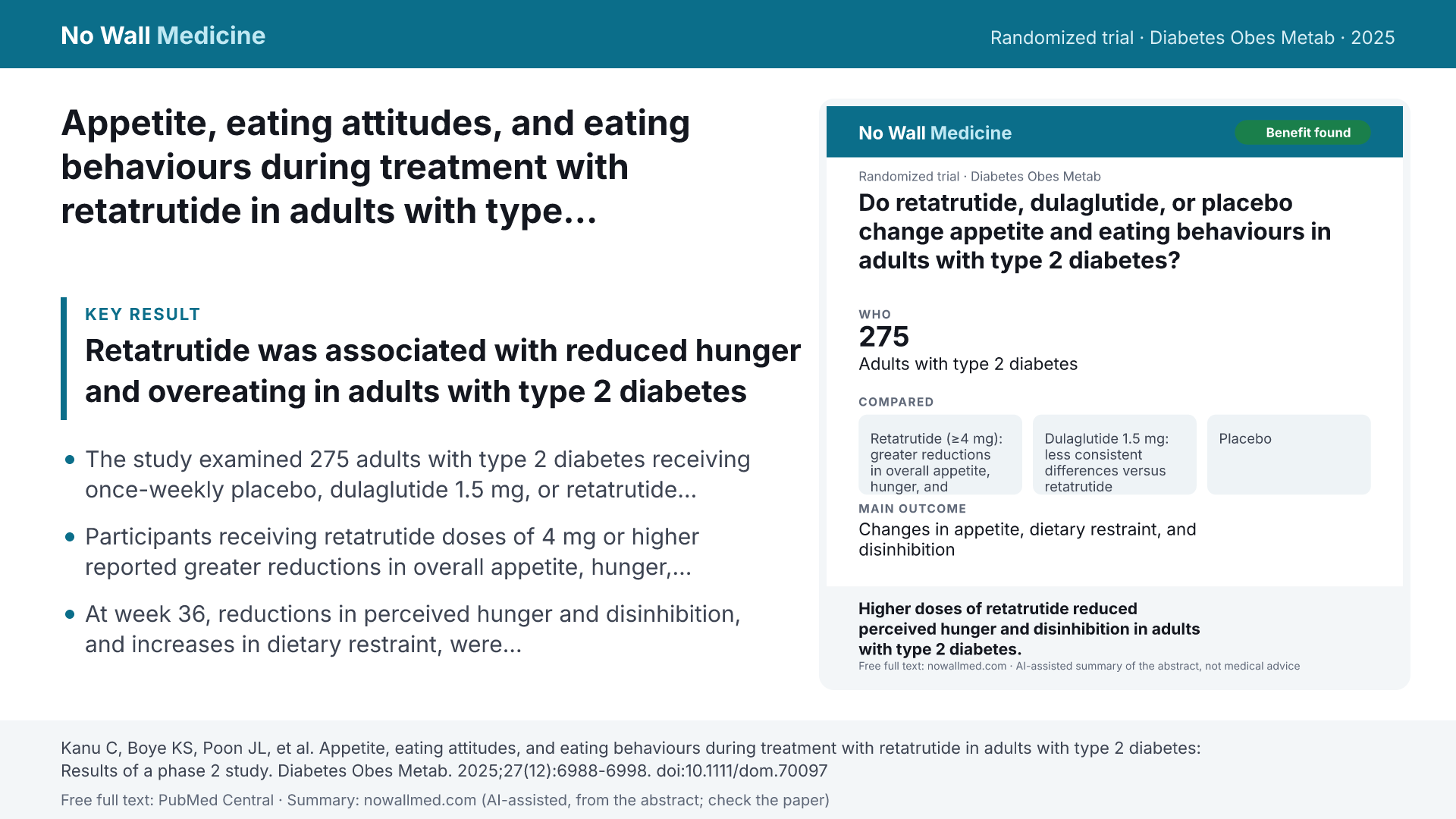
Retatrutide was associated with reduced hunger and overeating in adults with type 2 diabetes
Appetite, eating attitudes, and eating behaviours during treatment with retatrutide in adults with type 2 diabetes: Results of a phase 2 study
Randomized trialBenefit found
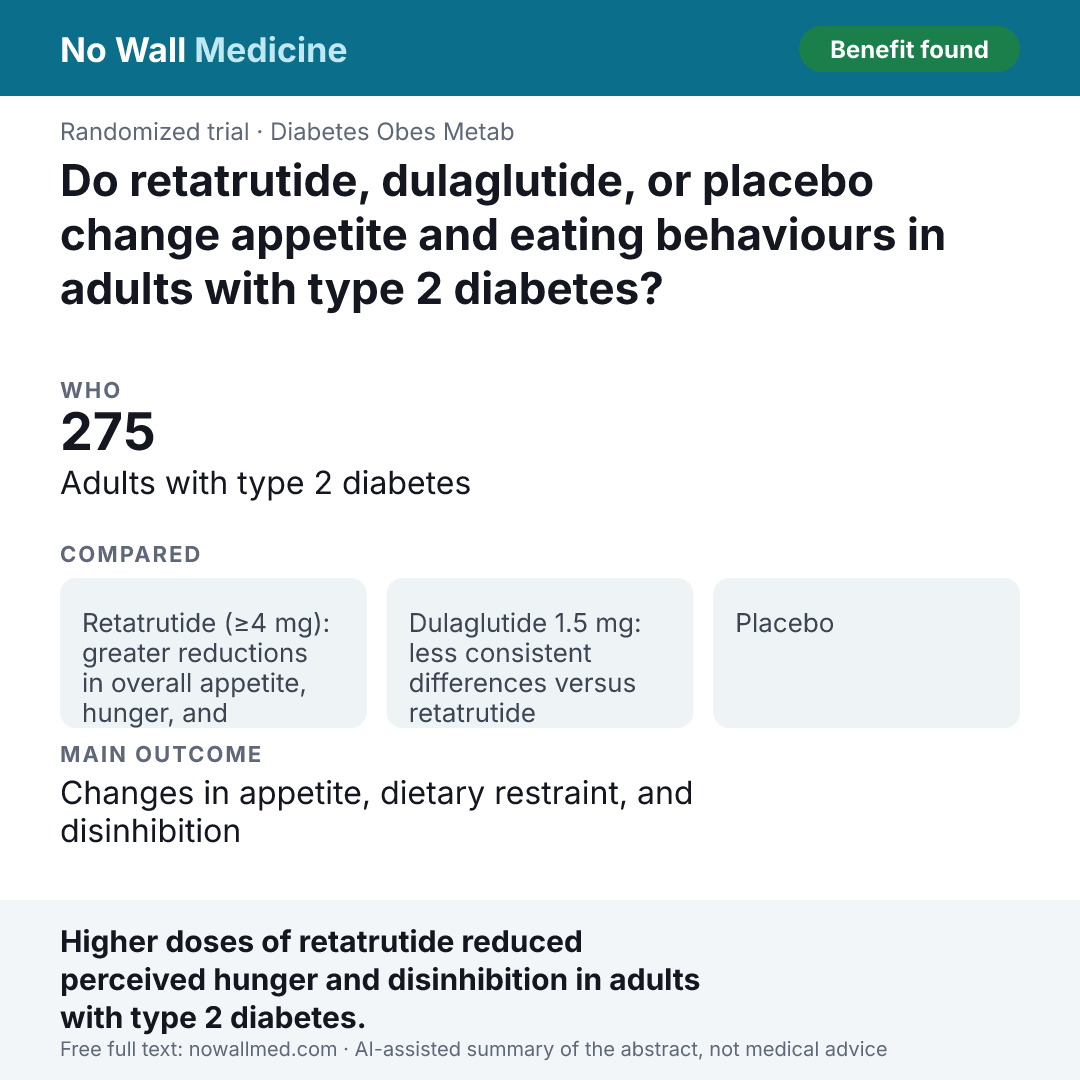
Do retatrutide, dulaglutide, or placebo change appetite and eating behaviours in adults with type 2 diabetes?
Who
275
Adults with type 2 diabetes
Compared
Retatrutide (≥4 mg): greater reductions in overall appetite, hunger, and prospective food consumption
Dulaglutide 1.5 mg: less consistent differences versus retatrutide
Placebo
Main outcome
Changes in appetite, dietary restraint, and disinhibition
Bottom line: Higher doses of retatrutide reduced perceived hunger and disinhibition in adults with type 2 diabetes.
Diabetes Obes Metab · 2025-09-08 · Save PNG
Clinical question: Do retatrutide, dulaglutide, or placebo change appetite and eating behaviours in adults with type 2 diabetes?
Why it matters: Researchers wanted to determine if retatrutide treatment leads to changes in self-reported appetite, dietary restraint, and eating behaviors in adults with type 2 diabetes.
Key points
- The study examined 275 adults with type 2 diabetes receiving once-weekly placebo, dulaglutide 1.5 mg, or retatrutide at doses of 0.5, 4, 8, or 12 mg.
- Participants receiving retatrutide doses of 4 mg or higher reported greater reductions in overall appetite, hunger, and prospective food consumption compared to placebo at week 24.
- At week 36, reductions in perceived hunger and disinhibition, and increases in dietary restraint, were significantly correlated with reductions in body weight.
Headline and key points written with AI from the paper’s abstract, with every number checked against it. Read the paper before relying on them.
Was this summary helpful?
Subject terms
Headline, design, result, key points, caveat and citation as plain text.
Cite this article
Kanu C, Boye KS, Poon JL, et al. Appetite, eating attitudes, and eating behaviours during treatment with retatrutide in adults with type 2 diabetes: Results of a phase 2 study. Diabetes Obes Metab. 2025;27(12):6988-6998. doi:10.1111/dom.70097
Spotted a mistake? Suggest a correction