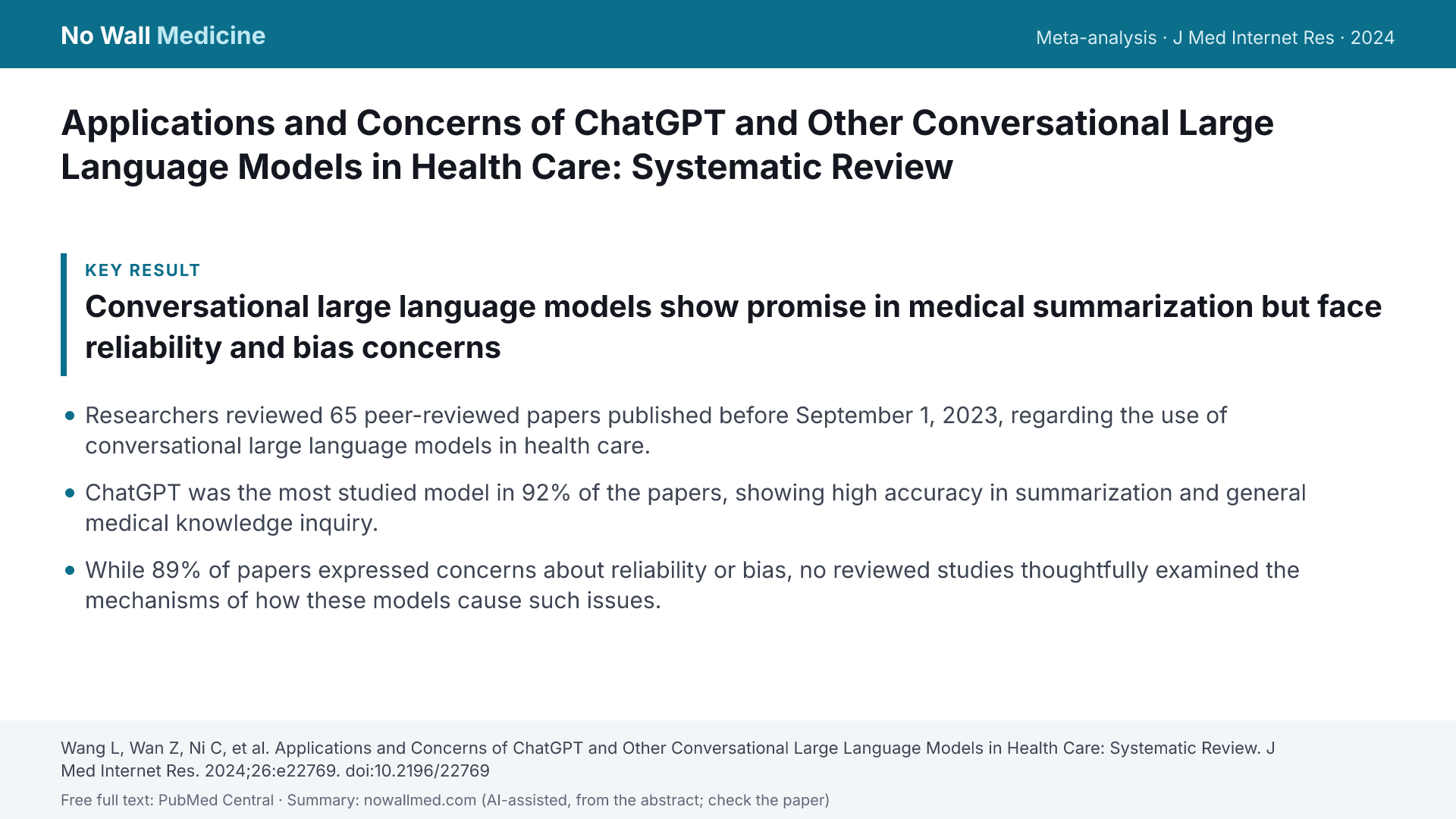
Conversational large language models show promise in medical summarization but face reliability and bias concerns
Applications and Concerns of ChatGPT and Other Conversational Large Language Models in Health Care: Systematic Review
Why it matters: The specific applications and potential risks of using conversational large language models in various health care scenarios were not fully summarized.
Key points
- Researchers reviewed 65 peer-reviewed papers published before September 1, 2023, regarding the use of conversational large language models in health care.
- ChatGPT was the most studied model in 92% of the papers, showing high accuracy in summarization and general medical knowledge inquiry.
- While 89% of papers expressed concerns about reliability or bias, no reviewed studies thoughtfully examined the mechanisms of how these models cause such issues.
Headline and key points written with AI from the paper’s abstract, with every number checked against it. Read the paper before relying on them.
Was this summary helpful?
Subject terms
Headline, design, result, key points, caveat and citation as plain text.
Cite this article
Wang L, Wan Z, Ni C, et al. Applications and Concerns of ChatGPT and Other Conversational Large Language Models in Health Care: Systematic Review. J Med Internet Res. 2024;26:e22769. doi:10.2196/22769
Spotted a mistake? Suggest a correction