Artificial intelligence using electrocardiograms increased early detection of low ejection fraction in hospitalized patients
Artificial intelligence-assisted diagnosis and prognostication in low ejection fraction using electrocardiograms in inpatient department: a pragmatic randomized controlled trial
Pragmatic randomized controlled trialBenefit found
Does artificial intelligence-assisted electrocardiogram diagnosis improve early low ejection fraction detection?
Who
13631
Inpatient patients under non-cardiologist care · Academic medical center in Taiwan
Compared
1.5%Intervention group receiving artificial intelligence results
1.1%Control group following standard care
Main outcome
Incidence of newly diagnosed low ejection fraction within 30 days
Result: hazard ratio 1.50 (95% CI 1.11-2.03)
Bottom line: Artificial intelligence-assisted electrocardiogram diagnosis enhanced early detection of low ejection fraction in inpatient settings.
BMC Med · 2025-06-09Download image
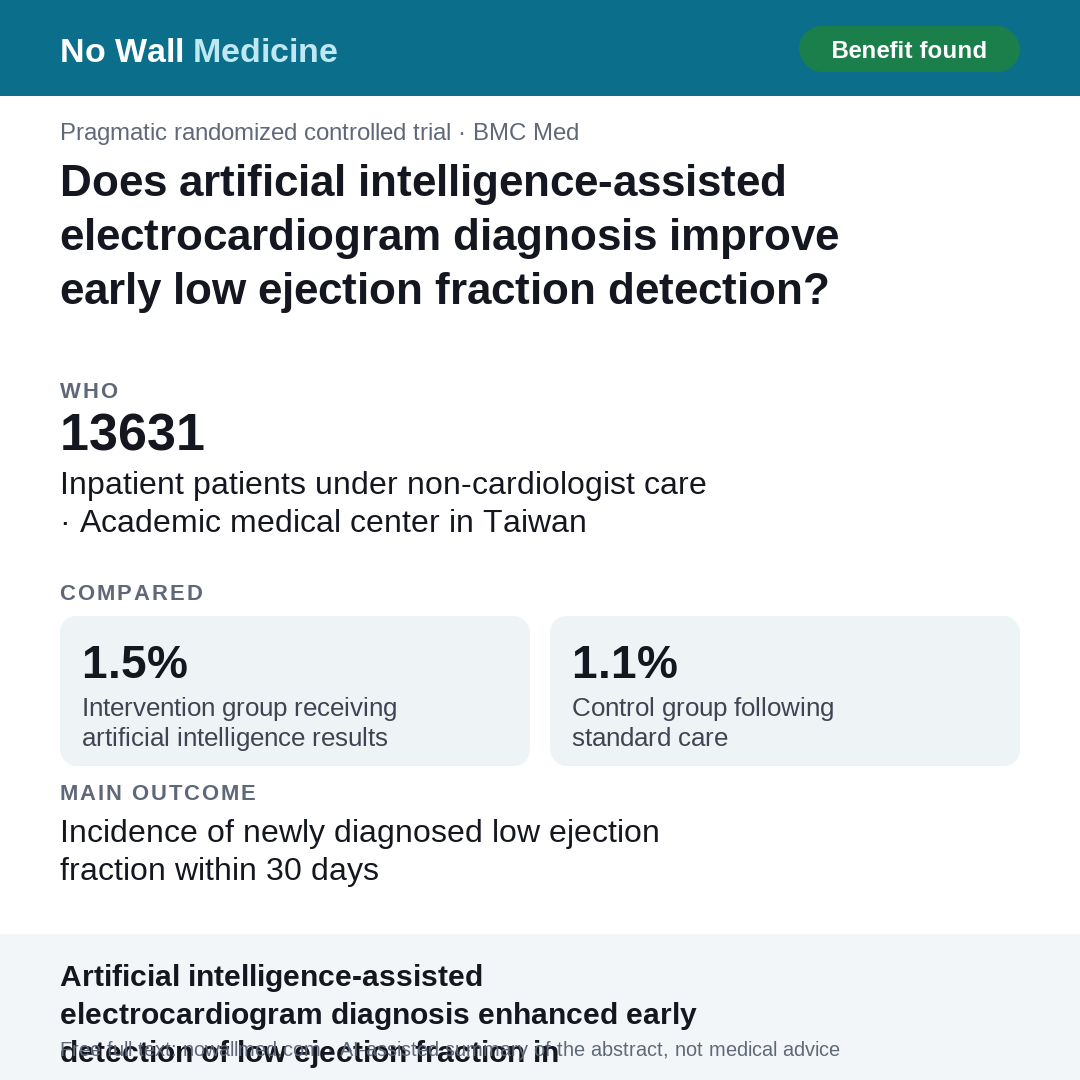
Clinical question: Does artificial intelligence-assisted electrocardiogram diagnosis improve early low ejection fraction detection?
Why it matters: Early diagnosis of low ejection fraction, which is a measure of how much blood the heart pumps out, is difficult for patients under non-cardiologist care.
Key points
- Researchers randomized 13,631 inpatients to receive either an artificial intelligence-assisted electrocardiogram tool or standard care.
- The artificial intelligence group had a higher rate of newly diagnosed low ejection fraction of 1.5% compared to 1.1% in the control group.
- Among patients receiving echocardiograms, the artificial intelligence group had a higher positive predictive value of 34.2% compared to 20.2%.
Headline and key points written with AI from the paper’s abstract, with every number checked against it. Read the paper before relying on them.
Topics
Cite this article
Tsai DJ, Lin C, Liu WT, Lee CC, Chang CH, Lin WY. Artificial intelligence-assisted diagnosis and prognostication in low ejection fraction using electrocardiograms in inpatient department: a pragmatic randomized controlled trial. BMC Med. 2025. doi:10.1186/s12916-025-04190-z
Spotted a mistake? Suggest a correction
Top studies every Monday
The week’s key trials and guidelines in your specialties, plus any topics you follow. By email, free.
Get the weekly digest