ClinicalAge biomarker associated with mortality and disease risk in UK datasets
ClinicalAge, a framework for modelling ageing trajectories from longitudinal electronic health records in the UK: a model development and validation study
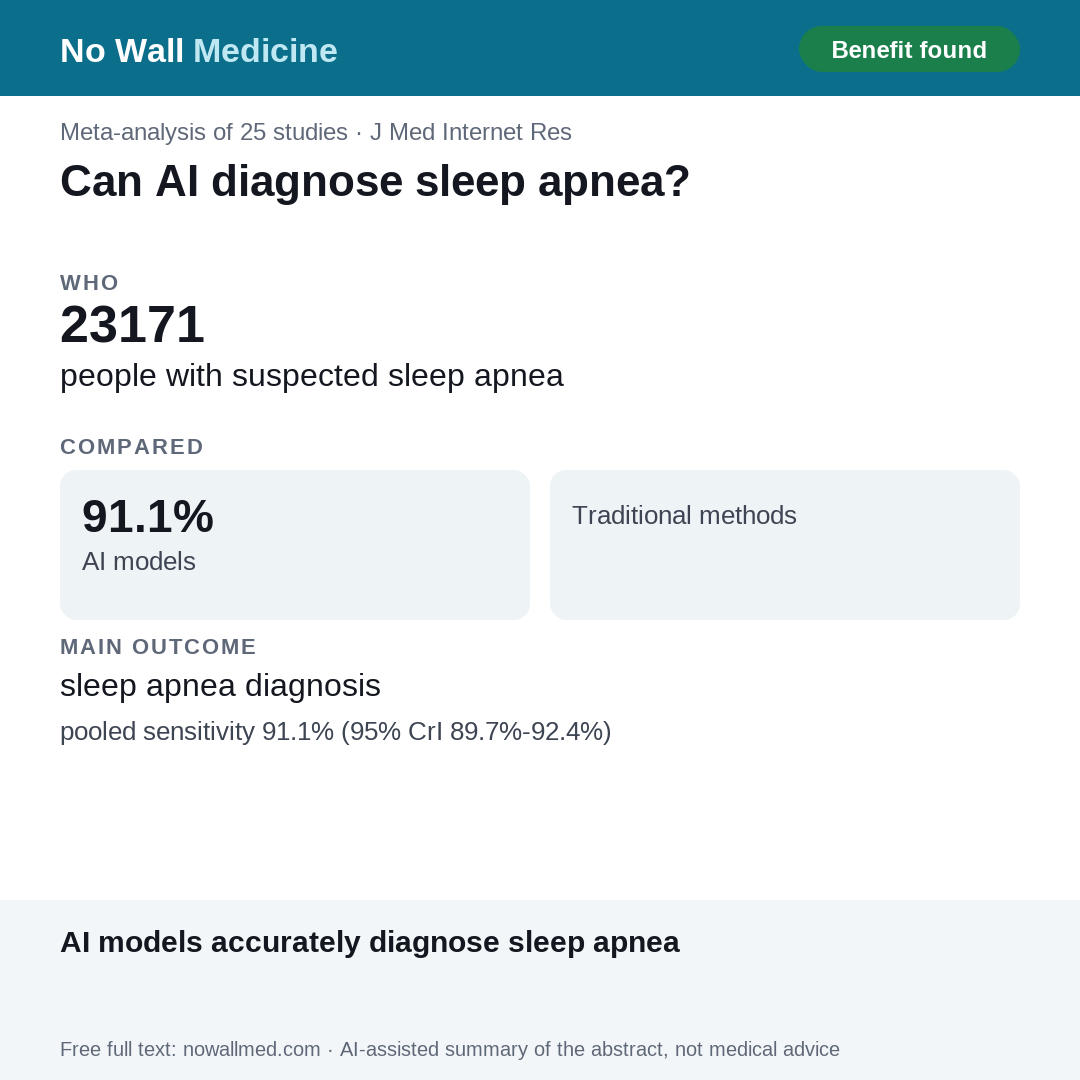
Artificial Intelligence Diagnosis of Obstructive Sleep Apnea Using Overnight Pulse Oximetry: A Systematic Review and Bayesian Meta-Analysis
Clinical question: Can AI diagnose sleep apnea?
Why it matters: Most cases of obstructive sleep apnea remain undiagnosed because the gold standard test requires specialized equipment and trained personnel.
Limitation the authors note: Prospective external validation in diverse populations and low-prevalence settings is still needed before widespread real-world use.
Headline and key points written with AI from the paper’s abstract, with every number checked against it. Read the paper before relying on them.
Spotted a mistake? Suggest a correction
ClinicalAge, a framework for modelling ageing trajectories from longitudinal electronic health records in the UK: a model development and validation study
Foundation artificial intelligence models for health recognition by use of face photographs (FAHR-Face): a model development and validation study
A prognostic model for use at labour onset to estimate the risk of severe fetal compromise at birth: a retrospective, model development and validation study
ECG foundation models for cardiovascular screening in a cohort of young competitive athletes
Medical Reasoning in Large Language Models: Development and Evaluation of the MedEvalArena Benchmark