Denosumab and setrusumab improved bone density in osteogenesis imperfecta patients but did not reduce fractures
Artificial Intelligence for Evidence Synthesis of Emerging Biologics to Improve Skeletal Health in Osteogenesis Imperfecta: Systematic Review and Meta-Analysis
Digital Health & AIAdult and pediatric
Systematic review and meta-analysisMixed results
What is the efficacy and safety of novel biologics in osteogenesis imperfecta?
Who
684
Patients with osteogenesis imperfecta
Compared
25.49%Denosumab in children (95% CI 17.14%-33.84%)
9.38%Setrusumab in adults (95% CI 6.5%-12.26%)
Main outcome
percentage change in areal bone mineral density
Bottom line: Denosumab and setrusumab improve bone mineral density, but no biologic significantly reduced fracture incidence compared to bisphosphonates.
Limitation: Findings should be interpreted cautiously given the small and heterogeneous trial base.
J Med Internet Res · 2026-07-10Download image
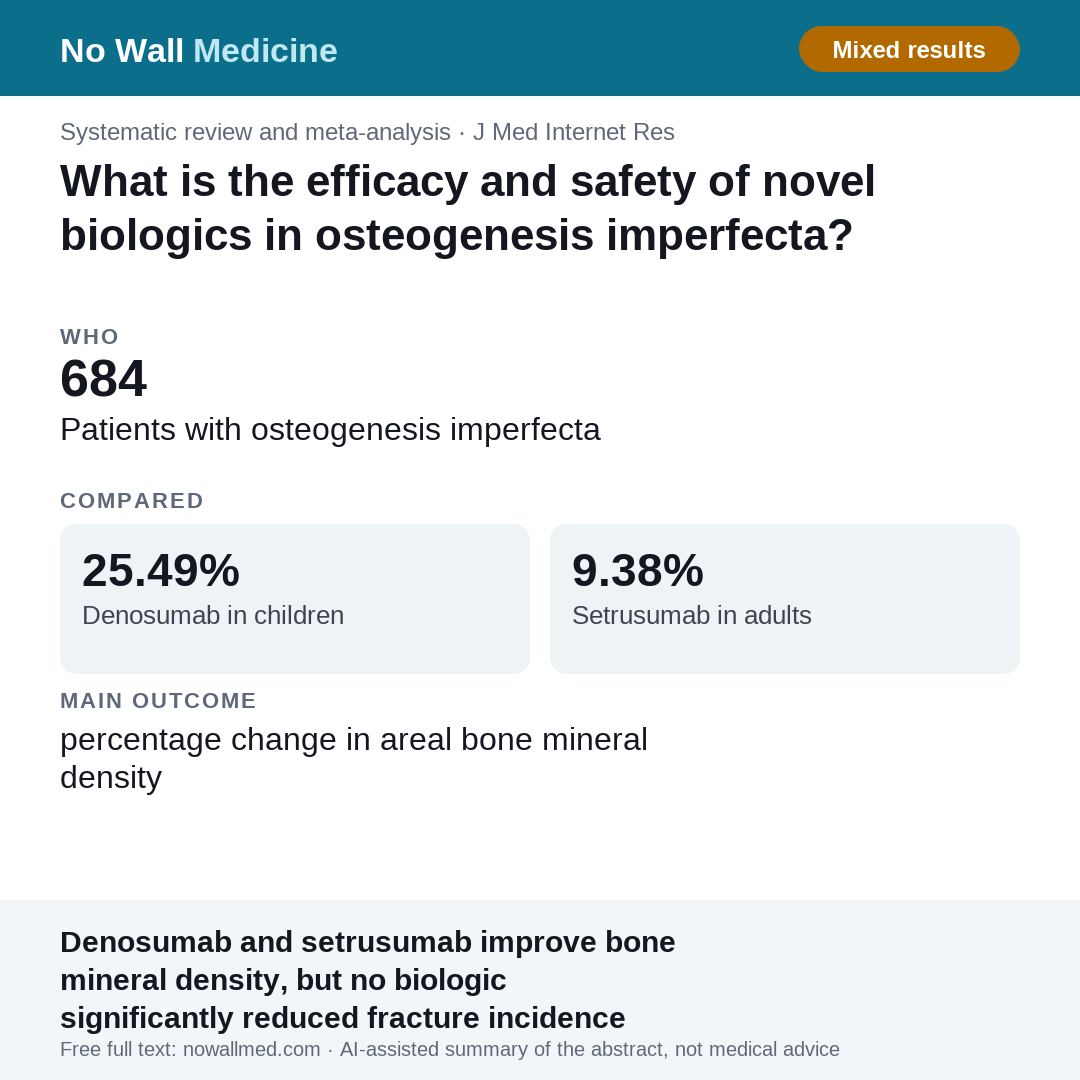
Clinical question: What is the efficacy and safety of novel biologics in osteogenesis imperfecta?
Why it matters: Evidence regarding the efficacy and safety of emerging biologics for osteogenesis imperfecta remains fragmented and heterogeneous.
Key points
- Researchers reviewed thirteen trials involving 684 patients to compare the efficacy and safety of five different biologic drugs for osteogenesis imperfecta.
- In children, denosumab showed a 25.49% increase in lumbar spine areal bone mineral density at 12 months, while setrusumab increased adult density by 9.38%.
- No biologic significantly reduced the number of fractures compared to bisphosphonates, and denosumab was associated with a 30.95% risk of hypercalcemia in children.
Limitation the authors note: The authors state that findings should be interpreted cautiously due to the small and heterogeneous trial base.
Headline and key points written with AI from the paper’s abstract, with every number checked against it. Read the paper before relying on them.
Topics
Cite this article
Li C, Dai Z, Tang WC, Gao Z, Chan VKY, Ramirez-Posada M. Artificial Intelligence for Evidence Synthesis of Emerging Biologics to Improve Skeletal Health in Osteogenesis Imperfecta: Systematic Review and Meta-Analysis. J Med Internet Res. 2026. doi:10.2196/85840
Spotted a mistake? Suggest a correction