Artificial intelligence performance for hip fracture diagnosis and outcome prediction was comparable to current practices
Artificial Intelligence for Hip Fracture Detection and Outcome Prediction: A Systematic Review and Meta-analysis
Meta-analysis of 39 studiesNo clear difference
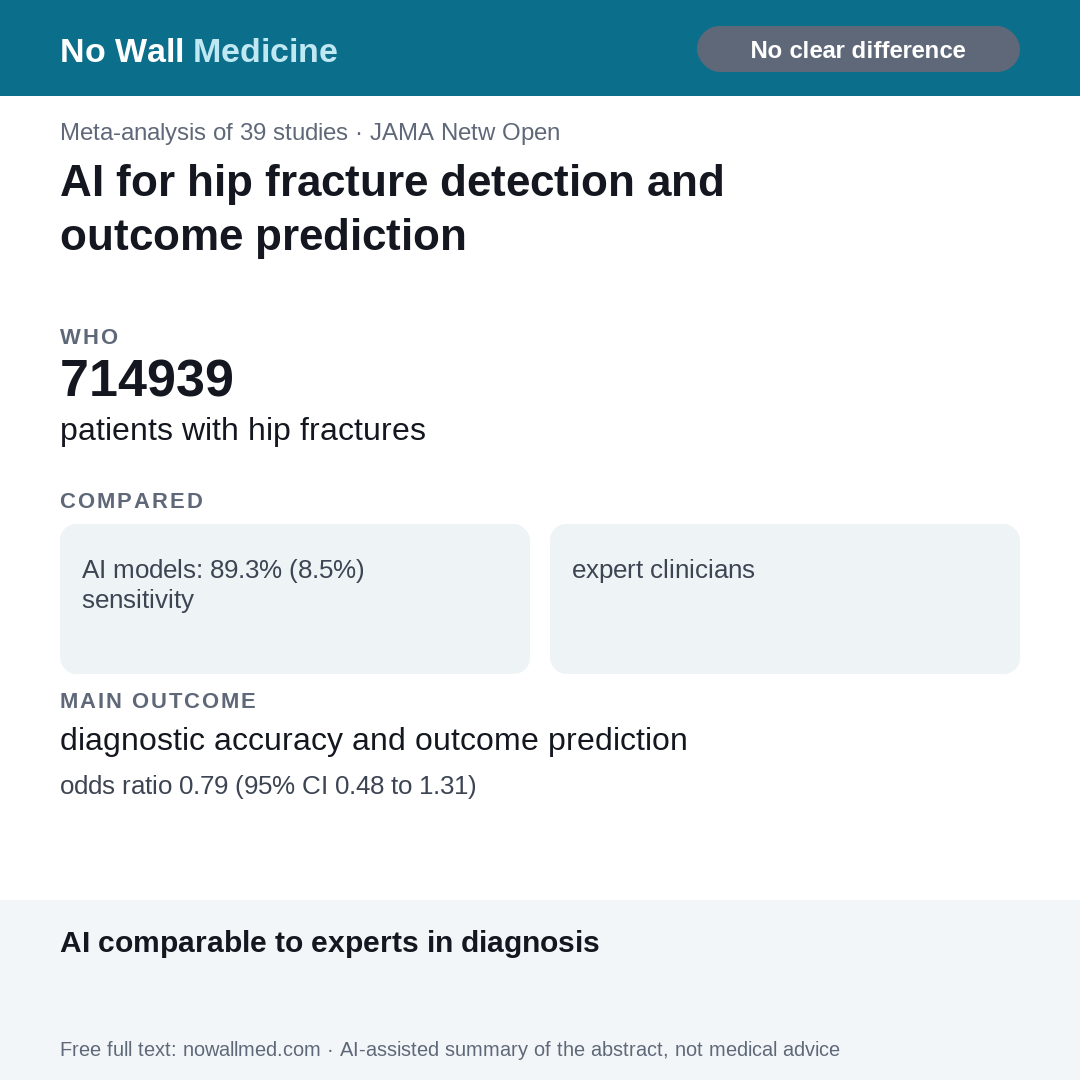
AI for hip fracture detection and outcome prediction
Who
714939
patients with hip fractures
Compared
AI models: 89.3% (8.5%) sensitivity
expert clinicians
Main outcome
diagnostic accuracy and outcome prediction
Result: odds ratio 0.79 (95% CI 0.48 to 1.31)
Bottom line: AI comparable to experts in diagnosis
Limitation: current implementations for outcome prediction limited
JAMA Netw Open · 2023-03-01Download image
Why it matters: The performance and potential impact of newly developed artificial intelligence algorithms for diagnosing hip fractures and predicting postoperative outcomes are currently unknown.
Key points
- Researchers analyzed 39 studies involving 39,598 radiographs and 714,939 hip fractures to compare machine learning models against clinicians and traditional statistical models.
- Machine learning models for diagnosing hip fractures had a mean sensitivity of 89.3% and a specificity of 87.5%, with no significant difference in diagnostic error compared to clinicians.
- The mean area under the curve for mortality prediction was 0.84 for machine learning models compared to 0.79 for traditional statistical models, which was not statistically significant.
Headline and key points written with AI from the paper’s abstract, with every number checked against it. Read the paper before relying on them.
Was this summary helpful?
Subject terms
Cite this article
Lex JR, Di Michele J, Koucheki R, Pincus D, Whyne C, Ravi B. Artificial Intelligence for Hip Fracture Detection and Outcome Prediction: A Systematic Review and Meta-analysis. JAMA Netw Open. 2023. doi:10.1001/jamanetworkopen.2023.3391
Spotted a mistake? Suggest a correction
Top studies every Monday
The week’s key trials and guidelines in your specialties, plus any topics you follow. By email, free.
Get the weekly digest