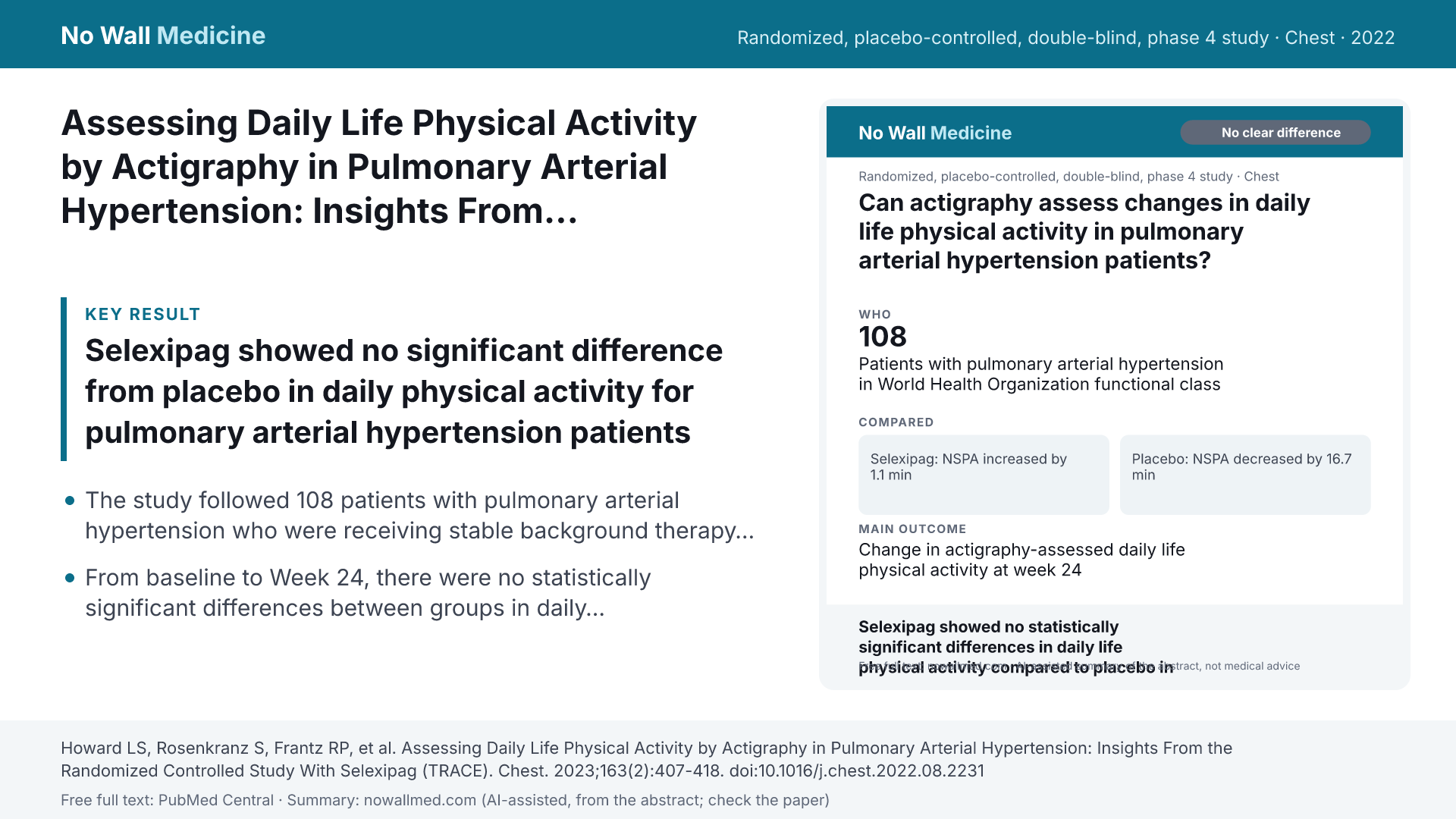
Selexipag showed no significant difference from placebo in daily physical activity for pulmonary arterial hypertension patients
Assessing Daily Life Physical Activity by Actigraphy in Pulmonary Arterial Hypertension: Insights From the Randomized Controlled Study With Selexipag (TRACE)
Randomized, placebo-controlled, double-blind, phase 4 studyNo clear difference
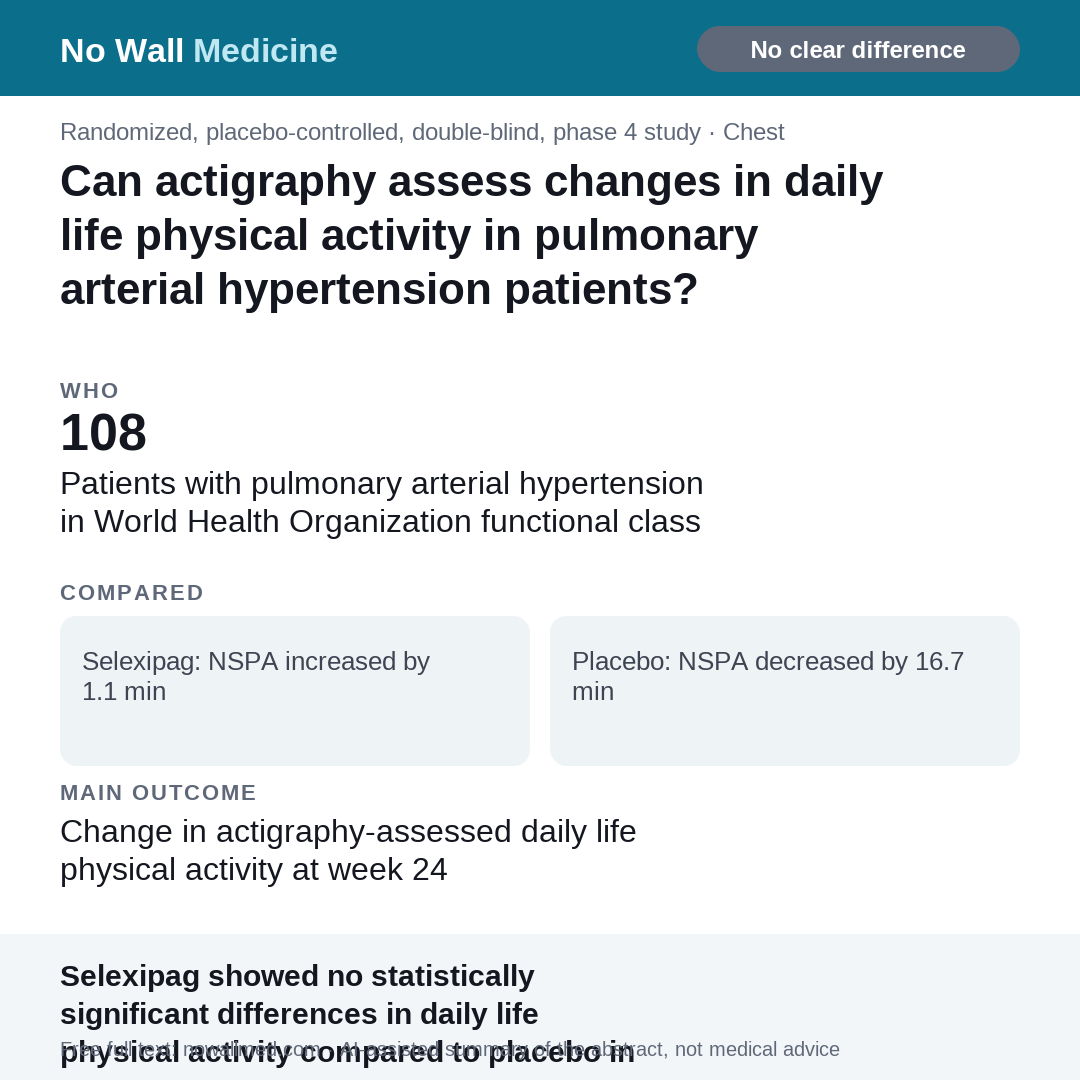
Can actigraphy assess changes in daily life physical activity in pulmonary arterial hypertension patients?
Who
108
Patients with pulmonary arterial hypertension in World Health Organization functional class II/III · Multicenter
Compared
Selexipag: NSPA increased by 1.1 min
Placebo: NSPA decreased by 16.7 min
Main outcome
Change in actigraphy-assessed daily life physical activity at week 24
Result: treatment difference [95% CI], 17.8 [-6.0, 41.6] min
Bottom line: Selexipag showed no statistically significant differences in daily life physical activity compared to placebo in pulmonary arterial hypertension patients.
Chest · 2022-09-08Download image
Clinical question: Can actigraphy assess changes in daily life physical activity in pulmonary arterial hypertension patients?
Why it matters: It was unknown if actigraphy, a method using wearable accelerometers to track movement, could effectively assess changes in daily life physical activity for patients with pulmonary arterial hypertension.
Key points
- The study followed 108 patients with pulmonary arterial hypertension who were receiving stable background therapy and were randomized to receive either selexipag or a placebo.
- From baseline to Week 24, there were no statistically significant differences between groups in daily nonsedentary physical activity, moderate to vigorous physical activity, or daily step counts.
- Changes in daily life physical activity were small and highly variable among the participants in both treatment groups.
Limitation the authors note: The study enrolled a prevalent population on background therapy who were at low risk of disease progression.
Headline and key points written with AI from the paper’s abstract, with every number checked against it. Read the paper before relying on them.
Was this summary helpful?
Subject terms
Cite this article
Howard LS, Rosenkranz S, Frantz RP, Hemnes AR, Pfister T, Hsu Schmitz SF. Assessing Daily Life Physical Activity by Actigraphy in Pulmonary Arterial Hypertension: Insights From the Randomized Controlled Study With Selexipag (TRACE). Chest. 2022. doi:10.1016/j.chest.2022.08.2231
Spotted a mistake? Suggest a correction
Top studies every Monday
The week’s key trials and guidelines in your specialties, plus any topics you follow. By email, free.
Get the weekly digest