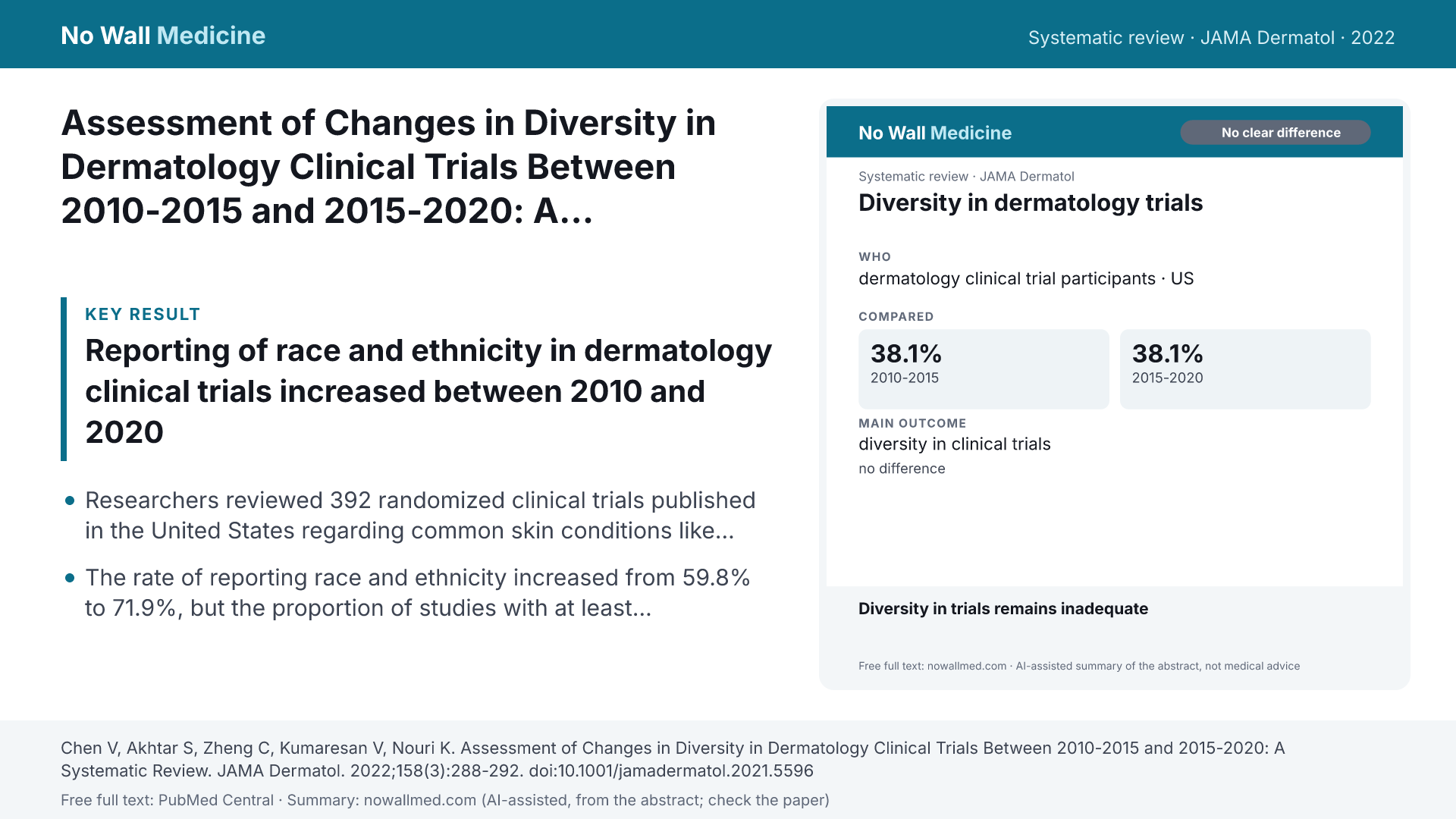
Reporting of race and ethnicity in dermatology clinical trials increased between 2010 and 2020
Assessment of Changes in Diversity in Dermatology Clinical Trials Between 2010-2015 and 2015-2020: A Systematic Review
Systematic reviewNo clear difference
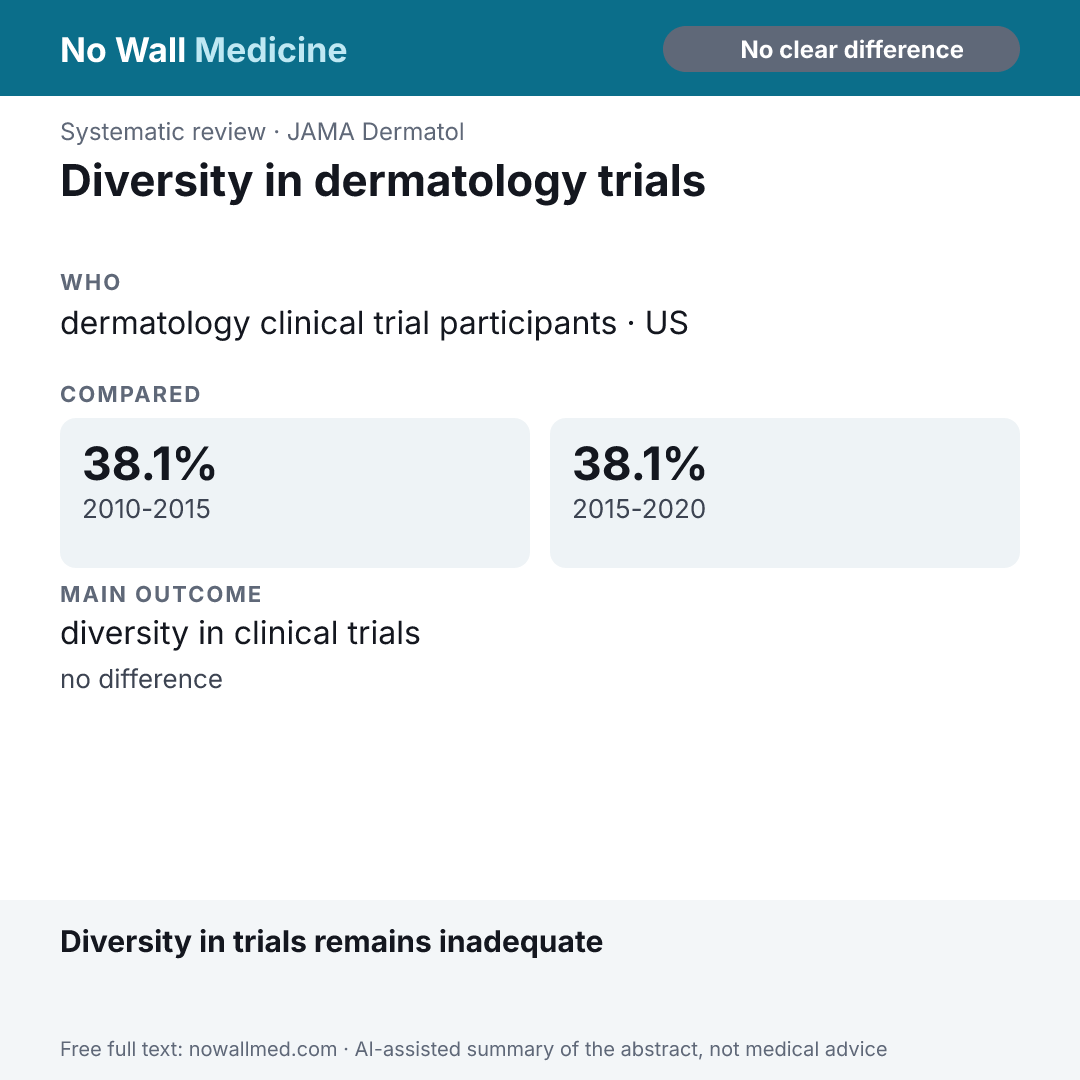
Diversity in dermatology trials
Who
dermatology clinical trial participants · US
Compared
38.1%2010-2015
38.1%2015-2020
Main outcome
diversity in clinical trials
Result: no difference
Bottom line: Diversity in trials remains inadequate
JAMA Dermatol · 2022-01-27 · Save PNG
Key points
- Researchers reviewed 392 randomized clinical trials published in the United States regarding common skin conditions like acne and psoriasis.
- The rate of reporting race and ethnicity increased from 59.8% to 71.9%, but the proportion of studies with at least 20% non-White participants remained unchanged at 38.1%.
- Psoriasis studies showed the lowest diversity, with 12.1% including at least 20% non-White participants and 29.5% including at least 45% women.
Headline and key points written with AI from the paper’s abstract, with every number checked against it. Read the paper before relying on them.
Was this summary helpful?
Subject terms
Headline, design, result, key points, caveat and citation as plain text.
Cite this article
Chen V, Akhtar S, Zheng C, Kumaresan V, Nouri K. Assessment of Changes in Diversity in Dermatology Clinical Trials Between 2010-2015 and 2015-2020: A Systematic Review. JAMA Dermatol. 2022;158(3):288-292. doi:10.1001/jamadermatol.2021.5596
Spotted a mistake? Suggest a correction