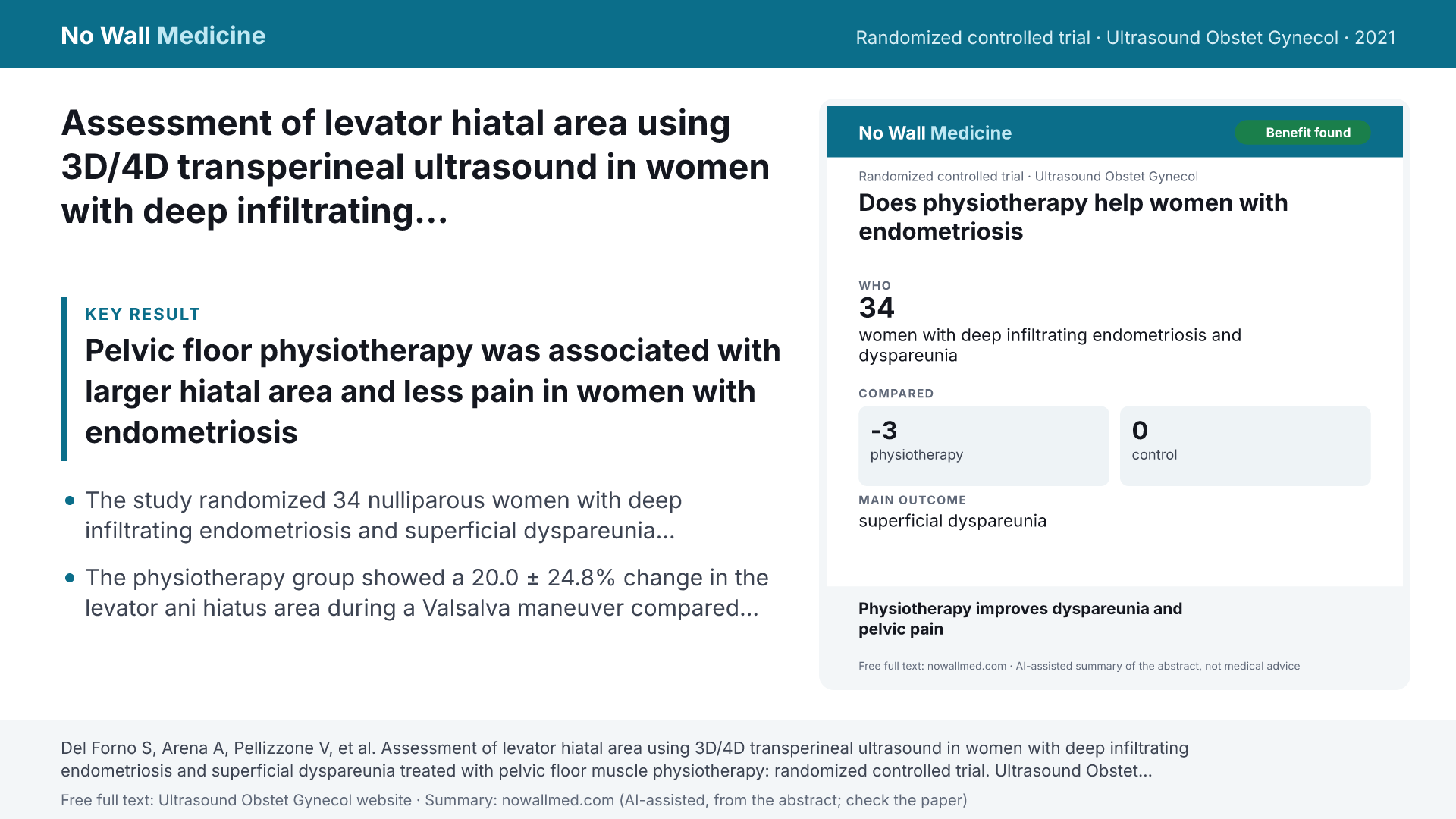
Assessment of levator hiatal area using 3D/4D transperineal ultrasound in women with deep infiltrating endometriosis and superficial dyspareunia treated with pelvic floor muscle physiotherapy: randomized controlled trial
Key result: Pelvic floor physiotherapy was associated with larger hiatal area and less pain in women with endometriosis
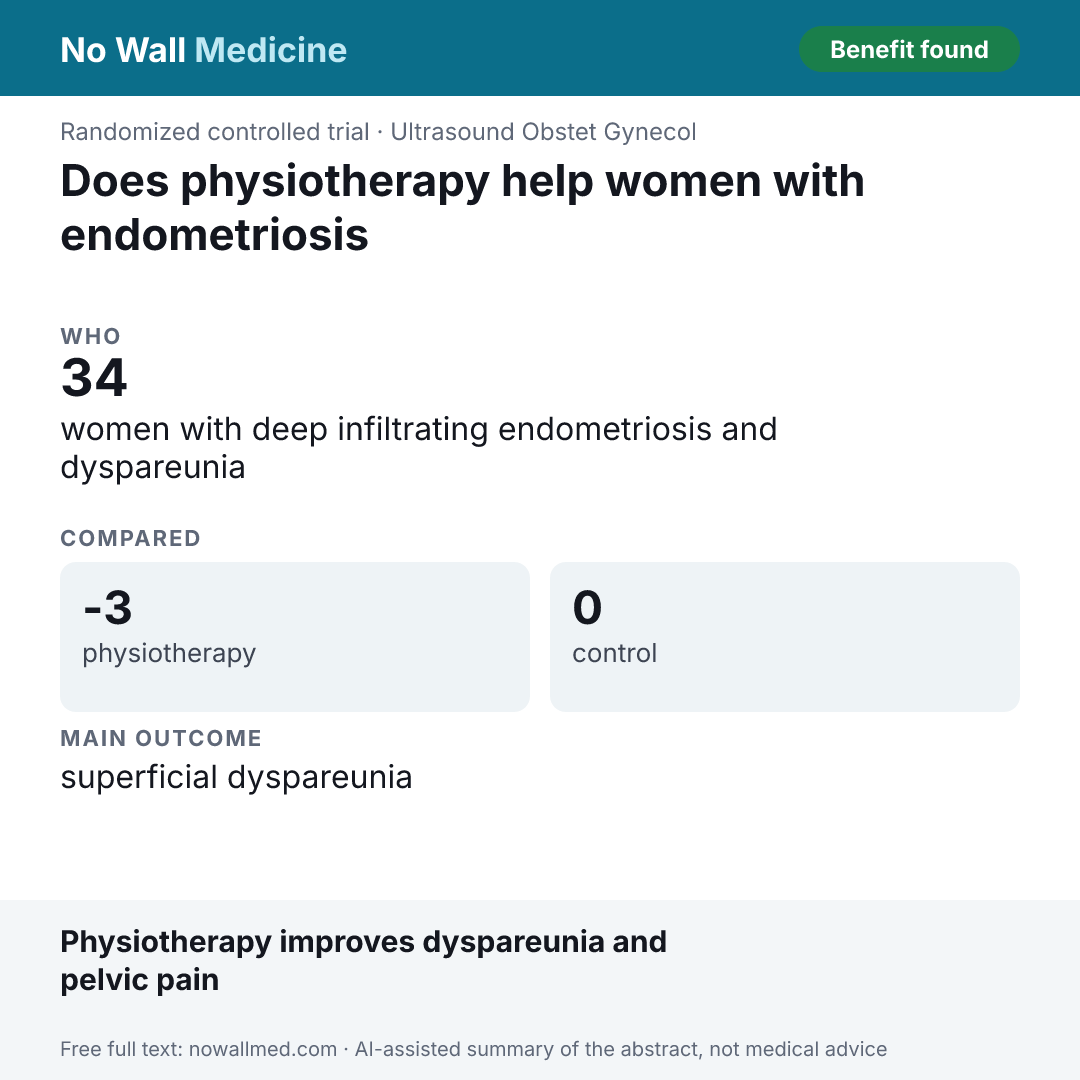
Randomized controlled trialBenefit found
Does physiotherapy help women with endometriosis
Who
34
women with deep infiltrating endometriosis and dyspareunia
Compared
-3physiotherapy (IQR, -4 to -2)
0control (IQR, 0-0)
Main outcome
superficial dyspareunia
Bottom line: Physiotherapy improves dyspareunia and pelvic pain
Ultrasound Obstet Gynecol · 2021-01-12 · Save PNG
Key points
- The study randomized 34 nulliparous women with deep infiltrating endometriosis and superficial dyspareunia to either five pelvic floor physiotherapy sessions or no intervention.
- The physiotherapy group showed a 20.0 ± 24.8% change in the levator ani hiatus area during a Valsalva maneuver compared to -0.5 ± 3.3% in the control group.
- Physiotherapy was associated with a median reduction in superficial dyspareunia pain scores of -3 compared to a median change of 0 in the control group.
Discussion prompts
- Would these patients look like yours? Who was left out?
- Is the main outcome one that matters to patients?
- Is the difference large enough to change what you do?
Cite: Del Forno S, Arena A, Pellizzone V, et al. Assessment of levator hiatal area using 3D/4D transperineal ultrasound in women with deep infiltrating endometriosis and superficial dyspareunia treated with pelvic floor muscle physiotherapy: randomized controlled trial. Ultrasound Obstet Gynecol. 2021;57(5):726-732. doi:10.1002/uog.23590
Free full text: Ultrasound Obstet Gynecol website · Summary and visual abstract: nowallmed.com/a/assessment-of-levator-hiatal-area-using-3d-4d-transperineal-1icpjmm/ (AI-assisted from the abstract; check the paper before relying on it).