Systematic review finds links between COVID-19 infection and new or worsening alopecia areata
Association between alopecia areata and COVID-19: A systematic review
Systematic reviewMixed results
Is there an association between alopecia areata and COVID-19 infection?
Who
Patients with new-onset or preexisting alopecia areata
Compared
New-onset alopecia areata: 7 patients
Recurrence or exacerbation: mixed findings
Main outcome
New-onset or exacerbation of alopecia areata
Bottom line: Alopecia areata may be a dermatologic manifestation of COVID-19, often appearing 1 to 2 months after infection.
Limitation: A majority of the included studies were case reports and heterogeneity precluded data synthesis.
JAAD Int · 2022-02-10Download image
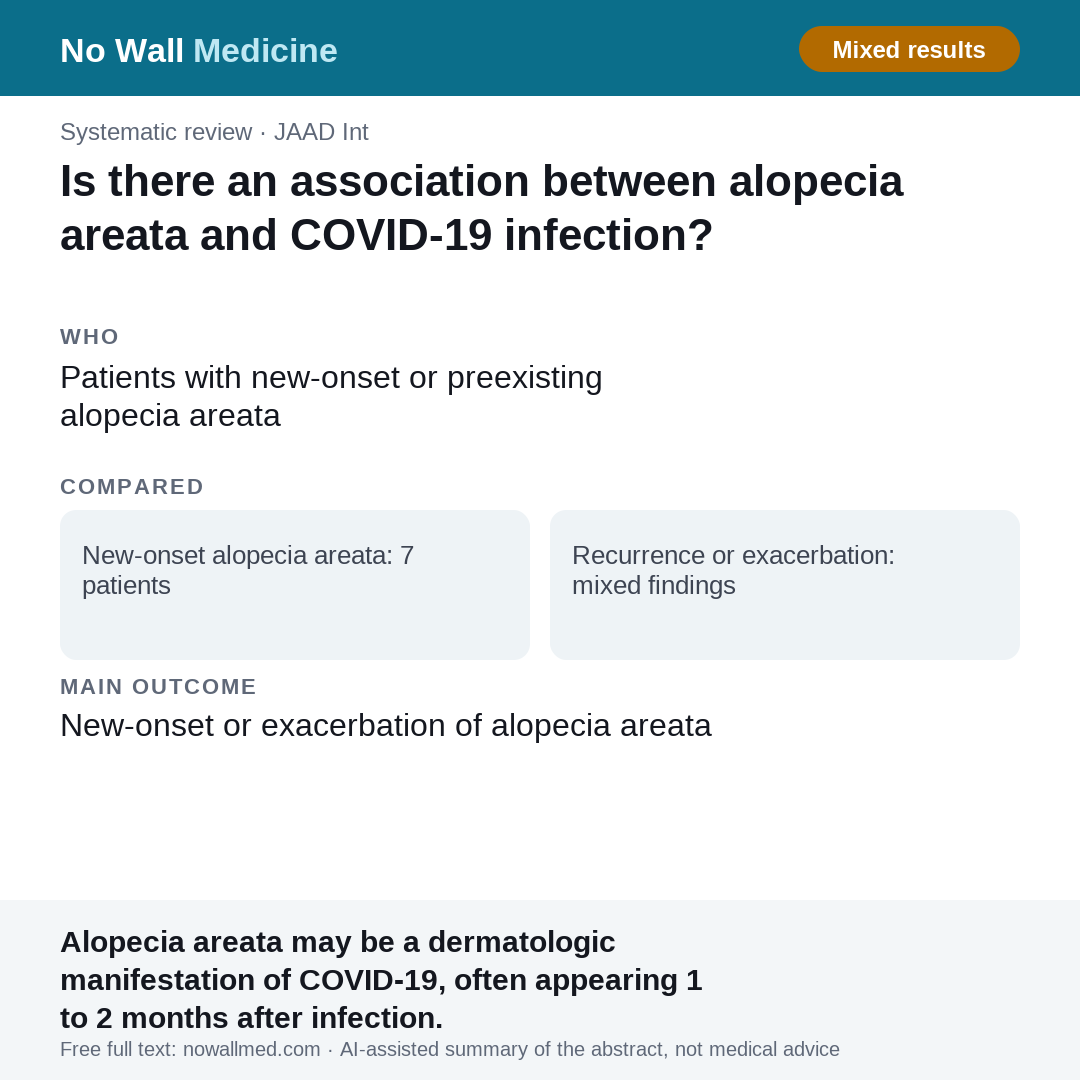
Clinical question: Is there an association between alopecia areata and COVID-19 infection?
Why it matters: The relationship between SARS-CoV-2 infection and the onset or worsening of alopecia areata remains unclear.
Key points
- Researchers reviewed 402 articles to identify 9 studies involving 7 patients with new-onset alopecia areata and others with preexisting disease.
- New cases of alopecia areata, an autoimmune hair loss condition, most often appeared 1 to 2 months after SARS-CoV-2 infection.
- Studies investigating the worsening or recurrence of existing alopecia areata following infection reported mixed findings.
Headline and key points written with AI from the paper’s abstract, with every number checked against it. Read the paper before relying on them.
Was this summary helpful?
Cite this article
Christensen RE, Jafferany M. Association between alopecia areata and COVID-19: A systematic review. JAAD Int. 2022. doi:10.1016/j.jdin.2022.02.002
Spotted a mistake? Suggest a correction
Top studies every Monday
The week’s key trials and guidelines in your specialties, plus any topics you follow. By email, free.
Get the weekly digest