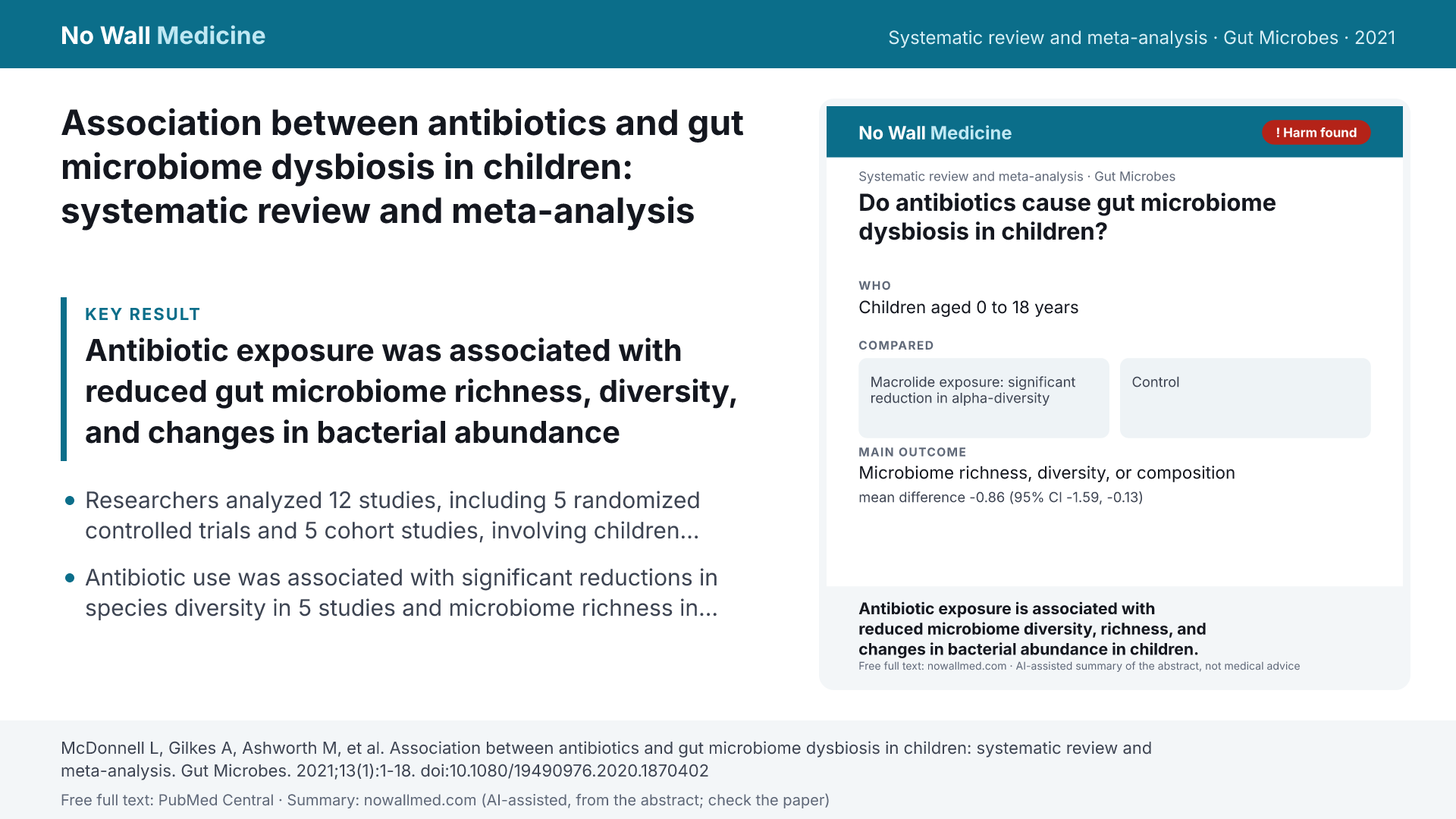
Antibiotic exposure was associated with reduced gut microbiome richness, diversity, and changes in bacterial abundance
Association between antibiotics and gut microbiome dysbiosis in children: systematic review and meta-analysis
Systematic review and meta-analysisHarm found
Do antibiotics cause gut microbiome dysbiosis in children?
Who
Children aged 0 to 18 years
Compared
Macrolide exposure: significant reduction in alpha-diversity
Control
Main outcome
Microbiome richness, diversity, or composition
Result: mean difference -0.86 (95% CI -1.59, -0.13)
Bottom line: Antibiotic exposure is associated with reduced microbiome diversity, richness, and changes in bacterial abundance in children.
Gut Microbes · 2021-03-02 · Save PNG
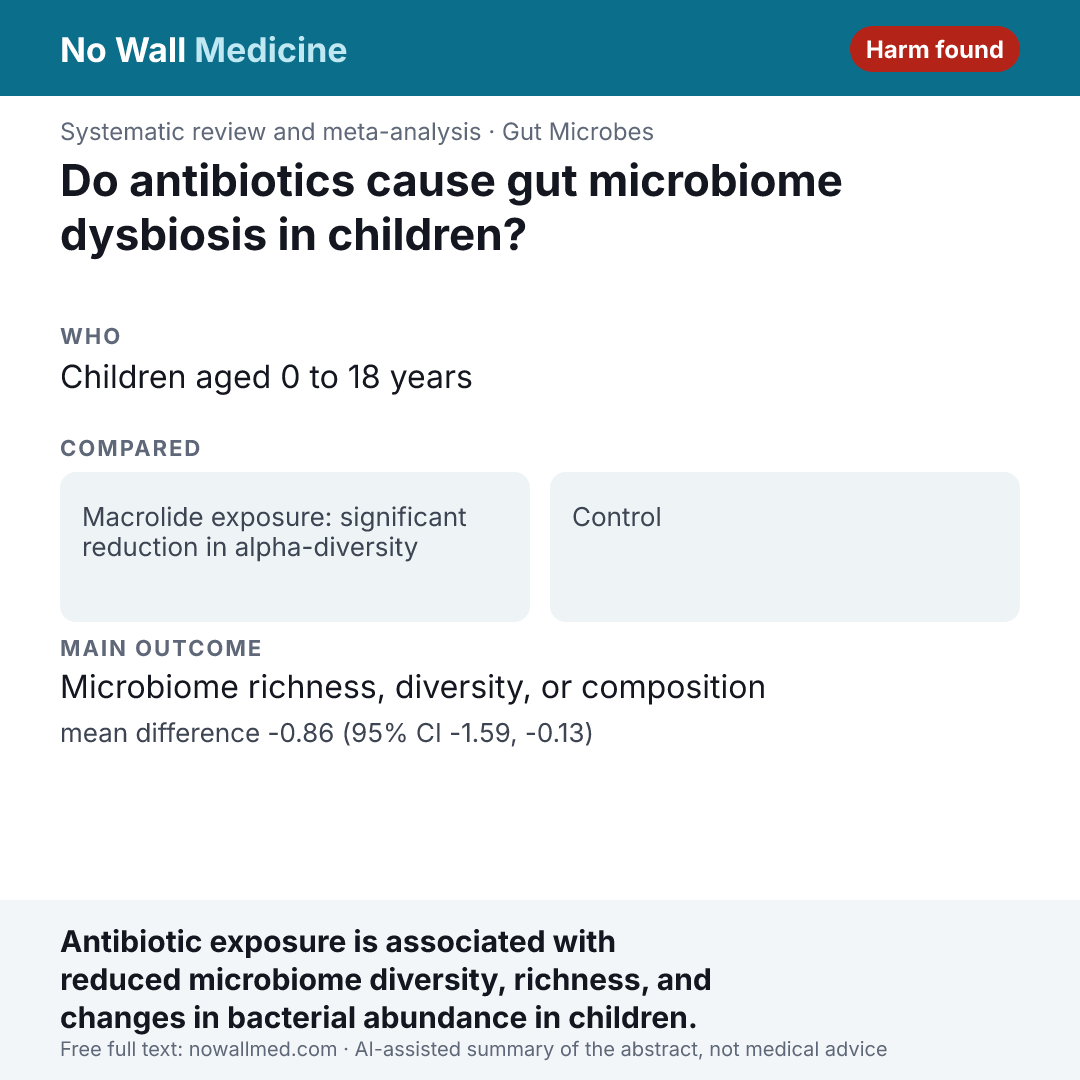
Clinical question: Do antibiotics cause gut microbiome dysbiosis in children?
Why it matters: The underlying mechanisms linking childhood antibiotic use to diseases like asthma and type 1 diabetes are thought to involve disruption of the gut microbiome.
Key points
- Researchers analyzed 12 studies, including 5 randomized controlled trials and 5 cohort studies, involving children aged 0 to 18 years.
- Antibiotic use was associated with significant reductions in species diversity in 5 studies and microbiome richness in 3 studies.
- Macrolide exposure was associated with reduced richness for twice as long as penicillin, and azithromycin exposure showed a mean difference of -0.86 in the Shannon index.
Headline and key points written with AI from the paper’s abstract, with every number checked against it. Read the paper before relying on them.
Was this summary helpful?
Subject terms
Headline, design, result, key points, caveat and citation as plain text.
Cite this article
McDonnell L, Gilkes A, Ashworth M, et al. Association between antibiotics and gut microbiome dysbiosis in children: systematic review and meta-analysis. Gut Microbes. 2021;13(1):1-18. doi:10.1080/19490976.2020.1870402
Spotted a mistake? Suggest a correction