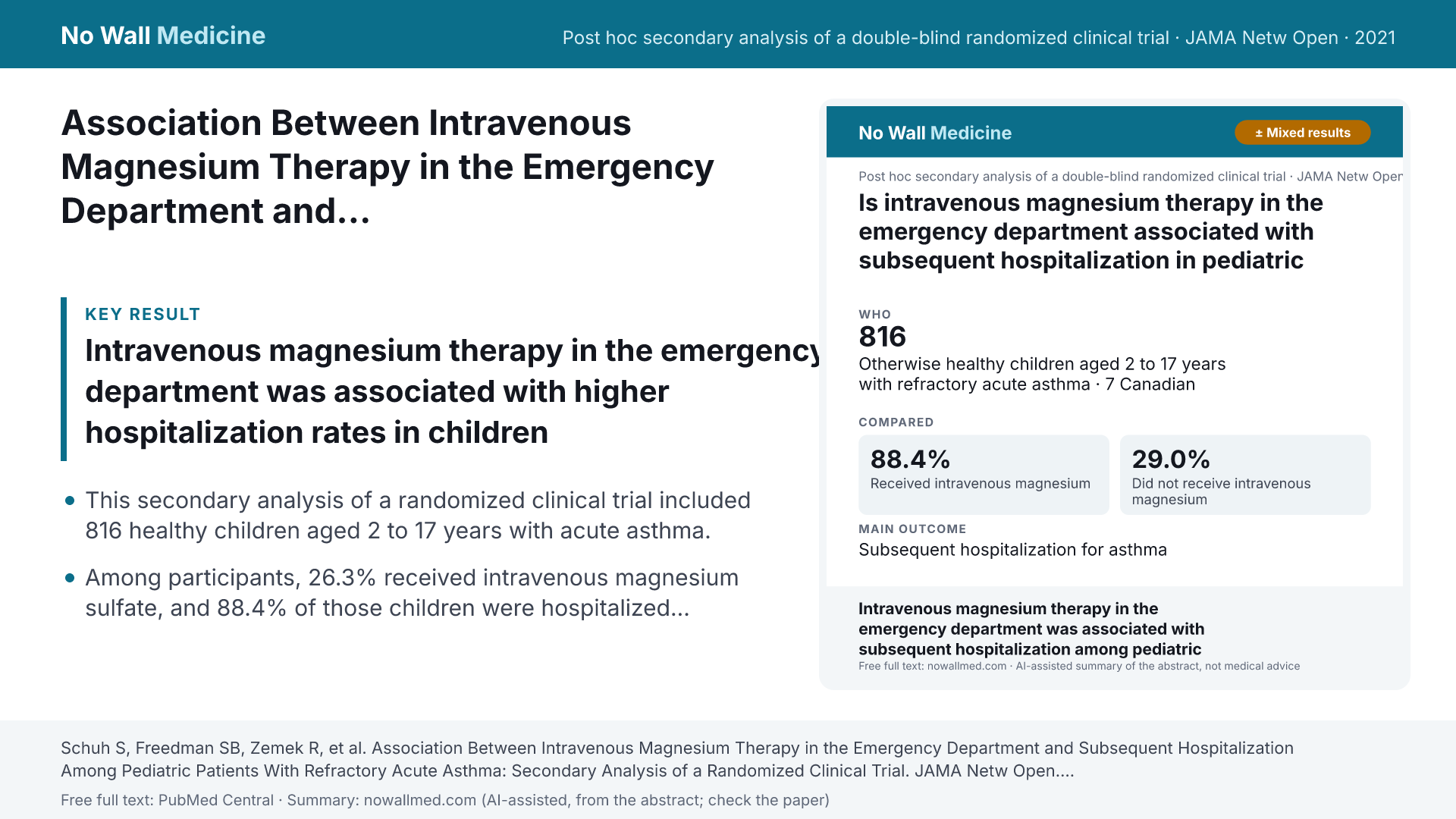
Intravenous magnesium therapy in the emergency department was associated with higher hospitalization rates in children
Association Between Intravenous Magnesium Therapy in the Emergency Department and Subsequent Hospitalization Among Pediatric Patients With Refractory Acute Asthma: Secondary Analysis of a Randomized Clinical Trial
Post hoc secondary analysis of a double-blind randomized clinical trialMixed results
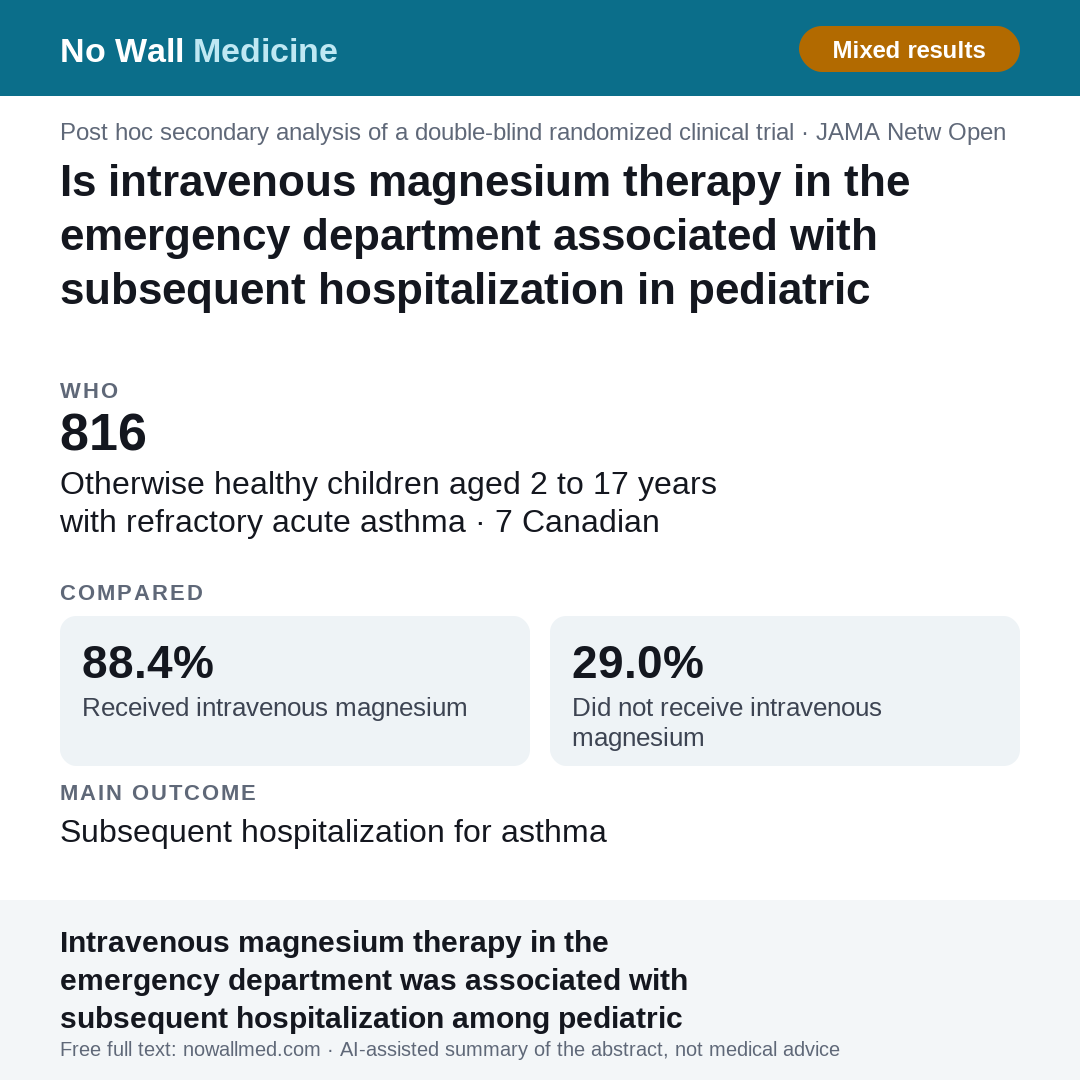
Is intravenous magnesium therapy in the emergency department associated with subsequent hospitalization in pediatric refractory acute asthma?
Who
816
Otherwise healthy children aged 2 to 17 years with refractory acute asthma · 7 Canadian tertiary care pediatric emergency departments
Compared
88.4%Received intravenous magnesium (190/215)
29.0%Did not receive intravenous magnesium (174/601)
Main outcome
Subsequent hospitalization for asthma
Result: OR 22.67 (95% CI 6.26-82.06) for 2011-2016; OR 4.19 (95% CI 1.99-8.86) for 2017-2019
Bottom line: Intravenous magnesium therapy in the emergency department was associated with subsequent hospitalization among pediatric patients with refractory acute asthma.
JAMA Netw Open · 2021-07-01Download image
Clinical question: Is intravenous magnesium therapy in the emergency department associated with subsequent hospitalization in pediatric refractory acute asthma?
Why it matters: It is unknown if intravenous magnesium sulfate therapy in the emergency department affects the rate of hospital admissions for children with severe asthma.
Key points
- This secondary analysis of a randomized clinical trial included 816 healthy children aged 2 to 17 years with acute asthma.
- Among participants, 26.3% received intravenous magnesium sulfate, and 88.4% of those children were hospitalized compared to 29.0% of those who did not receive it.
- After adjusting for patient characteristics, receiving intravenous magnesium was associated with subsequent hospitalization, including in children with mild asthma scores at discharge.
Headline and key points written with AI from the paper’s abstract, with every number checked against it. Read the paper before relying on them.
Was this summary helpful?
Subject terms
Cite this article
Schuh S, Freedman SB, Zemek R, et al. Association Between Intravenous Magnesium Therapy in the Emergency Department and Subsequent Hospitalization Among Pediatric Patients With Refractory Acute Asthma: Secondary Analysis of a Randomized Clinical Trial. JAMA Netw Open. 2021. doi:10.1001/jamanetworkopen.2021.17542
Spotted a mistake? Suggest a correction